For several seasons, the proliferation of influencer-branded teams has clearly shaped the trajectory of European
League of Legends. In France, following the example of Solary and Karmine Corp, various initiatives have emerged in the LFL and Division 2, built around a range of internet personalities. Some have thrived and secured a place in the national elite — Ici Japon Corp, Joblife, or Esprit Shônen, for instance. Some others faded and withdrew, such as AEGIS, Team du Sud, or Gentle Mates. The phenomenon is such that, of the eight teams qualified for the 2026 LFL season following the previous split, six are led by streamers or YouTubers.
Until now, Webedia, the league organizer, had remained a background player in this dynamic, approving each application as slots opened in the LFL or its feeder league. But in early December, this "all-in on influencers” shift was formally acknowledged and embraced by the advertising agency. To launch 2026, Webedia sought to innovate with a format that revived the spirit of the Coupe de France: the first split of the year
will be an Invitational starting January 21, featuring seven LFL teams, eight Division 2 teams, and Game Changers teams.
Two Slots Up for Grabs
Only seven LFL teams, which marks a significant change in the league’s history, which has been contested by ten teams since 2021. Three organizations are absent: GameWard, Gentle Mates, and Karmine Corp Blue. While KCB’s absence is temporary — the team qualified for LEC Versus
thanks to its victory at the last EMEA Masters — the other two organizations exited at the end of 2025. This time, Webedia opted not to assign replacements for these two slots.
Instead, to complete the lineup of its new product, the company allocated the final two LFL Invitational slots to influencer-led teams, without a club affiliation. The vacant LFL positions will be contested and awarded for the remainder of the season to the two best non-LFL teams emerging from this competition. According to our sources, Webedia made this choice for two reasons: to mitigate declining viewership and due to the lack of sufficient teams for the winter tournament. “Our goal was to have a winter split that celebrates the French esports ecosystem; it seemed impossible to impose LFL requirements on lower-division teams for this winter segment,” the league commented.
A (too) Free Electron
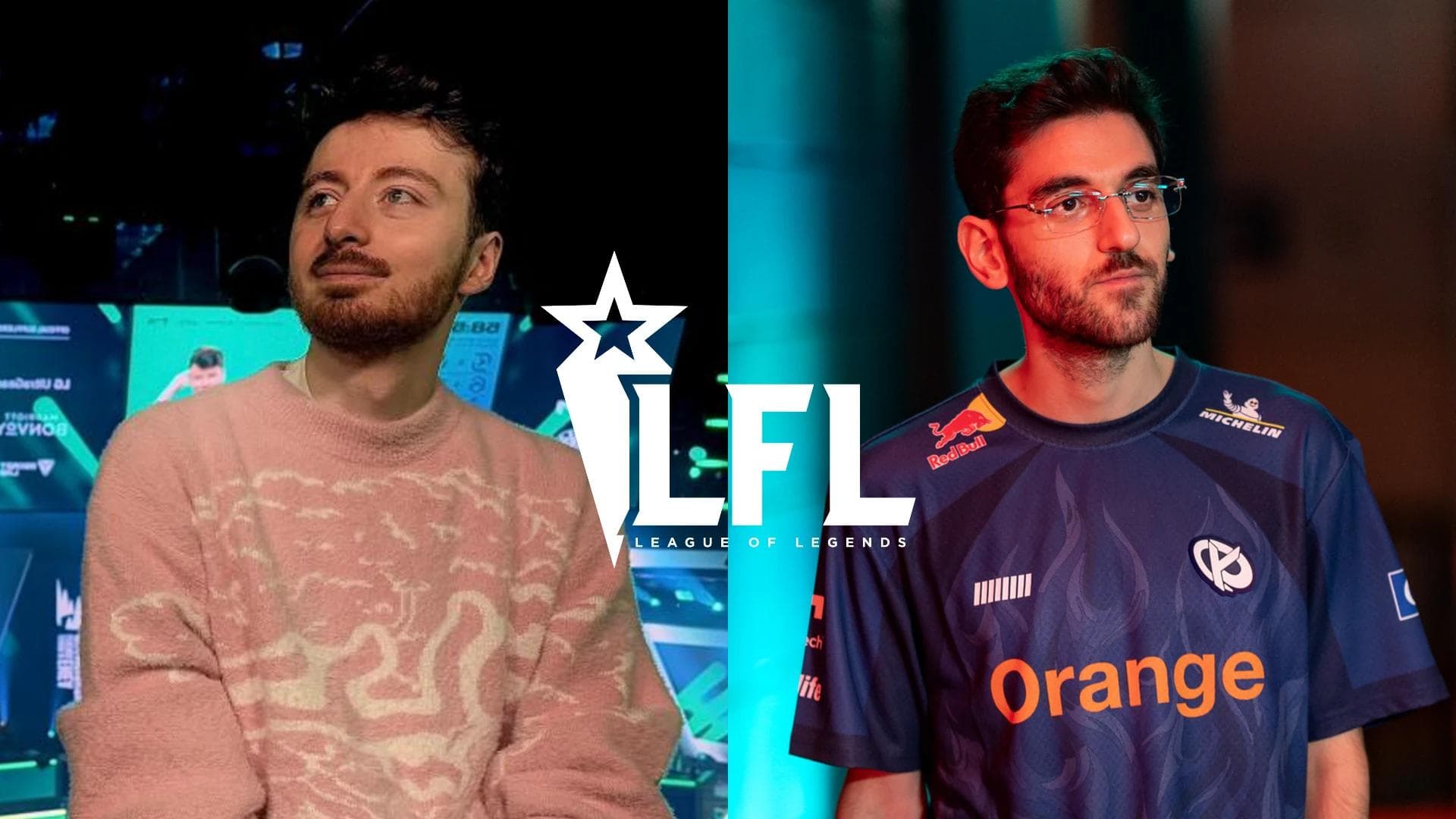
As first reported by Sheep Esports and later confirmed by Webedia, the two influencer teams will be led by Jean “
TraYton” Medzadourian and former LEC player Yasin “
Nisqy” Dinçer — according to our sources, Pierre-Alexis “
Domingo” Bizot’s OGs were also considered. The decision was not imposed on the teams, explains a representative of the French Union of Professional Esports Clubs (UFCEP).
“Two union members were fully integrated into the discussions surrounding the format,” he notes.
“Our goal is to support the LFL, and that includes our participation in discussions about the league’s future.” The problem, however, is that these teams enter as free agents in a long-established ecosystem. Exempt from certain obligations, both the nature of these teams and their potential future in the league raise questions. “UFCEP, the clubs, and Webedia were aligned on the Winter format,” the Union explains. “In execution, we recognize two issues: competitive fairness and the application of a uniform set of rules for all participants.”
Indeed, unlike other organizations, the TraYton/French Flair and Nisqy/ZYB teams are not required to contract their players, avoiding the associated administrative and legal constraints. This exception applies only to the winter split and could not continue should the teams qualify for Spring and Summer. According to LFL regulations, which remain somewhat ambiguous for the Invitational, “team members must have a service contract.” This rule would obligate FF and ZYB to formalize contracts and undertake considerable administrative procedures. Webedia has stated that “discussions will be held with qualifying teams to ensure they comply with the same rules as teams with participation rights.”
“Administrative preparation for Summer and Spring 2026 is still ongoing”
Qualification would also impose another requirement that these teams avoid this winter: the payment of a salary or contractual compensation. For the first time in league history, and despite the LFL not mandating a minimum salary, rosters will compete for free, contravening current rules. The LFL rulebook specifies that “for any contractual agreement […] the contract needs to adhere to and be governed by applicable local laws.”
According to French labor law (Article L1221-1), “an employment contract is an agreement whereby an individual undertakes to work, in exchange for remuneration, under the direction of another person.” Webedia acknowledged these points, emphasizing that “these issues must be clarified, and administrative preparation for Summer and Spring 2026 is still ongoing.”
Among the favorites
These peculiarities raise concerns regarding competitive equity. While Nisqy’s project clearly leans toward entertainment — particularly
in the support role... — TraYton, by contrast,
assembled players capable of competing at Tier 1, overlooked during this offseason. His objective: to demonstrate that his players belong at the highest level. Consequently, the team could act as a spoiler and is among the favorites to qualify for the LFL.
This represents a radically different status from what was promised to other organizations, who approved the change without considering such a competitive scenario. As a reminder,
the LFL Invitational will begin with a group stage of five groups of four teams, with two teams advancing from each group. Clubs fear being placed in a group with two LFL teams and French Flair. Should they underperform, the tournament could end in January without resuming until April for an LFL organization, raising potential risks for marketing commitments, notably sponsors, often the primary revenue source for clubs.
How did this situation become possible? In practice, the roster assembled by TraYton would have exceeded the budget of any ERL team. But unusually in esports, the players who joined FF prioritized a non-financial project. While other LFL teams can offer benefits such as coaching or facilities, money remains the lifeblood of most organizations — but not in this case. “I was able to assemble these players because they wanted to play together, and LEC teams didn’t pick players who should be there,” TraYton explains.
TraYton al-Gaib
Another question arises: could another organization have assembled the Avengers at zero cost? “In my case, I have an LEC brand and an LEC player image to uphold, and some LFL teams could negatively impact my image,” a French Flair player notes. “I’d rather stream to compensate for lost salary and protect my reputation than be labeled just an ERL player.”
In other words, French Flair is an anomaly orbiting around the streamer’s personal brand. This venture likely exists solely because the participants wanted to play together on an unconventional project. “The opportunity is also interesting due to its timing,” emphasizes the UFCEP, citing Los Ratones as an example, and noting that the roster was constructed late with “undesirable” players previously overlooked.
Long-established clubs find it difficult to compete under these conditions. Surveyed organizations acknowledge the critical drop in viewership — down more than a third in 2025, reflecting a global esports and Twitch trend (-25% in 2025) — and recognize influencer teams’ potential to monetize the league. Yet the situation causes friction: “We’ve invested hundreds of thousands of euros annually for years, playing by the rules, but it changes the game if that isn’t the case for all teams,” says one club representative. “We may reconsider our participation,” adds another.
Revenue Sharing
At this stage, clubs feel partially heard: “UFCEP acknowledges being consulted by the organizer regarding regulatory parity, but not regarding the potential early exits of LFL teams from the tournament.” Beyond the questions about the rulebook, tensions could also crystallize if FF qualifies for the remainder of the season. According to our sources, TraYton is prepared to continue through Spring and Summer if victorious, provided his team remains and is fully integrated into the league — including revenue sharing: a sum of tens of thousands of euros per team allocated proportionally to their contribution (viewership, engagement).
This could become contentious, as teams might theoretically be deprived of part of their revenue, while assuming costs not borne by the streamer-led team. Webedia has already taken steps to address this. The organizer plans to potentially integrate two new teams into revenue sharing if they qualify for the LFL, while assuring existing clubs on December 3 during the “Owner Conference” that their historical share remains unchanged. Webedia aims to increase the total pool to satisfy all parties.
“I don’t think all teams are satisfied with the outcome, but being involved in shaping the format of a league that isn’t ours is already significant compared to other esports organizers,” summarizes UFCEP. While questions abound regarding the first year, uncertainties also arise over medium-term rules, minimum salaries, or contract obligations for all teams, amid rumors of potential major changes for ERLs in 2027. The league seeks to reassure: “We will not break the LFL ecosystem or change the rules; we are adapting to a new economic reality by integrating new actors.”
In Learning Mode
This system is still in its infancy. Fans, players, organizations, and Webedia itself must adapt. In addition to unresolved contractual questions, a minor issue arose in early December. Webedia approved TraYton’s roster despite it violating an ERL rule:
the team included more than two “veterans” (players who played over 50% of matches in three of the last five Tier 1 splits), which is prohibited.
Following public exposure and complaints from other teams, Webedia initially claimed the rule applied only to the EMEA Masters and not the LFL. Ultimately, TraYton revealed that roster adjustments would be required, with Gabriël "Bwipo" Rau affected by this change, mainly due to EMEA rules being applied to the French league. The inclusion of these influencer teams is thus still tentative, and this new paradigm generates both excitement and concern.
Header Photo Credit: Riot Games