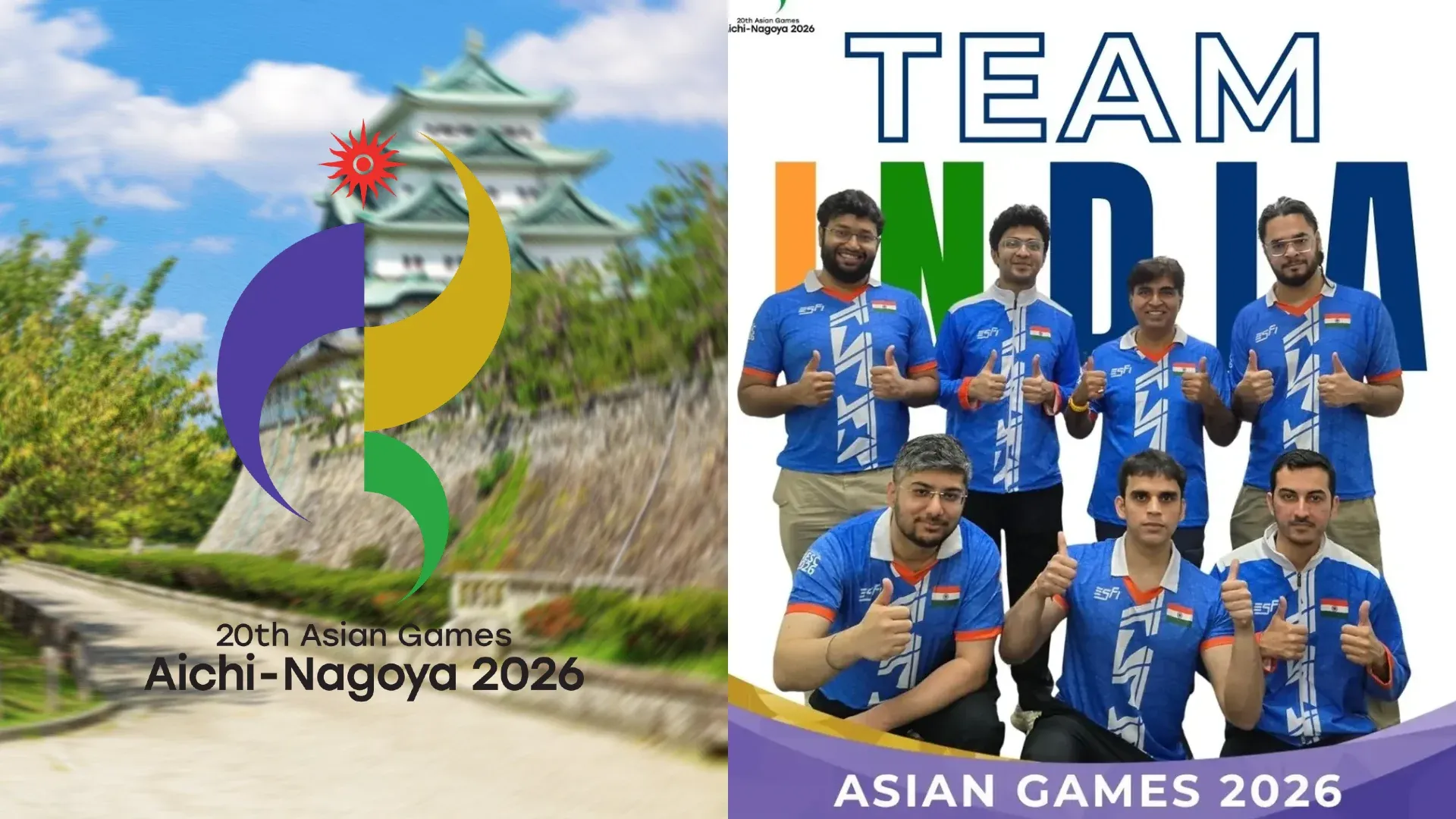
For the Indian
League of Legends team, preparing for the
2026 Asian Games does not mean quitting their jobs or putting their studies on hold. The six players live in different cities, and one of them is even based abroad. Their training ground is therefore primarily Discord, with sessions organized late in the evening, a far cry from the preparation of Team South Korea, for example, the competition's big favorite. It is a story told and explained by Indian outlet
Sportstar in a long and comprehensive article.
To tell this story,
Sportstar based its article around Mihir “
Lotus” Ranjan, the 25-year-old AD Carry of India's
League of Legends team. A graduate of IIM Ahmedabad, he now works at McKinsey & Company and only
launches League of Legends after his workday. As he told
Jonathan Selvaraj, the journalist behind the article, “
Now my second life begins,” as he puts it.
“When you have a goal, when you have passion, it doesn’t matter”
His captain and midlaner, Akshaj “Kat Bot” Shenoy, is meanwhile pursuing an MBA while also helping manage his father's sanitaryware businesses. Aakash “Infi” Shandilya, the jungler, is a cloud engineering intern, Ahmed “Nero” Shahid Israr, the support, is studying chemical engineering, while toplaner Sanindhya “Deadcorporal” Malik works for Telecommunications Consultants India Ltd., an Indian state-owned company, from Mauritius.
Rahul “Bob” Bisht, 29, and the oldest player on the team, perhaps illustrates this setup better than anyone. A computer science graduate from BITS Pilani, he works as a product designer and is also developing his own startup. His daily routine is organized around the few hours when all six players can be together. “There’s no other time in which to practice other than late at night. That’s when we are all free. We’ll practice together until about 12 am. After that I’ll play a few personal games. Then I’ll work for the next few hours. I probably sleep for about four or five hours a night,” he explains.
This setup is also a consequence of an ecosystem that remains limited, partly because of the place of esports in India and partly because of the place of League of Legends within this small scene. In 2022, Akshaj began bringing together the best Indian players to form a competitive team, looking for them across different local competitions. “You can’t just play with the person if he’s just good. You have to have similar goals,” he explains. Despite this, it does not seem to hinder the team's determination, which is driven by their passion, as Deadcorporal explains: “All that is frustrating. And when I have my regular job to do, it gets really tiring to play after that. But when you have a goal, when you have passion, it doesn’t matter. You just do it.”
The search for legitimacy
This group, apart from the support role, had already represented India together at the 2023 Asian Games in Hangzhou, originally scheduled for 2022 but postponed due to COVID-19, where they finished in the Top 5/8 after being eliminated in the quarterfinals by Vietnam. For them, this experience also helped change the way esports was perceived. As Lotus explains, he was notably tested by India's anti-doping agency before the competition. Far from being an issue, “the fact that I was drug tested actually gave some legitimacy to the whole thing,” he says, particularly in the eyes of his parents. “My parents were at home when all this happened. Until that point, they were always having this bit of disbelief over how real my gaming was. I think they thought I was making some of it up and I’m not really going to the Asian Games,” he detailed.
The Indian team at the 2023 Asian Games. Credit: Sporstar
Nero, meanwhile, says he had to convince his university to grant him permission to participate in the competition. “They wanted to know if I even counted as an athlete, and I had to tell them yes, I do count as an athlete. It’s a medal event.” Lotus shares a similar view: “I do consider myself a professional sports person, from a mentality perspective,” he says, as he has to juggle the game with his professional life.
Even so, and despite these two points, it seems fairly clear to Lotus that a genuine career and a genuine life as a professional player are not viable. As he puts it, he does not “really not even like [know] much money can I make. At that point, it was just becoming a bit apparent to me that I will not be able to sustain the kind of lifestyle I want. In this game at least.”
Difficult conditions to prepare
On the competitive side, India must nevertheless deal with difficult conditions. The country still does not have a dedicated League of Legends server, and players usually play on the Singapore servers, with around 80 to 90 ms of latency. For Lotus, this is comparable to “playing with a weighted vest,” explaining that after playing with the additional delay for so long, players unconsciously compensate for the latency. In tournaments, when it disappears, the game suddenly feels much faster.
On top of this, the player pool also appears to be very limited. Kat Bot estimates the active Indian community at around 1,000 players, far below the figures of countries that will be their competitors at these Asian Games, such as South Korea, Taiwan, or Hong Kong. This difference in depth was evident in Hangzhou, where India was heavily dominated by Vietnam in the quarterfinals. “They were doing things that we didn’t know were possible,” Mihir recalls. “Vietnam destroyed us,” with two 20-minute games, something that can obviously be explained by the professional status of the Vietnamese players, who were all competing at the highest level of LoL.
Despite this, the motivation appears to be more than present, and since 2023, the roster has evolved, notably with the arrival of the two supports earlier this year. The players have therefore been scrimming against the best teams in South and West Asia while working entirely remotely. Even their physical preparation is built around their constraints, as Infi explains, saying that “the more physically fit we are, the better we play,” while emphasizing the need to be able to spend several hours in front of a screen while maintaining “a sharp mind.”
Yet the situation is sometimes even more complicated, particularly for their toplaner. A cut to an undersea cable serving Mauritius severely degraded his connection for nearly a month, preventing him from training normally.
A new test in Nagoya
This year, India finds itself in Group B, by far the most difficult group, with South Korea and Taiwan (Chinese Taipei in the Olympic context), respectively the winner and runner-up of the previous edition. The League of Legends tournament will take place from September 29 to October 2 at Aichi Sky Expo, in Japan, with eight nations split into two groups before a four-team final stage.
For Infi, the competition will also have a personal dimension, as he explains through an anecdote involving the biggest star in esports. In Hangzhou, he was able to meet Lee “
” Sang-hyeok, South Korea's legendary midlaner, whom he had watched since the beginning of his career: “
He was always the guy I grew up watching on streams or in World Championships. It’s like if you got to meet Sachin Tendulkar [one of the best cricket players in history] or Lionel Messi.”
Despite the difficulties in preparing, Lotus' motivation ultimately comes down to a few words: “I don’t think there’s anything as special as getting the opportunity to wear the India jersey.” It is a source of pride that he has shared with his family, as he explains: “I gave one set to my grandparents, and it was one of the most sentimental moments of my life.” He still keeps that pride somewhat private, particularly because “it’s basically passion that’s driving all of us. It’s not like we make a living out of this.” He describes himself as “someone who likes to show off my accomplishments. I don’t go and tell people about the fact that I’ve played for India at the Asian Games.”
“It didn’t matter what kind of sportsperson I was. It was the India jersey. And when you wear it, everything we do seems to be worth it,” he concludes. The full article is available on Sportstar, with even more details, and offers a rare look at the players from smaller esports nations who have the opportunity to showcase themselves and experience events of such importance.