The
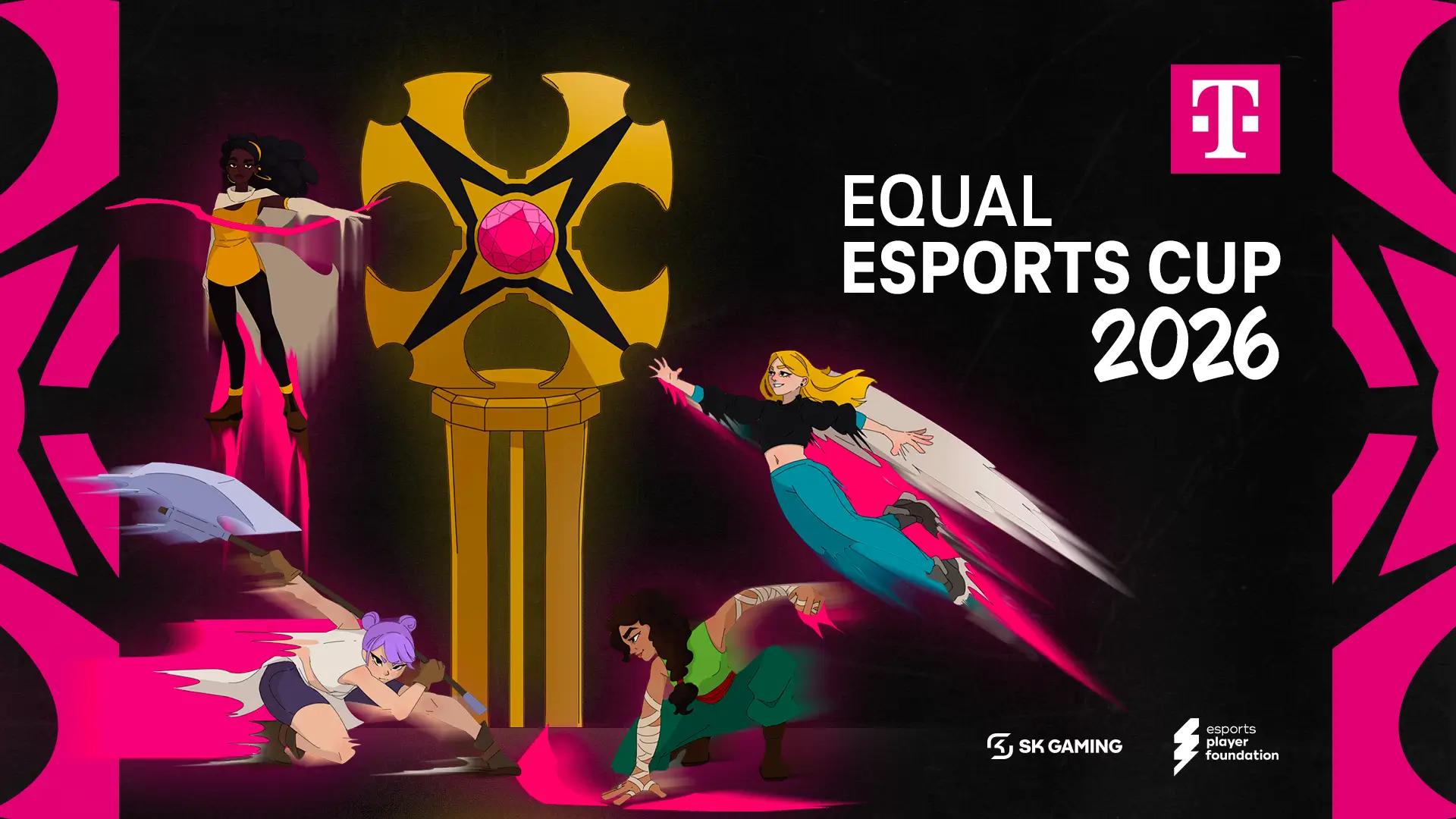
Equal Esports Cup returns for its fourth edition in 2026, featuring a €10,000 prize pool.
Open to all women—cisgender and transgender—as well as non-binary players, the competition will feature eight teams this year. Four squads will receive direct invitations, while the remaining four spots will be decided through
open qualifiers beginning in mid-May.
The tournament will then move into a best-of-three group stage in July, followed by playoffs, where teams will battle for a place in the emblematic finals at
gamescom 2026 in Cologne on August 29. Among the teams already confirmed are
Mental Rush, SK Avarosa, and
Vitality Rising Bees. The fourth invited team is expected to be G2 Hel, who were
recently reported by
Sheep Esports to be finalizing their return to the scene.
Format and Key Dates of the Equal Esports Cup 2026
Spanning multiple stages, this new edition of the EEC will run over four months, albeit in short bursts. The key dates for aspiring participants are the two open qualifiers, taking place on May 16–17 and June 6–7. Across each two-day qualifier, teams will first compete in a Swiss stage on day one, followed by a double-elimination bracket on day two. The top two teams from each qualifier will advance directly to the main event.
- May 16–17, 2026 — Open Qualifier 1
- June 6–7, 2026 — Open Qualifier 2
From there, eight teams will enter the Equal Esports Cup and take part in a Prime League–style power ranking, where participants collectively determine the seeding. Teams will then be split into two groups of four. Running from July 7 to July 14 across four match days, the group stage will feature a single round-robin, best-of-three format, with each team facing every other team once. The top two teams from each group will advance to the playoffs.
- July 7, 2026 — Match day 1 (four matches)
- July 8, 2026 — Match day 2
- July 9, 2026 — Match day 3
- July 14, 2026 — Match day 4
A new addition to this year’s format, the third- and fourth-placed teams from each group will not be immediately eliminated. Instead, they will enter the “Lucky Losers Group,” an intermediate stage taking place on July 15. During this action-packed day, teams will compete in a best-of-one round-robin format to determine the final two spots in the lower bracket of the playoffs.
- July 15, 2026 — Tiebreakers (if necessary) + Lucky Losers Group (six matches)
Finally, after two teams are eliminated, the tournament will resume with its playoff stage on July 28. The remaining six teams will compete in a double-elimination bracket across multiple rounds for a spot at gamescom 2026. The opening rounds in both the upper and lower brackets will be best-of-three, with later matches played as best-of-five—except for the grand final, which will be played as a best-of-three.
- July 28, 2026 — Upper Bracket Round 1 (BO3)
- July 29, 2026 — Lower Bracket Round 1 (BO3)
- August 15, 2026 — Upper Final & Lower Semifinals (BO5—simultaneous)
- August 16, 2026 — Lower Bracket Final (BO5)
- August 29, 2026 — Gamescom Grand Final (BO3)
Though subject to change, each match day of the main event is scheduled to start at 18:00 CEST and will be broadcast on the competition’s official
German Twitch channel.
POGTV in French and
EUniverse in English provided coverage in previous editions, and may return again this year, although this has not yet been confirmed.
The Bottom Line
While the Equal Esports Cup remains a net positive for the scene—especially as it is currently the only major inclusive tournament allowing non-binary players to compete—some concerns persist around the competition. Reflecting the broader state of
women’s and marginalized genders’ League of Legends esports in 2026, the tournament has notably reduced its team count from twelve last year to just eight this year.
This decline appears linked to several factors, including
organizational departures due to early-season uncertainty and ongoing financial challenges in sustainably monetizing the scene. In 2024, the tournament featured eight invited organizations. Last year, it had to rely on six invited organizations alongside two player-led teams formed specifically for the event. This year, only four organizations were secured among initial invitees, one of which is a relatively new entrant to the scene. Although
the League of Legends Game Changers initiative was recently renewed for two more years, an initial lack of structure and long-term vision led many stakeholders to step away, and it may take time for organizations to return.
On the format side, several improvements can be noted from an organizational perspective. Despite lingering concerns around stability and scheduling, the introduction of a best-of-three group stage and a safety net for underperforming teams during the early phase are welcome additions, alongside the use of best-of-five series in the later playoff stages. However, this is somewhat undermined by the tournament’s presence at Gamescom, which limits the grand final to a best-of-three due to scheduling constraints. This reduces the prestige of the final series, particularly given the frequent format shifts teams must adapt to throughout the tournament—from best-of-three to best-of-five, and back again.
In the end, the Equal Esports Cup, despite its flaws, remains one of the most influential tournaments in women’s esports. Criticism regarding scheduling should also be viewed with some nuance, as announcements for the upcoming LGC 2026 season have yet to be made. It is therefore possible that the format was designed with this in mind, potentially to avoid overlap with that competition’s matches amid an already crowded global esports calendar.