
12.10.26 - 15:0012.10.2026 - 15:00·m minutos de leitura·
Por Mathéo "Maffeoh" Gorlier
M8 Placido: "For us, it’s not about putting the biggest names together and hoping it works"
After a difficult end to the season on VALORANT and in the midst of a hectic offseason, Placido, the managing director of Gentle Mates, answered questions from Sheep Esports.
🇬🇧English
Compartilhar
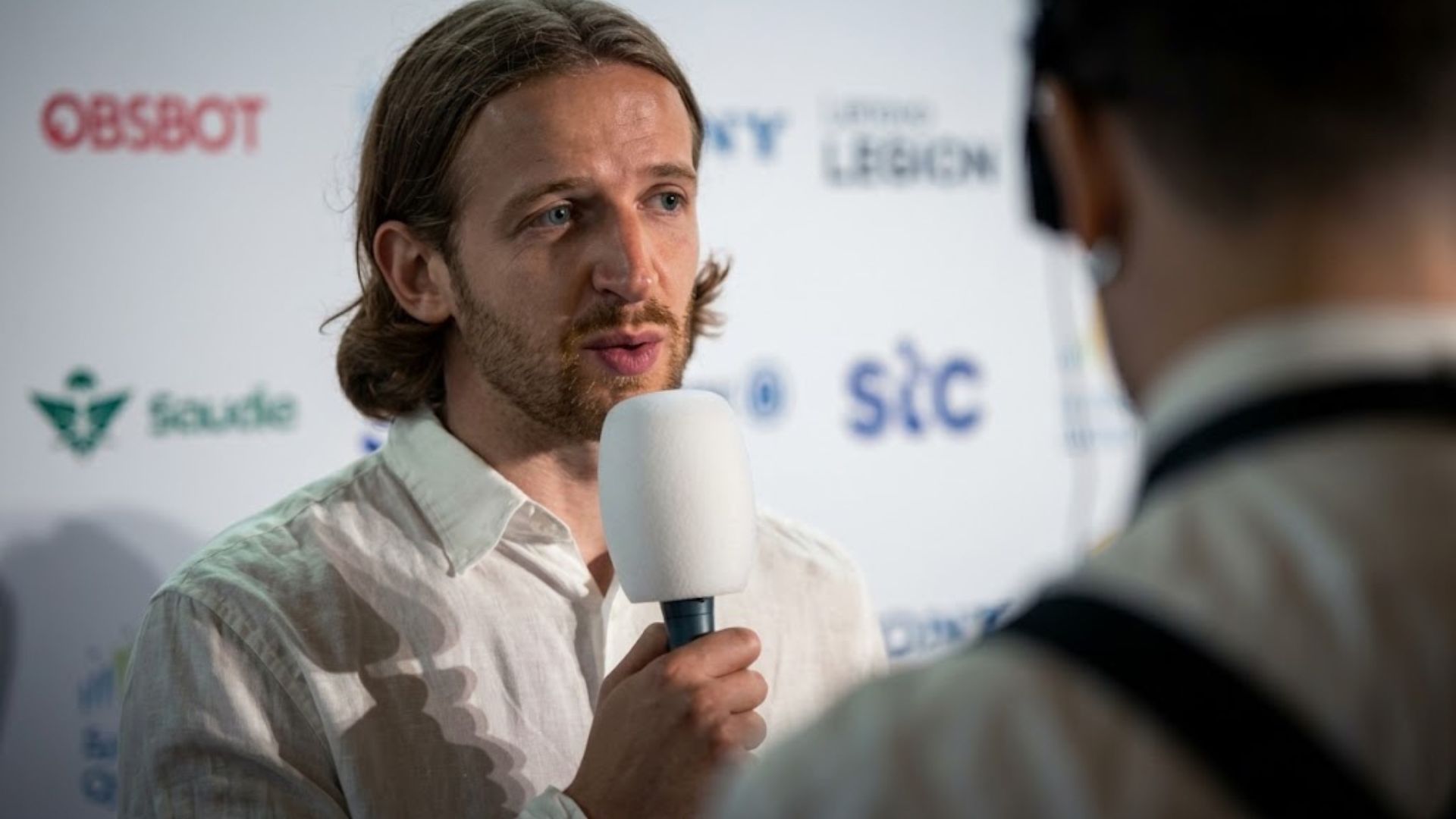
"This year, we were given an opportunity, and I think we knew how to make the most of it"
Loading...
Gentle Mates’ 2026 VCT season came to an early end, with the French team among the first organizations in the region to bow out during Stage 2. While awaiting confirmation of whether M8 will retain its partnered status in the VCT next year, the club has already begun its offseason — and has emerged as one of the most proactive and fastest-moving teams on the market. As previously reported by Sheep Esports, four players have already agreed to represent the Mates next year: Emir "Alfajer" Beder, Martin “MAGNUM” Penkov, Denis-Stefan "kozzy" Aionitoaei and Uğur "Ruxic" Güç.
Meanwhile, Gentle Mates are also approaching another milestone in their season, with the start of the VALORANT Champions 2026 on the Game Changers circuit drawing closer. Amid this particularly eventful period, Sheep Esports spoke to Marceau “Placido” Lambert, the team's general manager, to learn more about the organization's ambitions for the months ahead.
What is your overall assessment of the VCT season and of its unfortunate conclusion?
Marceau “Placido” Lambert: “I think it was a fairly good season compared with our previous ones, even though the way it ended obviously hurts. It’s difficult because we lost to two Tier 2 teams. Overall, we took part in our first international tournament in Santiago. We finished in the top eight there, so I think that’s pretty good considering where we were coming from last year. We also qualified for the EWC, so that was our second international tournament, even though it was in Paris, on home soil. I think we had a good tournament there as well. In the Group Stage, we beat Nongshim RedForce, who are still a very good team. And we played an incredible BO against NRG, where we came very close to beating them.
Up until that point in the season, we felt that we had simply had a somewhat mediocre Stage 1, and we had made changes specifically to try to correct that, which we thought we had managed to do. I think that once we entered Stage 2, what ended up costing us dearly was a few small mistakes in important matches. But obviously, when you have five matches per stage and they determine your seeding, everything moves very quickly. That’s where I think making one small mistake here and there in a key match can quickly put you in the situation we found ourselves in: ending up in the lower bracket, lacking confidence and momentum as a team, and having to play against Tier 2 teams that are full of confidence, who have just won everything in their league and for whom reaching Tier 1 is a once-in-a-lifetime opportunity. You end up with a clash between a team that is somewhat losing momentum and confidence because the stage hasn’t gone particularly well, and a team that is riding a wave of confidence.
Of course, we also have to be honest about the fact that the Tier 2 teams were genuinely very strong this year. I think they played a lot of matches throughout the year, had time to get to know each other well, and Tier 2 may have been somewhat more stable than Tier 1 because there wasn’t the same need for immediate results. Teams had more time to build, they made fewer changes, and so on. It was easier for them. And it’s true, you can clearly see it: when you have five matches per stage, if you don’t perform, it quickly disrupts a team’s momentum and forces you to make changes. That’s what I hope will change next year with the new format.
You made two changes at important points in the season that did not really bear fruit afterwards. Do you have any regrets about those decisions?
Marceau: At the beginning of the year, I don’t think we started out on paper with a team packed with individual talent or as the best team in the world on paper. We had some individual talent, we had talent within the team, but I think what we really managed to build was a very strong dynamic, and it worked all the way through the Masters. The problem with this kind of team is that some players were still lacking a certain level of mechanics or raw talent. When everything is going well and the dynamic is good, it’s great, but as soon as you start losing a few matches, the blame quickly falls on the players who are mechanically weaker, and that creates frustration between the players, which unfortunately forces us to make changes that sometimes don’t make sense from the community’s perspective. When you’re inside the team, you know that once one or several players have lost confidence in another player, it becomes extremely difficult for that player to rebuild that trust and regain their own confidence. So often, when we force changes, that’s the situation we’re dealing with.
As for the coaching change, it’s very simple. I think we had identified an issue with the way we were working. Pakko (Pavle Kostić) is a great person, and I think he helped us tremendously in creating that team dynamic. On the other hand, I think that from an in-game perspective, when we started struggling in Stage 1, we saw the limitations in terms of the depth of our gameplay. That’s when we collectively decided to move KUNDIKUNDI (Jiri Honkala), the assistant coach, into the head coach role, because he had a deeper understanding of the game that could help the players move towards what we felt we could achieve. We would have loved to keep Pakko, once again, because I think he was a very good person on a human level. Nevertheless, being moved from head coach to assistant coach is never something anyone wants to go through. That’s why things came to an end at that point.
Then we changed our first player. We did it before the EWC, replacing GLYPH (Conner Garcia) with Proxh (Yusuf Emre Tunc). As I explained, at the beginning of the year, when the dynamic was good, everything worked very well, but when we started struggling in matches, things became more difficult. GLYPH was somewhat behind mechanically, even though he brought a lot to the game. The fact that some of his teammates could lose confidence in him inevitably created situations that were unfavorable. Proxh obviously came in to address that. I think we were all aligned on that decision at the time. The EWC was also very well placed in the calendar for that.
And then, as I explained, during Stage 2, those few issues caused things to deteriorate very quickly. We quickly lost games because of two or three mistakes that cost us matches. The change from bipo (Taranvir Singh) to H1ber (Joona Parviainen) was, quite honestly, more of a last-ditch attempt to change the team’s momentum. Frankly, I think we knew it was probably a lost cause, but not making a change would also have meant giving up, so I think we preferred to try something.
Regarding the offseason you are currently in, what are your objectives, and does the change in format affect the way you are approaching it?
Marceau: I don’t think next year’s new format particularly affects the offseason. Regardless of the format we would have been playing under, I think we would have had the same ambitions for the offseason. That said, at Gentle Mates, we’ve now been in the VCT for three years. In the first year, we were an Ascension team, and we kept the French roster out of respect for the guys who had gotten us promoted. Whether that was the right decision or not, I don’t know, but that’s how it happened.
In the second year, we had this sword of Damocles hanging over us because we knew that if we didn’t perform, we would, so to speak, be out of the partnership. And in the third year, we were brought back at the last minute, practically after the transfer window. On top of that, it was only for one year, so we didn’t know what would happen the following year. So we’ve been in the VCT for three years, but we haven’t really been able to fully establish ourselves in the VCT because we’ve had this somewhat unusual status.
Next year, in principle, although we don’t have official confirmation yet, I think we have a good chance of being a VCT partnered team. I think people know that, and the players do too. So, for the first time, we would have a stable status where we could say, for two years, that with this VCT partnership, we’ll be able to build something much more solid. The ambition for the offseason is to really build something stable and solid, and to build around players we want to keep for as long as possible, with as much talent as possible, obviously. I think we’re giving ourselves the means to match our ambitions this offseason. So far, things have started pretty well, and I hope we’ll be able to bring this offseason to the best possible conclusion and have big ambitions next year.
How do you feel about your chances of joining the League as a partnered team? In 2025, M8 preferred to leave the game rather than return to VCL at the end of the season. If you are not selected as a partnered team, would you do the same thing this year?
Marceau: It’s difficult to say, honestly. I think it will depend on the opportunities available on the market, but there is one reality: VALORANT is a very important game for us, and next year’s format will allow us to remain in the game regardless of what happens, even if we aren’t partnered. That said, we would have to lower our ambitions, because there are still significant differences between partnered and non-partnered teams in terms of revenue and monetization, whether through skins or competitive success.
I don’t think we’ll leave the game, honestly. It’s something we’ll discuss, but to be completely sincere, we expect to become a partnered team. I think we have very strong arguments and very good assets when it comes to the partnership, considering what we’ve been able to demonstrate over the years. This year, we were given an opportunity, and I think we knew how to make the most of it. We contributed significantly to the visibility of the VCT, through the performances we had internationally, but also through everything we built around them. We entered Game Changers, and we really helped shine a light on the circuit as well.
Of course, we’re not the only ones. We’re not Messi, and we didn’t come in as if everything had changed because of us, but I think we genuinely bring something extra to the VCT and Game Changers through our branding, our content creation, our team CEOs being heavily involved and co-streaming every match, travelling to events, and so on. That’s not something you see very often. It’s something that has even been criticized in some teams in the past, and that’s no secret. I think it’s a very positive thing, and I hope these are also factors that will be taken into account when it comes to the partnership. Once again, I think we have a stable structure that is giving itself the means to achieve its ambitions, and I hope that will be taken into consideration throughout the process, because that’s how we’ll build something stable and also make VALORANT more attractive.
Given the first rumors and leaks surrounding the team’s transfer window, is the objective for next year to build a “super team”, or at least to have established top-level VCT players on the roster?
Marceau: I don’t think our objective is to build a super team. For us, it’s not about putting the biggest names together and hoping it works. There always needs to be a logic behind how we build the roster: whether the players will get along, whether the roles work, whether they share the same vision as us, and whether they fit into the DNA of Gentle Mates. That’s what we want to give the team: winning, performance and everything that comes with it. Can we expect some big names on the team? Yes, obviously. Beyond the names themselves, when they’re big names, it often also means they’re good players. They’re players who have proven themselves, who have experience, who have shown that they deserve their place at the highest level and who have already demonstrated that they know how to win.
That doesn’t mean there will only be those kinds of players. I think there are opportunities on the market to combine very good, proven players with players who may have slightly less experience or fewer achievements to their name, but who have the ability to become very good players. I don’t think we’ll be a super team. At least, as things stand, that isn’t necessarily the case, but we’ll have some established names and, hopefully, players who will become established names in the future.
There is another major milestone coming up with the Game Changers Championship, in the organization’s first year on the circuit. What is your assessment of the year so far in Game Changers?
Marceau: We’re extremely happy with the season we’ve had. We’ve reached the European final three times and won one title. For a first season, that’s almost unheard of. Game Changers has existed for several years now, and I think the level has only continued to rise. So, to come in this year and reach three finals, I think that was somewhat unexpected. If you had told us that at the beginning of the year, we would have signed immediately.
I think what we can be happiest about is having managed, together with a coaching staff we know very well, to build a really close-knit group. We have a really good, strong core that works hard and represents everything we were looking for, whether in terms of attitude, gameplay or everything happening around the team. I don’t think we could be happier with that. We’ve qualified for the Champions, and we can still hope to win them. It’s a project we’re extremely happy and grateful to be part of.
How important is the Game Changers section to you? What impact do these results have on your development as an organization and on VALORANT?
Marceau: The GC section is VALORANT, so regardless of what happens, VALORANT is one of our core games. It’s one of the games that matters to us. The section naturally has an important place within the organization. It was absolutely crucial for us not to give the GC team a different status from our other teams. We treat them the same way we treat any other team. They regularly have bootcamps, they regularly create content, and they take part in partner activations. They’re a team like any other. For us, it was really important to integrate them in this way because I think that’s how we’ll help the scene evolve and create a place for women and marginalized genders in esports. That’s essentially how we approach the team.
From a perhaps more emotional perspective, the results this team has achieved and the content we’ve been able to create with them have made this an incredible journey on a human level, and we’re obviously very happy about that. Speaking about the coaching staff, Ex6TenZ (Kévin Droolans) returning to the organization has already brought a lot. The fact that he came back to Game Changers, took on the challenge and helped them reach where they are now has been extremely satisfying.
You have once again decided to make a change ahead of an important deadline, with Safia “safiaa” Leghzal joining the team. What led you to make that decision?
Marceau: I think Ex6TenZ explained it very well in his tweet, actually. The idea of making this change had been in the back of the staff’s mind for quite some time. I think they wanted to wait before making it, to make sure that the issues potentially affecting the team dynamic were actually real. We also wanted to make sure we could give the player every opportunity to the very end, through discussions aimed at trying to change things, improve the dynamic and address some of the small issues we were experiencing. That’s why it happened so late, because the player had earned the right to be given that opportunity until the very end.
I also understand the people who are disappointed and feel that she deserved to play at the Champions, because of course she was part of the team until the end and she certainly earned her place there. That said, I think we had reached a point where, for the team’s mentality and dynamic, it was necessary to break something and make this change. Obviously, from the public’s perspective, making a change at this point in the season is difficult. Internally, when you know that these discussions have been taking place for some time, it wasn’t really a surprise either. I think it’s something we had already discussed before. Even though it’s disappointing for her, I think she understands it and knows the reasons behind it. The objective is precisely to try to build something even stronger and healthier.
Will it work immediately at the Champions? That’s difficult to say. It’s obviously a risky gamble, but our goal is to make it work from the Champions onwards. And if it doesn’t happen at the Champions, perhaps it will happen afterwards; we’ll see. I think it has already been said, but we have four players who are already secured for next year. So the final piece of the puzzle is still open. And perhaps if Safiaa performs very well at the Champions, we’ll want to continue with her.”
