15.10.26 - 16:0015.10.2026 - 16:00·10m10 minutos de lectura·
Por Max
KRÜ marketing director: "We believe we have the merits […] to keep growing VALORANT in Latin America"
KRÜ Esports' marketing director discusses VCT 2027, expansion into new esports, China, and the club's long-term future
🇬🇧English
Compartir
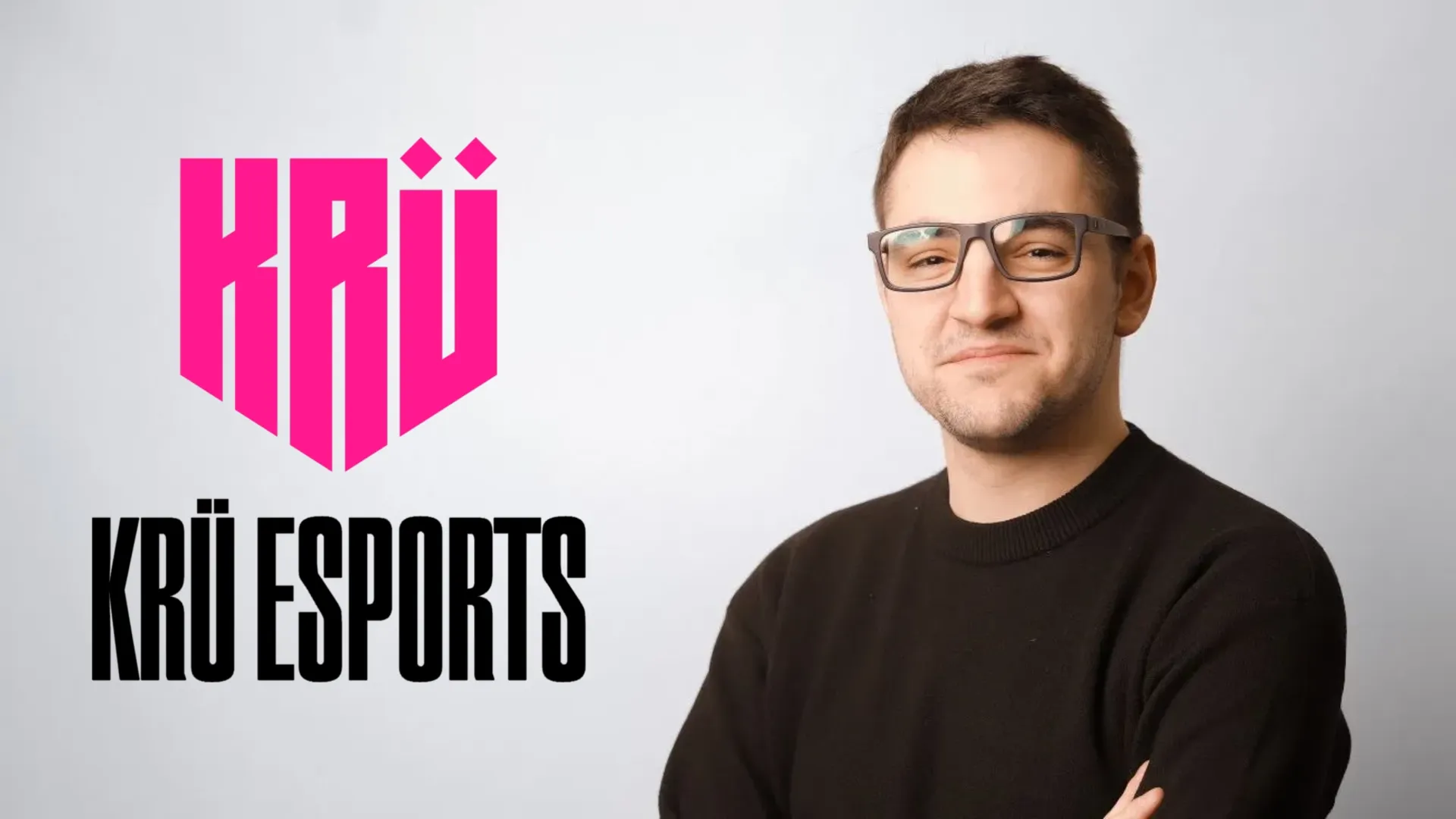
"I cannot commit in this interview to saying that KRÜ would continue with a VALORANT project in 2027 if we were not part of the partnership program"
Loading...
As the offseason gets underway ahead of major changes to the VALORANT Champions Tour, Sheep Esports spoke with Valentín Rementería, Head of Marketing at KRÜ Esports, to discuss the organization's business model, competitive strategy, and long-term ambitions. Having previously served as the club's sponsorship manager, Remería returned to KRÜ three months ago to lead its marketing department.
In this interview, Rementería discusses how KRÜ generates revenue, its plans to expand into new esports titles, and its efforts to establish a stronger presence in China. He also reflects on the team's recent competitive struggles, explains why he believes KRÜ deserves to remain in the VCT partnership program for 2027, and outlines the organization's priorities for rebuilding its connection with fans while ensuring its long-term sustainability.
To start, who are you within KRÜ Esports, and what is your role in the organization’s operations and decision-making?
Valentín Rementería: “I’m 26 years old, and I started working in esports around nine years ago, when I was still in high school. My whole career has been related to communication within esports and managing different commercial communication projects. I have a qualification in advertising, I’m very close to graduating, with only a few subjects left, and I also have some background in law.
My role as KRÜ’s marketing director comes after three and a half years at the organization, where I worked as sponsorship manager. I was responsible for managing the commercial agreements KRÜ already had with its partners and sponsors, as well as identifying new business and sponsorship opportunities. After that, I took a short break and worked as a commercial director at an influencer agency. I returned to KRÜ as marketing director three months ago.
I have a strong background within the organization, I know how it works, and I’m very familiar with its internal dynamics. Also, esports are my hobby and my passion. I do this not only because I see it as a good professional field, but also because esports are part of my everyday life. I never really switch off, so to speak: I work in something I’m passionate about, and I keep shaping my career around it.
In terms of decision-making, we have a board made up of Sergio (Sergio ‘Kun’ Agüero), our founder, and the organization’s main executives. Below that, we have a matrix structure divided between the marketing department, which I lead, and the sports department, which is now led by Atom (Jorge Noriega).
Both departments manage the club’s day-to-day operations. For the most important decisions, those affecting the core business or issues outside the usual routine, the board meets with the marketing and sports directors. We discuss the different topics and make decisions together. That is, in general terms, how KRÜ is governed.
How does an organization like KRÜ sustain itself financially? What roles do its founders-owners (Sergio Agüero, Leo Messi), sponsors, and the club’s different revenue streams play?
Valentín Rementería: KRÜ’s business model, like that of other esports clubs, is shaped by the particular nature of the market. There is not a huge difference between the model used by KRÜ as a Latin American club and the one used by G2 Esports, an organization that is more developed and has been in the market for longer. The difference lies in how developed each club is, the region it operates in, and how it can make the most of its revenue sources.
An esports club’s operations are based on two or three main revenue streams. We all work to diversify them so that no single source becomes too important and, if one of them is affected, it does not cause a major downturn for the organization.
KRÜ’s first source of income is sponsorship. Visa, Logitech, Disney+… We have worked with many partners throughout our history. We currently work with those brands, as well as Paty, an Argentine food brand that supports us at the events we organize. Our commercial focus is on making the most of this revenue stream, selling KRÜ’s advertising space and generating income from it.
The second source is the agreements we have with the publishers that develop the games and their competitive ecosystems. In some cases, publishers pay clubs a fee for taking part in and promoting their games; in others, there is a revenue-sharing system based on in-game skin sales. Each ecosystem has its own format, but these agreements are a key source of income for KRÜ.
We are also working to increase our participation in these models. The Esports World Cup ecosystem, for example, brings together a limited group of clubs from around the world. It is a space KRÜ wants to be part of if we are to continue increasing our revenue streams.
The third source is the financial support our founders may provide for new competitive projects or developments that help the club grow.
What does having a top-level footballer as the founder of an esports organization bring beyond financial investment?
Valentín Rementería: There are quite a few examples of athletes entering the esports market. David Beckham (Guild Esports) is one example, and there are also several footballers in Latin America who have invested in clubs. I think what makes KRÜ different, or what makes clubs with an athlete or footballer as a founder or partner able to keep operating, is that they do not rely entirely on that person’s profile. They make use of the initial boost that someone like that can provide, but then they develop as a club and as an entertainment business beyond that individual.
Beyond the financial side, I think the main contribution is access to a mainstream audience that is not as familiar with video games and esports. When Kun gets involved in esports, my mother, my aunt, or my grandfather might bring me a news story about it. It allows us to reach new media spaces and audiences that we would have found it difficult to reach in other ways.
The important thing is not to focus only on that audience but also to work within the niche. I think the most important spaces in communication, especially in esports, are niche communities. First, you need to win over the people who regularly follow a particular discipline, and then expand from that position. Clubs with major figures from outside esports have to work with that reality. The main advantage is being able to reach new mainstream audiences that we would not reach without someone like Sergio.
KRÜ has competed in different esports throughout its history. What factors determine which titles the organization chooses to invest in?
Valentín Rementería: When I joined KRÜ three months ago, the competitive project was mainly focused on VALORANT. We had the main team competing in VCT, an academy team, and Game Changers. Although VALORANT has always been our main game, KRÜ used to be a multi-game organization. We had a strong presence in FIFA, now EA Sports FC, as well as Rocket League and a League of Legends team.
Recently, the club had focused specifically on VALORANT, but our competitive and marketing strategies have changed a little over the past few months. We are going to look for opportunities to enter other disciplines. One example is Pokémon, with Juanfi (Juan Francisco Salerno), who is one of the best players in Latin America and is also Argentine. We competed with him at the World Championship, and afterwards he won the first regional event of the 2027 season in Recife without losing a match, qualifying for the next World Championship. We are very happy both with his performance and with the attention he is bringing us from a communications perspective.
We want to be present in niches that may not be well covered by other clubs or that are still new markets for esports organizations. Pokémon is a very well-known intellectual property with an audience, tournaments, and a competitive scene. It was an interesting opportunity to enter that world and understand how it works.

Credit: Riot Games
When deciding whether to invest in a game or enter a new discipline, the key factor is how profitable or sustainable it can be. Today, clubs are looking for profitability or, at the very least, sustainability. There are competitive scenes that offer these possibilities, and the idea is for KRÜ to start becoming part of them.
We are looking at ecosystems with partnership or affiliate systems. We are also taking the possibility of joining the Esports World Cup very seriously. I don’t want to mention the games we are looking at because I don’t want to create expectations, but our focus is on expanding KRÜ’s range of disciplines in a way that allows each one to be sustainable.
We measure this using two factors: what the publisher offers the club for being part of that game, and how much we can generate commercially from it. A game’s ecosystem may not offer direct financial benefits from the publisher, but it may have strong commercial potential because brands are investing in it, as is the case with Pokémon. The publisher does not necessarily have to provide money, but there needs to be a commercial opportunity or a relationship with the publisher that allows the discipline to remain sustainable over time.
Does that decision also depend on sponsors’ interests and the possibility of building commercial agreements around a particular discipline?
Valentín Rementería: The business model we discussed is based on two pillars. The first is B2C (Business to Consumer): what we can offer consumers so that they follow us or become part of our audience. That includes disciplines they are interested in, entertaining content, public figures they pay attention to, and merchandise they want to buy. Our audience is the central market, although that part is not always monetized directly.
The other side is B2B (Business to Business): how we get other companies to invest in KRÜ. One way is to have a discipline that interests them. If a sponsor wants to be present in a particular game, we can act as a channel for that brand to enter the Latin American esports market alongside a strong organization like KRÜ. We then assess whether the discipline interests us and whether it is viable for us to compete in it with the investment the brand wants to make. We are open to these opportunities, and entering new disciplines can also create commercial opportunities.
Is the expansion limited to new niches such as Pokémon, or are you also considering a return to established esports such as League of Legends, Rocket League, or Counter-Strike?
Valentín Rementería: Both. From a communications perspective, we are interested in niche communities as well as games and esports with established ecosystems. We are very interested in Rocket League and Counter-Strike, and of course we are also interested in the League of Legends ecosystem.
Those disciplines are more complicated because they require a larger investment and more complex financial planning, so we are more careful when considering whether to enter them. Niche scenes are good opportunities to take the KRÜ brand into areas where it has not been present before, but we are also interested in expanding beyond VALORANT into the main games.
KRÜ has now missed Champions for two consecutive seasons after qualifying for every edition between 2021 and 2024. How do you assess this season from within the organization, and what do you think has changed compared to those years?
Valentín Rementería: Missing Champions for the second year in a row is significant, because our basic competitive goal was to try to qualify every year. We achieved that during VALORANT’s first four years, and obviously failing to reach that goal affects the whole KRÜ structure.
The most specific change the board decided to make was in the leadership of the Sports department: Tom Nyogen (Tomás Castiglione) stepped down as sports director, and Atom took over. That is an initial sign that the past two years have not been our best and that the leadership has decided to take the competitive side in a new direction.
The sports department has had two inconsistent years, although KRÜ Blaze, for example, once again won the Game Changers scene in Southern Latin America and qualified for the Championship. Last year, that team finished fourth in the world. We have to remember that Latin America has fewer resources than other markets and that we compete under different conditions. We have achieved some things over these two years, but if we focus specifically on VALORANT, they have been two poor seasons: we have not qualified for any international events, and we have not competed at the level our audience was used to seeing from us.
It is also true that I consider the Americas to be the strongest region overall. KRÜ has not finished lower than sixth or seventh since 2021, which means we have remained around the middle of the standings. Even so, we consider this a bad year competitively because we did not achieve any of the goals we set at the start of the season, despite making a significant investment.
This poor competitive year is not because KRÜ failed to make the investments it considered necessary, but rather because of performance-related issues. It was more a competitive problem than a management one. Based on that, the leadership has made the decisions it considered appropriate.
During Champions, we saw KRÜ and other organizations run activations in China, even though they were not competing in the event. How do these initiatives come about, and what role does the Chinese market play in the club’s strategy?
Valentín Rementería: The reality is that China has, by far, the world’s highest audience figures and sales of digital goods within video games. If we add together all the markets where KRÜ is present — mainly Latin America, but also North America and parts of Europe, especially Spanish-speaking audiences — China is far ahead in both audience size and digital goods sales. This creates direct income through revenue sharing, so it makes sense for us to take the KRÜ brand into that market.
Leviatán has become very prominent there. It is one of the best-positioned foreign clubs in China and has done an impressive job. I think it is a success story, partly because its visual identity fits that market and it has built on that.
KRÜ has spent two years trying to build a lasting presence in China and understand the market. I think this year we have been able to carry out initiatives more consistently. We signed an agreement with ONWEAR, a company that produces merchandise for KRÜ and also works with other clubs. We also have a dedicated operational team in China that identifies opportunities and works on developing the market. We have an account on a Chinese social network with around 110,000 followers.
Any opportunity to be present in China makes sense for us, and we are investing a lot there. During Golden Week, we had a stand at a Riot event. We were one of four Americas clubs present, alongside Leviatán, NRG and G2, as well as Chinese clubs. We also took KRÜ Blaze to China for a bootcamp during the World Championship, to create content, organize meet-and-greets with fans and bring KRÜ closer to the country’s VALORANT community.

Credit: Riot Games
We also have a presence at ONWEAR’s stand and sales point, and part of our management team will attend the VCT gala in China to better understand the ecosystem. We will carefully consider the opportunities that come up, because we see China as an important market.
This does not mean KRÜ is going to become a Chinese club. We are having initial conversations to explore how we can enter with a different offer, because Chinese clubs already have that market and there are local organizations with that kind of value proposition. We are trying to understand how to bring KRÜ’s culture and Latin American culture there. That identity, with KRÜ as an underdog, made us known globally and gave audiences who might not have supported an esports club a team to get behind.
During our first years, good results in VALORANT helped us gain ground in Japan, North America and Europe. We even had sales in those markets that came from the competitive and communications presence we built at international events. Now we are trying to understand how to enter China in a similar way.
Looking ahead to 2027, what are KRÜ’s plans for its VALORANT project, and how would the strategy change if the organization were no longer part of the VCT partnership program?
Valentín Rementería: Our intention is to keep building a competitive VALORANT project and work to get KRÜ back to the highest level, as we were during the years you mentioned.
Beyond our intentions, we believe KRÜ has enough arguments in its favour to be part of the next VCT partnership program. We do not know what decision Riot will make, but, as I mentioned, competitively we have been around sixth or seventh at our worst, while at our best we have qualified for international events.
Also, apart from this year, when our skin sales have dropped, we have always been among the five clubs with the highest team capsule sales. Last year we finished third in VCT Americas and in the top 13 worldwide. We believe those are important figures. KRÜ brings an identity and a brand to the Latin American VALORANT ecosystem that have been closely connected to the game for a long time, and we believe we have earned the right to keep building a strong ecosystem in the region.
Leviatán’s work also reinforces this. It has had better competitive results than us recently, won Masters and greatly increased its presence. It is difficult for people in other markets to understand how much it takes for a Latin American organization to achieve those results. That helps increase VALORANT’s reach, visibility and presence in our region, and KRÜ benefits from that as well. I think there is a good relationship between both organizations when it comes to the regional ecosystem.
In terms of audience, we have also been among the most-watched clubs in VCT Americas. So we believe we have a case based on our following, competitive results and skin sales to remain in the partnership program. Our intention is to continue developing our competitive VALORANT project.
I cannot commit in this interview to saying that KRÜ would continue with a VALORANT project in 2027 if we were not part of the partnership program. We would have to assess profitability, competitive opportunities and the model the club could have outside the program. Even if there is a system that allows non-partner teams to generate income from qualifying, we would have to see how strong KRÜ’s project could be in that situation.
What I can say is that we believe we have the merits, despite this past year not being a good one, to keep growing VALORANT in Latin America. That is our main intention.
Looking ahead to the next few years, what would you like KRÜ to achieve, and what message would you give to the fans who continue to support the club, whatever happens with VCT?
Valentín Rementería: We have three pillars. The first is sustainability. I think any responsible club should aim for KRÜ to keep existing even after I leave the organization. As an esports fan, I can imagine clubs that were founded during the esports boom still being around when this generation and audience are no longer here. The logical thing is to work towards making the club sustainable from a financial and business perspective.
The second pillar is competition. Each pillar supports the others: for KRÜ to be competitive, it needs to be sustainable, but for it to be sustainable, it also needs a strong competitive presence, not only in VALORANT but in new disciplines as well.
The third pillar, which I think supports everything else, is winning our audience’s affection again. We want to rebuild the connection that existed when KRÜ launched and during its first years, when fans would come to our office at weekends to watch matches, fill our social media with messages and get the club’s logo tattooed. KRÜ is only six years old, which is very little time not only in esports but for any brand, and yet it managed to build that level of connection with its fans.
That is a value and a brand position we want to recover. Since I became marketing director, part of my work has been putting fans at the centre of the club. Everything we do, and everything we want to do, has to put fans at the centre of our decisions. This has been a weakness over the past year and a half, and we want to change that.
Both in niche communities and in broader markets, we want people to feel represented by KRÜ, to want to follow the club and to feel that they belong. My message to those who continue to support us is to trust the changes KRÜ is making. We will work to make you feel represented again and to keep growing.”