
06.10.26 - 16:0006.10.2026 - 16:00·15m15 Minuten Lesezeit·
Von Armand Luque
“We explored every possibility”: Game Changers organizers speak on the absence of LAN finals, plans for 2027, official broadcasts, and more
NEO looks back on LoL Game Changers’ 2026 season, addresses community feedback on the format, explains the decision to hold online playoffs, and reveals plans for a fully broadcasted finale on OTP.
Teilen
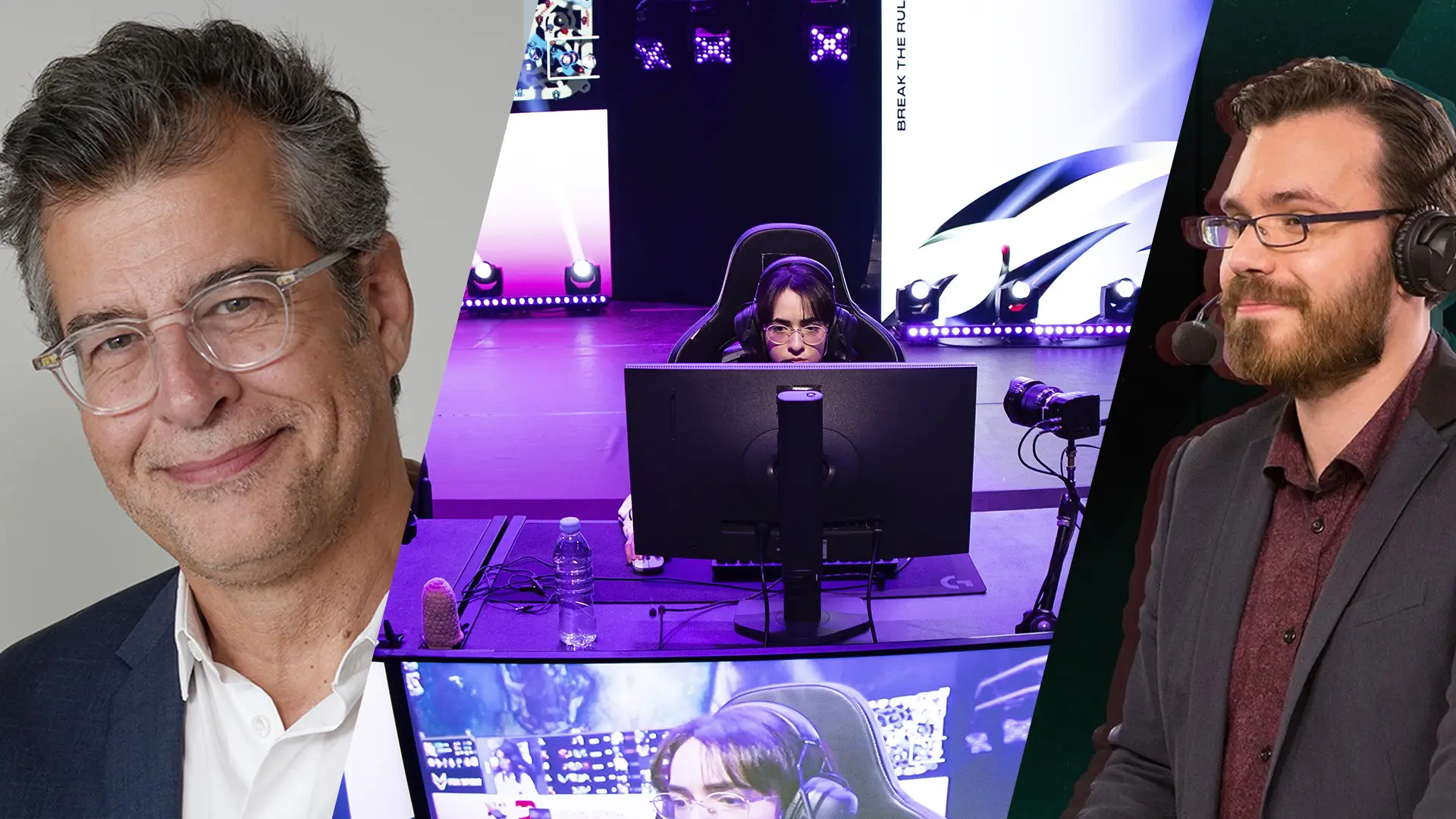
"You're looking at €100-150,000 for one day for a BO5 [...] This year, we were the ones financing the circuit [...] and we can't afford to do everything."
Loading...
The 2026 season of League of Legends Game Changers Rising is nearly over. With the playoffs on the horizon, the competition is entering its final and most important stage. Yet, the second edition of LGC has also been met with criticism from parts of the community, particularly after organizers confirmed that there would be no LAN final in 2026.
In this context, Sheep Esports sat down with NEO’s Bertrand Amar and Yoann Bouchard to discuss the community’s feedback, explain the reasoning behind the decision to forgo an offline final, and detail the organization’s plans to increase the visibility and stability of the competition. The duo also addressed the format, potential partners for 2027, and a major announcement regarding the broadcast of this year’s playoffs.
Summarizing the 2026 Season, responding to formatting feedback, and a special announcement concerning playoffs
Transitioning from 2025, and 2026’s late start
Yoann Bouchard: Last year’s inaugural edition was validated and launched quite late, so the format was fairly condensed. This year, the goal was precisely to rethink the LGC format and make it more coherent with its ecosystem, notably by offering more dates and more regular events.
Despite that, it also took a bit of time to get things started this year because our new company, NEO, didn’t come into being until March, which led us to kicking things off only in May. We did things as quickly as possible while still being careful not to launch things in a rushed way. I think having roughly one stage per month was pretty good, and it was received quite positively by the community.
One thing is that we took the time to talk to several members of the community to get feedback and present our format before launching the competition. We moved quickly, but it wasn’t rushed either. It was important to take the time to have those discussions.
If we have to take some learnings from 2026, I think obviously the goal would be to get things started earlier in the years to come. That’s the overall assessment.
Playoffs Formatting: Single versus Double Elimination Brackets
Yoann Bouchard: I know that's also something that got people talking a bit. We obviously take note of the feedback, just as we said we would last year, and we proposed a more substantial format this year.
I think it obviously makes sense to have a double-elimination format. However, when you look at the biggest competitions, like the League of Legends World Championship, their playoffs are also single elimination. So I don't think it's completely unreasonable either. But we take note of the feedback, and we would have been happy to look into a double-elimination format.
Still, it’s also something that’s complicated in a calendar that is extremely packed, notably with the WSCI, Demacia Cup, EMEA Masters, and soon, Worlds. This is only heightened by the fact that we kicked off the season rather late, and we’re now finishing quite late.
We can't just have an LGC day during a Worlds day, even if they happen at different times. So we tried to systematically choose dates when there weren't other competitions taking place, especially Worlds. And that makes the whole exercise very complicated if we want to fit in a double-elimination format.
Why will there not be offline finals?
Bertrand Amar: We explored every possibility we had until the very last minute. The decision was made only minutes before the announcement went out.
For years, Webedia managed the Paris Games Week stage. That allowed us to use that stage to showcase the Coupe des Étoiles and LoL Game Changers. Unfortunately, today, Paris Games Week itself manages its stage, so they are in charge of their own programming.
So we tried both the Paris Games Week stage and a partner stage, with which there were also discussions within Paris Games Week. In the end, it didn't work out because we wanted to prioritize a BO5. It's always a question of what we prioritize. We even considered the possibility of having a final somewhere else, but that didn't work out either.
Since we launched our company in March, we didn’t have all the flexibility or time necessary to find partners for the LGC. In 2026, NEO was the one financing the circuit with a budget that is still constrained. And when we had to make a choice in the end, we decided, and we stand by that decision, to invest in the broadcast of the playoffs… (!)
The trade-off: a fully professional broadcast for the entirety of playoffs
Bertrand Amar: That's what we're announcing today. We've decided to fund a fully fledged broadcast on OTP for the entirety of playoffs. This means that we are covering the production costs there: the studio, the casters, everything. The reason behind this decision is the same that has driven us from the very beginning as well: giving as much visibility as possible to the scene. This decision will also allow us to produce a more professional clean feed for international broadcasts.
Obviously, we’d like to check every box: have an offline final and broadcast it. But today, it’s an investment that is entirely funded by NEO, and we can’t do everything.
The question is: would it have been more worth having a smaller offline final, or an online one which is fully broadcasted and may showcase the scene to new audiences?
The goal will always be to give the scene as much visibility and stability as possible. We did just that in 2026: we created a more regular circuit to allow the scene to develop, and gave organizations the opportunity to pick up rosters without thinking, "I'm taking them for just one tournament."
Questions and Answers
Regarding the offline final, you pursued those discussions until the very last minute. Are you able to tell us when you started discussing it and how long it took to get to this point?
Bertrand Amar: Not since the beginning of the year, but since spring. It was our goal from the start, but today we can't afford to do everything.
Will you approach a potential offline final differently next year, potentially starting discussions earlier?
Bertrand Amar: No, we’ve always wanted to have an offline final, but we can’t do offline at any price. So it comes down to partners, brands that can come in and support the competition, but also partners within the ecosystem who can agree to support us by hosting a final at their venue or on their stage.
As long as we’re covering 100% of the costs, it’s subject to the economics of the competition. As you can imagine, this year, the LGC has been running at a deficit. It’s an investment and a commitment, because it’s something that matters to us.
So, I hope these explanations help explain things, because we also need the efforts we’re making to be seen and appreciated by the community, since that’s who we’re doing it for.
Can you give us an idea of how much it costs to organize a LAN, even just a rough estimate?
Bertrand Amar: A stage like the one at Paris Games Week costs between €20,000 and €30,000 per hour. For a BO5, it costs around €100,000. Those are the production costs. The stage, and on top of that, you have the costs of the competition: getting the players there, bringing in commentators, etc.
Yoann Bouchard: Indeed, you have all the expenses for the players, talent, admins, hotels, etc. It's not even a setup that's particularly extravagant in terms of cost, but yeah, in the end, you're looking at between €100,000 and €150,000 for one day for a BO5.
Would it make sense to consider smaller venues for future offline finals, such as ESpot in Paris, or would they be similarly expensive?
Yoann Bouchard: It's obviously different. The budgets are different, and we've had discussions with different venues that could also offer different stage sizes. You have to see what we prioritize.
Even if you go from a Paris Games Week final, where you have several thousand seats, to, as you mentioned, an ESpot where you might have around a hundred seats, maybe in the end it might simply be wiser to invest in a broadcast to maximize the visibility of the event.
In any case, we're not closed off to any option. Offline remains important to us, and we think it's great for the LGC. That's why we invested in it last year. That's why we explored it until the very last minute.
Bertrand Amar: And to be completely clear, it's the same budget to hold an offline final in a smaller venue as it is to broadcast it on OTP and put a lot of promotion behind it.
The choice we made was to go with a broadcast that will generate the maximum audience, because obviously, paying for the broadcast and for the LAN would be ideal, but this year, we didn't have the means to do both.
We could also have had an online final with a community broadcast, but no. We chose, in a year where the competition doesn't have a partner, to continue investing all the way through to the final, offering the community and the players a broadcasted final with a clean feed for international broadcasts.
The big question is: since you are taking on those discussions earlier this time around, can we expect partners to financially support Game Changers next year?
Bertrand Amar: Obviously, it's still a little early to talk about next year because we have to finalize discussions with Riot Games regarding our format, and more. But obviously, regarding what happened in 2026, you have to understand that partners for a competition are generally sought at the end of the previous year, because that's when they make their budget decisions and decide on their strategy for the following year.
In 2025, we were still with Webedia. Our departure and the fact that we were going to continue the LGC with NEO was not set in stone at the time. So basically, no brands could be approached at the end of 2025 for the 2026 circuit.
When we launched in March, most brands were saying, "It's an interesting product and we want to support the scene, but our budgets for 2026 are already committed. Let's talk about 2027 towards the end of the year."
This year, we're in a much more favorable position when it comes to looking for partners. The audience generated by the playoffs on OTP will also allow us to have figures to communicate, what we call KPIs, meaning data that can tell us more about our competitions and help us establish their value.
So, to answer your question, yes, it's the key issue in esports: having partners. And we've given ourselves the means to do that this year, notably with the support of influencers, but we arrived a little late on the market.
How flexible is LGC when it comes to changing its formats and decisions based on community feedback?
Yoann Bouchard: Right now, for example, there isn't an offline final. Will there be one next year? We're discussing it, but we really do take the feedback into account. That's important to us. I'd say there are three levels of implementation that can exist.
There are changes where, for example, when we announced the format, we received feedback about the schedules and the days. That's very easy for us to adjust. I think we've demonstrated our agility on that matter, and it was changed within a few days and adapted even before the first LGC stage.
Then, there are changes that are a bit more impactful, in the sense that they require some prior organization. That's the case with the Playoffs format. We can't just say, "Okay, let's do it as a double elimination," because we've already explored that option, and it's not that simple either, due to the scheduling constraints. But obviously, these are pieces of feedback that we'll take into account going forward.
And then there are elements that are less tangible, like the offline final. Yes, our desire to have an offline event for Game Changers is still there entirely, but it's not solely dependent on us. It's also dependent on the economics of the LGC, which, as Bertrand has repeated, is currently 100% supported by NEO.
Can we expect LGC to start earlier than May next year now that you're involved earlier?
Bertrand Amar: That's clearly the goal. Once again, we haven't finalized the discussions with Riot Games for next year; they're ongoing. What I can tell you is that we'll make announcements about 2027 before the end of the year. Maybe towards the end of November.
We hope the viewership for these playoffs will be high. The fact that we're now heading into playoffs with a broadcast on OTP, with the production of a very high-quality clean feed that all the community broadcasts will be able to use, we hope that will give us good viewership, which will be an element of reassurance for the development of 2027.
How do you feel about the overall reach Game Changers has had in 2026, and do you think there’s more that could be done in terms of promotion?
Yoann Bouchard: The main concern, which isn't specific to LGC, is always the same for me: at the beginning of the year, you're going to start with X number of teams, but then how many teams are you going to have by the final stage? Because it often tends to decrease at every stage.
We managed to maintain a healthy number of teams consistently, and our promotional efforts were constant. On that side of things, it was already a real success. It means there is a certain reach we’ve achieved. People know about these stages and want to participate. So the next step is to ask ourselves how do we go from 16 teams to 32, to 64, and beyond.
I think that by already having LGC, by having these stages taking place every month, having promotional support, having clean feeds made available that broadcasters can pick up and use, we're creating the foundation. After that, it's also up to the community to take advantage of it, to help grow this ecosystem, etc.
Do you also reach out to organizations to encourage them to join, or do you leave it entirely up to the organizations to decide whether they want to participate?
Bertrand Amar: We do have discussions, and we already had them last year. When organizations, including some big orgs, tell us, "LGC is nice, but there was only one tournament in 2025. What's going to happen in 2026?"
There are organizations that decided to stay, continue, or come back precisely because we showed them that this year, we were investing in a regular circuit. So obviously, part of our job is also to convince organizations that if they pick up a women's roster, there will be competition, there will be added value.
For us, that's really what drives us: giving value to this scene and offering it the best visibility and stability. So yeah, I hope that's perceived that way.
Are you hopeful that we could see more organizations joining next year?
Yoann Bouchard: We're working on it. And obviously, any organization that wants to discuss LGC projects, we'll be happy to talk about them. We've never cut discussions short with anyone. So obviously, yes, but once again, we're not the ones who are going to build the rosters for them.
Overall, are you positive about how Game Changers has evolved this year, and do you think we could see even more growth? Have you felt an accrued enthusiasm in 2026?
Yoann Bouchard: It's difficult to give a concise answer. I think there are things that were good this year. As I was saying, the format with the five stages can be improved; we should start earlier in the year. The playoffs, we took that feedback into account. There is a good structure that is, at least in my eyes, established. There are things that need to be changed, and there are things that can be improved.
Is there more enthusiasm than before? That's hard to say. The first stakeholders, beyond the organizations that can pick up a roster, are the people who participate in LGC. And obviously, every player and every team that signs up is the first driving force.
And even though we can see that there is a base that shows up, that's stable, and that participates at every stage, there's still a lack of more teams. And obviously, that's not the fault of the players who already sign up and participate, but in terms of community engagement.
I can see the negative feedback we're getting very clearly. So when you ask me whether there's enthusiasm, sometimes I have a hard time finding it on social media. But the feedback is very clear, and once again, we take it very seriously. It's important for us to have this feedback.
But as for community enthusiasm, I still have a hard time seeing it.
Do you think people are perhaps too negative on social media?
Yoann Bouchard: Not necessarily. The algorithms on social media sites might be more likely to amplify people who have something stronger to say than someone who simply thinks something is good. Maybe we feel less of a need to say something when things are good, and that's normal. The goal here isn't at all to put the blame on anyone.
Does that indirectly mean you're encouraging people to highlight the positive things a little more?
Yoann Bouchard: No, that's not the point. We really don't need to be patted on the back, we're used to it.
If we were to call for something, it would be to continue talking about women's competitions. For us, that's LGC, but obviously, there are lots of great initiatives throughout the year, every year, around women's competitions that are great. There are also things happening at a grassroots level that are great. So all of that helps more and more players become interested in this community, want to participate in it, and potentially sign up for LGC.
Don't forget that your voice is the most important one when it comes to talking about these things.”
