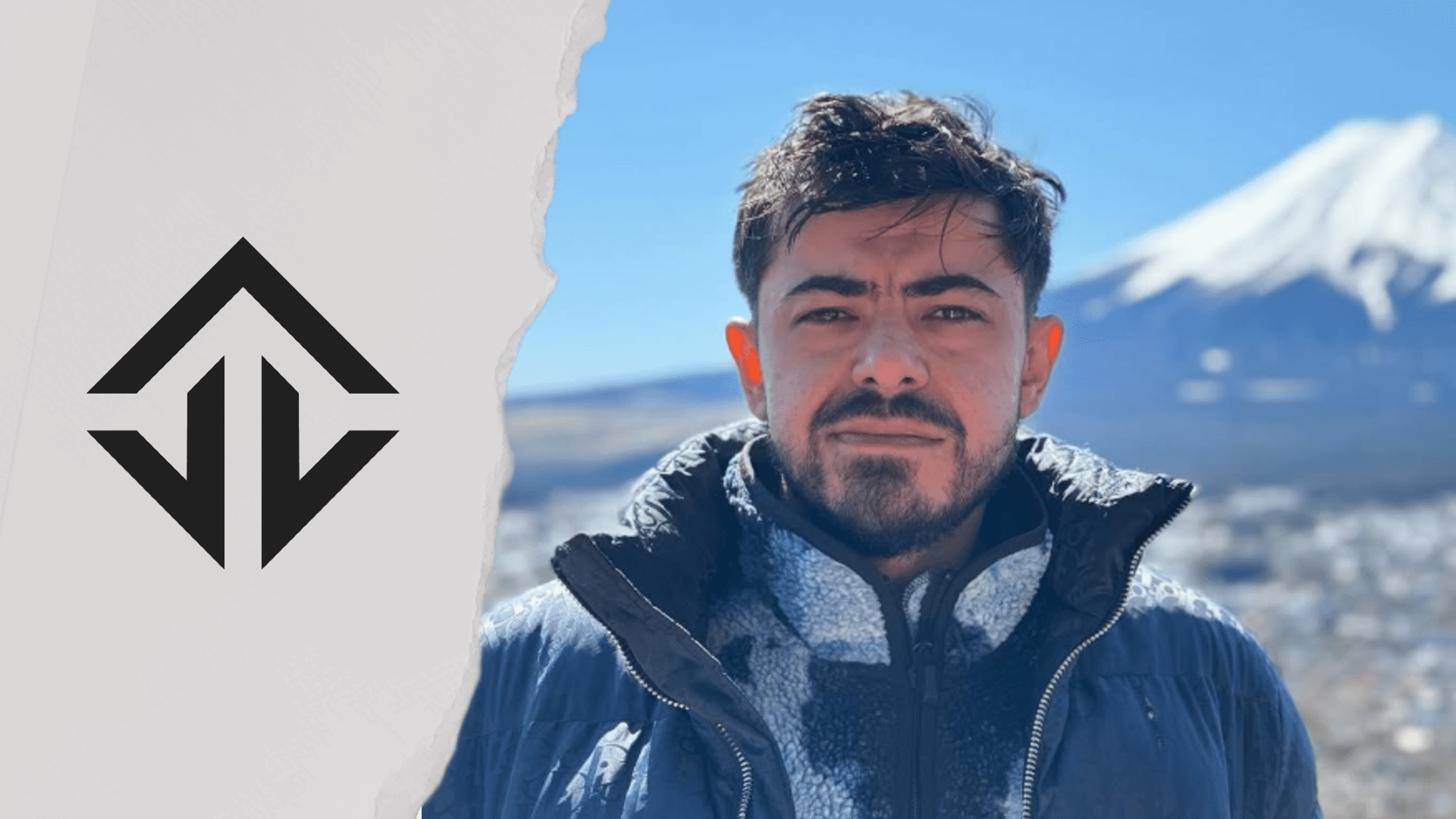
Co-owner of Joblife alongside Toma
"Tomy" Abdellaoui and a central figure in the project, Samuel
"Impulse" Benitah agreed to answer
Sheep Esports' questions to revisit JL’s entry into FPS esports, the reasons that led the organisation to commit long-term to
VALORANT, and the decisive choices made across successive seasons.
Between a turbulent 2025, defined by an intense campaign, and a 2026 season that already looks compelling, Samuel Benitah takes stock of
Joblife’s trajectory while laying out clear ambitions. With Riot Games announcing that Tier 2 teams will be able to access
Champions 2026, the stakes have shifted: JL no longer wants to merely dominate the VCL, but to give itself the means to knock on EMEA’s door.
You work as a talent agent/manager. How did you end up creating JL, and what is your role within the organisation?
Samuel Benitah: "I’m an agent for streamers and public figures. Alongside that, I run a management and marketing agency. At JL, I’m mainly responsible for everything on the VALORANT side: I genuinely oversee the project from A to Z, because I know the scene extremely well and I’ve been playing the game since day one. On League of Legends, I handed things over to Ashanome (Léo Deseuste), simply because I don’t connect with LoL at all. Beyond JL, I’ve supported Toma since the start of his career. We were involved in the creation of Prism at one point, with other people before JL, and even before my agency. On a more personal level, I’ve been immersed in competitive esports since I was a kid, especially on Call of Duty and Gears of War. I’ve always had that urge to build teams, structure them, and keep them alive.
How did you reach the point where you said, “We want to go into VALORANT”?
Samuel Benitah: I’ve always been part of this world: I attended a lot of LANs, and esports has always been a real passion. I’ve constantly had the instinct to start projects, build rosters, and give them direction. Then, at a certain point, Toma and I had an opportunity to make it real. Originally, Joblife comes from the name of Toma’s group,
“Jobless”. We wanted to draw a clear line between the two worlds, hence Joblife, with the slogan
“From jobless to joblife”, because we were moving to a structured project: recruiting, professionalising, and getting away from the jobless/unemployed gimmick. In 2021, we initially started on
League of Legends because we had an opportunity to enter Division 2. After that, there was drama, and the project split up. Today, we’re surrounded by much better support:
Kada,
Wati, and other people back us. For
VALORANT, it was more natural; Toma and I are FPS enthusiasts. I competed on
CoD, on
Gears, and a bit on
Counter-Strike, so
VALORANT truly fit us.
LoL was an opportunity;
VALORANT is an obvious choice.
From a competitive standpoint, do you think JL’s 2025 was a success? What was missing to reach the Ascension Finals and move up to VCT EMEA?
Samuel Benitah: 2025 was defined by a strong Split 3: we performed well. But the Challengers EMEA format leaves virtually no margin for error. The loss to ULF Esports cost us qualification for Ascension: we missed out by a single point and finished 9th when it was top 8. We did get a second chance because of the RAAD situation and were brought back in. The problem is that we arrived with less preparation and, above all, with visa issues, meaning fewer players available.
We brought in kAdavra (Thomas Johner) as a replacement: I saw his tweet, contacted him immediately, because I knew he was the profile we needed. He’s strong; he adapts quickly, and because he isn’t the kind of player who relies heavily on set plays, integrating him was easier. On the entry role, it was more complicated: we picked up stonezy (Albert Makushev). Overall, the team functioned well. The start was logically difficult because we were the last seed. Still, we fought back all the way to the match against DNSTY for a spot in the Ascension final, then everyone got sick.
Photo by Michal Konkol/Riot Games
I won’t lie, it was surreal: some people were throwing up during the game. We weren’t allowed to have substitutes on site because we had already made two roster changes, which was the maximum permitted. So we played while sick. Obviously, when your IGL and your Sentinel are out of it, there are no calls, no structure, it’s extremely hard. That said, we also made a lot of mistakes: you can’t put everything down to illness. But yes, without that, we clearly would have had much better chances.
How important is it for JL to take care of staff and players? What makes a player or coach feel supported, confident, and genuinely attached to the jersey?
Samuel Benitah: It’s a combination of things. Today, everyone talks: if you’re doing a poor job supporting people, it gets around quickly. If you’re reliable and professional, that gets around, too. I have one simple rule: if you’re with us, you’re taken care of. I used to be a player; I know what it’s like to be poorly managed. So if I want you at JL, I do what’s necessary to make you comfortable: you have what you need, you’re paid on time, and you’re in a healthy environment. We also try to be present day-to-day: I regularly check in and jump on calls with the players. Toma does too, he sends some messages. It sounds trivial, but there are owners who don’t even reply to their players. We want presence and recognition. And we provide as many tools as possible to help them succeed: marketing, financial support, and organisation. In bootcamp, players know they’ll be welcomed properly. There’s a family element, and in the end, it’s those details that make the difference between a solid organisation and a bad one.
Riot announced that Tier 2 teams will be able to reach Champions this year. Is that an objective? What are your ambitions for 2026?
Samuel Benitah: Yes, that’s the objective. That said, I’m not in denial; we’ll see on the server. For 2026, winning the VCL isn’t even a debate: it’s the goal, period. Then, at the European level, I need the organisation to take a step forward. Every year we improve, but the gap we still need to close is clearly in Europe. In 2026, we have to be able to do better at that level.
Many people are wondering why some talents from the 2025 roster, like Ryad "sh1n" Ensaad, weren’t retained. What drove the rebuild around the staff and Egor "chiwa" Stepanyuk?
Samuel Benitah: For sh1n, it’s simple: he chose to go to MANDATORY. There’s nothing else to debate. As for rebuilding around the staff, it’s because I trust them completely. Right now, there’s a major shortage of IGLs. And Larsson (Kevin Bernand) is among the very few, maybe the only one, who can build IGLs from scratch. To me, it’s the best coaching staff in Europe right now. And chiwa was also an obvious decision: he came to us and said he wanted to stay at Joblife without even doing trials. When a player tells you that, you understand the project matters to him and that he feels good here. Beyond being strong, he’s also a genuinely good person. And if he isn’t in the VCT, it’s mainly because of his nationality: he’s Russian, so visas become an issue. There have been interested VCT teams, but that’s where it gets stuck. We’re working on his visa and we’ll do everything we can for him to obtain it and play in France.
With Maks "kamyk" Rychlewski returning, and the additions of Enzo "Enzo" Mestari, Domagoj "doma" Fancev, and Emil "runneR" Trajkovsk: if you had to give one defining quality for each player, what would it be?
Samuel Benitah: Enzo, I’d say it’s his work ethic. He’s a real grinder, calm, capable of guiding a team. A captain. For Doma, his versatility and reliability. He received a strong endorsement from Boaster, and he was very clean in trials. He can play anything; he’s underrated, motivated, easy to live with, and vocal when needed. A dependable option. For kamyk, his raw level. He’s a machine. He’s had behavioural issues, let’s be honest, even with us back then. But today he wants to change, he’s making efforts, and we’re going to support him fully. The switch to smokes was Larsson’s idea, and I think it’s excellent: he sometimes tends to bait, so that role forces him to play more as a team. And for runneR, his potential on the Duelist role. I can’t say too much yet, I haven’t seen enough of him, but he surprised everyone in trials. The issue is that we had him play a lot of different roles even though, initially, he’s an entry. We want to put him back on his fundamentals: duelist.
You extended the coaching staff. How did you decide to keep trusting them?
Samuel Benitah: Because I trust them, quite simply. As I said, we lack IGLs, and Larsson is one of the few who can develop them; technically, he’s exceptional. He lives VALORANT morning, noon, and night. SKAZZ is a long-time friend, he’s excellent with the human side, and he was even one of my students.
Joblife went through a period without sponsors after its early days. To what extent did that slow the club’s growth? And did dominance on the French circuit help?
Samuel Benitah: At the start, we had sponsors: Sergio Tacchini and Wethenew. Then there was drama, so sponsors didn’t necessarily renew. There were external factors too: Sergio Tacchini was acquired, which made things more complicated. The following year, we found ourselves without a sponsor. We had to fund everything ourselves, from A to Z. And that probably set us back by three years compared to what we could have achieved. As for results: yes and no. Results help, but in reality, many sponsors don’t care that much about pure scorelines. What matters most is image, metrics, visibility, and time because you need to let a project establish itself.
You invest heavily. Was there a moment when you considered stopping everything?
Samuel Benitah: Yes, of course. When you put €200,000 to €250,000 of your own money in, at some point, you ask yourself how long you can keep going. But I always believed in the project. The question wasn’t "Is this going to work?", it was "How long can we absorb it?" And the proof is there: thankfully, we didn’t stop. Today, we have very strong sponsors that I can’t announce yet, but we signed them this year. Above all, we have an incredible community. Without it, we would have shut down. There’s the financial side with Twitch subs, merch, support, but also the energy: they’re there in the good times and the bad. Watch parties, IRL events, they always show up. That’s why we’re here.
For a streamer who owns an esports organisation, how important is streaming? And how did you turn that fanbase into club supporters?
Samuel Benitah: Streaming is essential, because Toma is authentic. He’s real, he’s natural, and that makes people want to follow him and support what he builds. People identify with him, and since it was a new project, they wanted to push alongside him. Joining a club and a community matters a lot too: people like belonging to something, sharing a story, wearing a jersey. Toma knows how to rally people around a project, and he did it with his viewers: they go all-in for JL. And it’s public: I don’t put a single euro into Joblife, everything is financed by Toma. I work on the project, but he funds it. He has always believed in Joblife. Without the community, we would have closed."
Header Photo Credit: Samuel Benitah