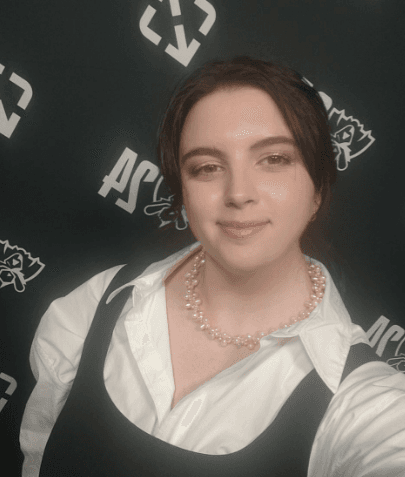
delivered the kind of opening series that leaves more questions than answers.
A 3-0 win at MSI 2026 against
keeps the tournament run alive, but shaky coordination and inconsistent execution made it clear there is plenty of work ahead for LCS’ first seed. And few players are as candid about their shortcomings — or as willing to openly challenge the media to ask more interesting questions — than one of this year's first-time MSI attendees.
In an interview with
Sheep Esports,
reflects on the team's uneven performance, the communication issues that surfaced on stage, Inspired's leadership behind the scenes, and his own standards as a top laner of the LCS. beyond what lies ahead at MSI, Dhokla also shared his thoughts on the packed competitive calendar and EWC's place in the LoL Esports' ecosystem.
You won 3–0 but it didn't feel clean, and the broadcast also highlighted that. What mattered most to you, the score or how the games looked?
Niship "Dhokla" Doshi: "Obviously the score. We definitely didn't want to lose and be in the BLG-T1 Gulag match of whoever loses that. That's going to be a hard match. So glad that we won, but obviously we want to show better, have a better showing and play better because what we showed today is not going to be enough, nearly enough to beat those teams in front of us from now on. So glad we were able to win, but it was not clean at all.
In the first two games you guys seemed really unstable, do you reckon that's an issue of execution, or more of a deeper structural issue within your team?
Dhokla: Yeah, I mean, the vibes felt kind of off. I'm not sure if it's just our first match at MSI, but yeah, definitely the vibes were off and it didn't feel like we played like we normally would. So definitely going to have to talk about that in the coming days to figure out what went wrong and what we need to change because if we play like this, we're just going to go home fast. I definitely don't want to do that, so we're going to have to address that.
Can you talk me through what happened between game 2 and game 3? Behind the scenes, when you went back to your team room, what happened?
Dhokla: I mean, we're kind of just watching over some of the fights that we messed up on and giving our opinions on how the play went and where we went wrong. Then we just move on to the next game and try to fix that issue of being connected. I think that was the biggest gap in game 2. It's like Kacper (Inspired) wants to go for the scuttle crab and the rest of the team is not ready, so it looks like we're very disjointed. Typically, this doesn't happen as much as it did today, so we definitely need to address that as a team.
I'm curious about something that Sjokz said after the match. She said something along the line of "when there's a backstage discussion, Inspired is usually the one talking to the coaches." Is that something that happens often? Is Inspired taking charge for the team, or was it just a one-time thing?
Dhokla: No, that's definitely how it goes down. He has a strong opinion, and I think jungle really is a central role where everything is facilitated through them. So he has a clear point of view of how the game should progress and what we did right and wrong around that. So we just listen, change what we need to change, and try to be on the same page.
It feels overused because every player says "be on the same page," but if you look at the fights… for example, in game 2 I was around Raptors trying to stack mega while Galio was TP-ing with Ult coming down, and we went into the scuttle crab fight right away. Maybe I should have been there instead of stacking mega, but we also needed to wait for Galio. It's just that we were a little disjointed. In the end, the result looks really bad, and that's kind of been the series. I mean, in Game 1 I kind of ran it down, but my team carried me through it. We definitely need to be more connected.
There were a lot of online comments after game 1, but it seems like the quadra-kill with Varus in game 3 kind of shut everyone up.
Dhokla: Yeah. I mean, I don't think I did much. I just played the game, and Kacper (Inspired) really sacrificed his game to make my lane playable. So I just did my job in that game as well.
Do you think top lane, especially at international events, is more about generating advantages now, or just not losing agency for the rest of the map?
Dhokla: I don't think it's necessarily either of those. It's more about whether you play the matchup to the expected value of what your champion should accomplish.
So in the Jayce game, I didn't play well because I didn't get a significant gold lead in lane. I knew the lane swap timer was coming, and I could have controlled the wave better. In that game, I failed my job. I just look at it as: did you fulfil what was required of your champion? That's the way I think about it.
You're going up against either T1 or BLG next. I don't want you to reveal your strategies, of course, but are you treating this as a different kind of match compared to playing anyone else?
Dhokla: No. I think our preparation needs to be similar. We're not going to change much in two days. It's really just about not making these basic mistakes, and then we might have a chance in those series.
Obviously they're two of the best teams in the world, so it's going to be hard no matter what. But if we trip over ourselves, we won't have a chance at all. It's really about limiting your own mistakes before they put you in situations where you have to outplay them. If you outplay yourself first, then you won't have a chance. So basically, don't lose to yourself.
Earlier this year you said that Bin and Zeus were the top laners you least wanted to face, and you seem to hold yourself to a much higher standard than most players, in my experience. Do you think having respect for another player—knowing they might be stronger than you on any given day—is something you developed over years of pro play, or is it just part of who you are?
Dhokla: I'm not sure I fully understand the question, but I'll frame it this way: I really respect how consistently they're able to play their matchups and generate leads in the lanes they pick. That's kind of the benchmark for how those matchups should go, and you should try to reach that standard. So when I play against them, I try to do the same thing, but obviously it's hard.
I was trying to understand whether that's just who you are as a person, or whether your experience as a player shaped the way you think about other players.
Dhokla: Yeah, it's definitely my experience as a player that led me to this mindset.
I want to take a step back from MSI and talk about this year's calendar. The current global calendar is almost unsustainable for some players—you have MSI, then EWC, then Summer Split, then Worlds, and so on. In your opinion, has the calendar quietly become part of the competitive skill gap?
Dhokla: No and honestly, I'm grateful that it's so busy because I think about the alternative.
I was talking to a couple of friends after we won Finals, and I said I was more grateful that we didn't lose than that we won, because if you don't win, then you don't get to play any meaningful matches for at least a month and a half. You're basically doing nothing for that entire time.
I'd rather be busy for a month and a half than do nothing for a month and a half and just wait around. Not being able to compete is really hard. So I'm glad we're in a position where we have the opportunity to keep playing. If that wasn't the case, I think I'd be really, really depressed.
Do events like EWC create a more complete competitive ecosystem, or do they risk fragmenting preparation and focus away from Riot's official circuit?
Dhokla: I don't think they necessarily take away from it, but it is a really fast tournament. When I looked at it, it was something like a four-day tournament with a lot of teams, so it's going to be very fast-paced.
I don't think it really takes away from the competition. Maybe it kind of dims the spotlight on MSI because there's another tournament immediately afterwards with most of the same teams attending. In that sense, it can take away a bit if there's a different winner. But yeah, it's another tournament for us, and I'll take it.
As a last question, this year's Worlds is being held in the U.S. Given international travel and current government policies — especially around visas and entry clearance — do you think some players or teams could be affected in ways that are outside competitive control?
Dhokla: Yeah. I mean, I don't really know what to say politically. I pretty much got a job because of a visa back then, so that's already step one for me. Anything could happen with this administration. I'm not a fan of it, but I'm not really factoring that into who we play against."