Diamondprox: "The more I streamed, the more I realized being a pro was terrible for my health"
Four years after retiring, Diamondprox sits down with Sheep Esports to reminisce on his career.
00
Share
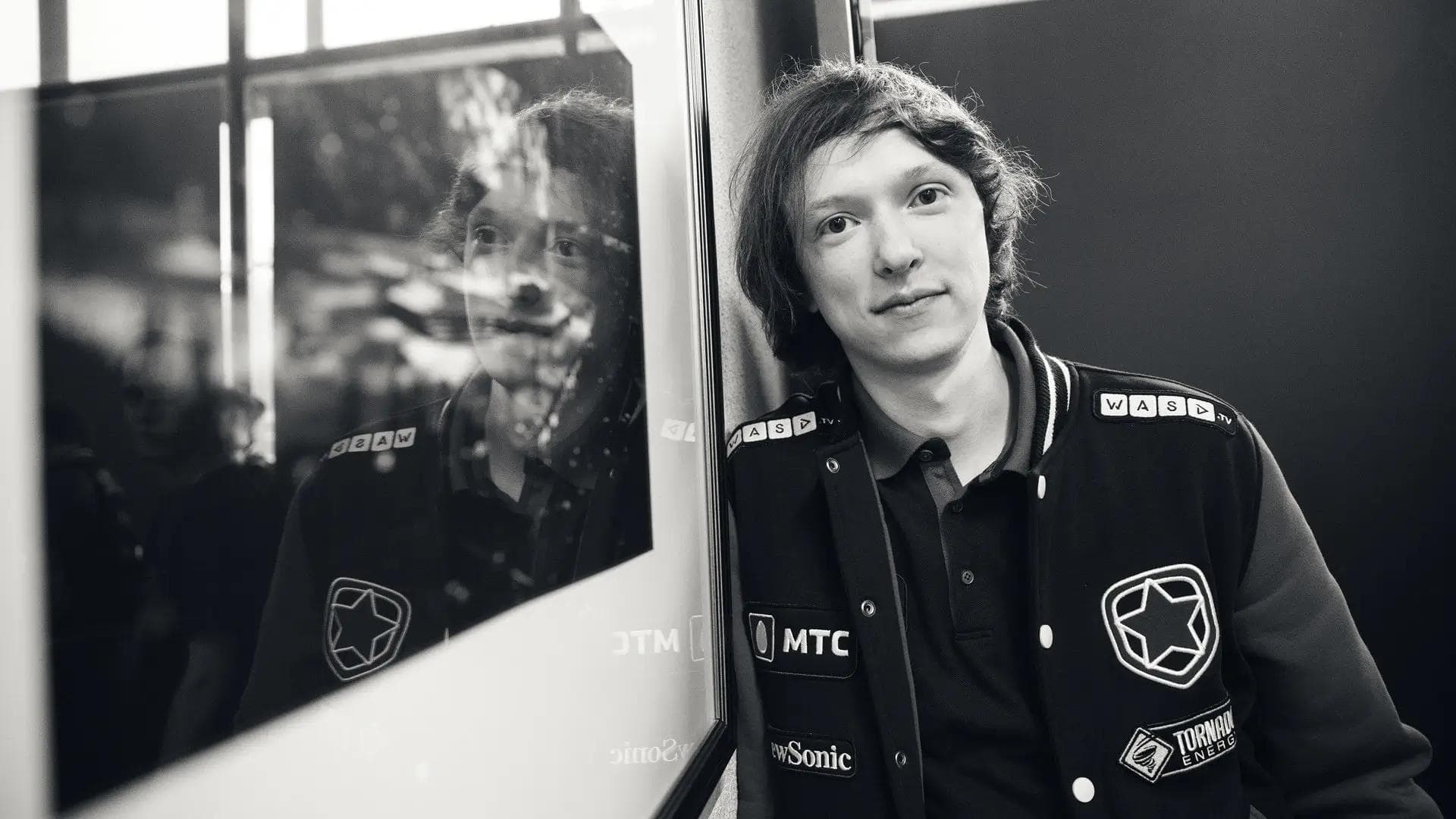
Danil "Diamondprox" Reshetnikov, former legendary jungler, known for his time under Moscow Five and Gambit Gaming. Credit: Gambit Esports
"At certain points in my career, I was almost at rock bottom, but I would still gather strength and push through. I just didn’t see any other options. I couldn’t let my team down. I couldn’t let myself down by not working hard enough."
Loading...
Loading...
Hailing from Saint Petersburg, Russia, Danil “Diamondprox” Reshetnikov is a name that may no longer resonate with younger viewers—but one that once stood at the very pinnacle of European League of Legends esports. A World Championship semifinalist in 2012, Diamondprox was the beating heart of the legendary Moscow Five, later Gambit Gaming, and a defining figure of the game’s early competitive era.
Renowned for his innovation and fearless approach to the jungle role, he helped shape how the game was played at the highest level. For years, he remained one of Europe’s most respected talents, before his career was abruptly disrupted by visa issues. He would later reinvent himself in the CIS region, continuing to compete until the league’s closure in 2022 following the Russo-Ukrainian war. After further setbacks in the European Regional Leagues, Diamondprox has since stepped away from professional play, turning to streaming.
More than thirteen years after standing among the world’s elite in Los Angeles at Worlds 2012, Sheep Esports sat down with the former pro turned streamer to reflect on his legacy, the state of the Russian-speaking scene, his relationship with former teammates, and his new life in content creation.
You recently subbed in for Bushido Wildcats at EMEA Masters after being away from pro play for a while. What led to your return—did Edward "Edward" Abgaryan reach out and ask you to step in?
Danil "Diamondprox" Reshetnikov: “Yeah, I was sitting, chilling, preparing to stream, and then Edward hit me up with, “Hey, are you here? It’s important—can you play? We have jungle troubles.”
I didn’t mind. I really like playing competitively. I just don’t enjoy the practice side as much because it takes a lot of time and effort, but coming in as a substitute is actually enjoyable. You just get to play pure League of Legends without having to spend months grinding with a team and going through all that. So it was actually fun for me.
Do you miss the competitive aspect of pro play, or do you prefer streaming at this point?
Diamondprox: I miss some aspects. People often come to my stream and ask if I miss competitive play, and I usually say no—for the most part. What I really miss is playing on a good team. When you’re on a good team and feel like you can achieve something together—something truly great—it’s very enjoyable. You help each other, work together, discuss things, and spend a lot of time together.
“But in my career, I played professionally for about 11 years, and only around a year and a half of that was in truly good teams.”
Most of the time, I had maybe one or two strong teammates, while others were either not as good as players or not the best to work with. When the environment isn’t right, I’d rather just stream and chill. The competitive aspect is still there in solo queue—you’re still competing with other players—but without the need to rely on teammates, which can be frustrating if you don’t get along well.
When you think about the best team you played on, would that be Moscow Five in 2012, or maybe early Gambit in 2013?
Diamondprox: Yeah, for sure.
You reunited with Edward for a short time—have you stayed close over the years?
Diamondprox: We have a very long relationship. We’ve been together since the early days, then separated, then played a couple of splits together in the Russian league, then separated again. After that, he called me to play for FURIA in Brazil, where he was coaching, so he was coaching both me and the team.
So yeah, we have a long history. I like him as a person, and I like him as a coach—he’s a great guy. It’s always really nice to spend time together.
“Sometimes I wish I could play with my old teammates again.”
Not necessarily League of Legends though. Some of the Moscow Five guys don’t play it anymore—like Genja (Evgeny Andryushin), for example, you just can’t convince him. And League isn’t even my favorite game either. I enjoy solo queue, but I don’t see the point of playing as five just for fun. If you’re not trying to be a good team, it’s not really for me.
There’s also no other game we all play together, which is a bit sad. Regardless, every time I do get the chance to play with them, it’s always enjoyable.
What’s your favorite game these days?
Diamondprox: I don’t really have a favorite game. League of Legends is my main game nowadays, but it’s not a game I truly love. I admire Riot Games because, in my opinion, they’re the best company I’ve ever seen in terms of developing a game.
The League of Legends we have now is vastly different from how it was at the beginning. I don’t think there are any other game that has ever improved as much over time. I really enjoy League as a game, but it’s not my favorite. I used to love other games more, and now I mostly play League because other games suck.
You mentioned Genja—are you still in contact? I know Evgeny "Darien" Mazaev still streams on Twitch, Alexey "Alex Ich" Ichetovkin works in the US as a programmer, and Edward is still coaching, but we haven’t really heard from him.
Diamondprox: Actually, about Alex and Genja—I haven’t talked to them in about two years, so I really have no clue what they’re up to now. I can’t really say.
The last I heard, Genja was working as a programmer in Russia. We had planned to play Diablo 4 together when it came out. We were pretty serious about it, but I got a bit busy with other stuff, and when I finally had time, I realized Diablo 4 was really terrible, so there was no way I’d play it for long.
How is your life as a streamer these days, and what made you decide to switch to streaming?
Diamondprox: There are two things. I became a streamer mainly because of the situation with Bifrost, where they scammed me for money. It was a deal with one of their CEOs—they asked me to stream a few times to promote their brand. I agreed, thinking I’d get paid, but they never actually pay me shit. From those streams, I realized I had gotten better at streaming.
“Back when I was in Moscow Five and Gambit, I streamed only a little. Even a six-hour stream could bring like $500 in ad revenue.”
So many people watched, but I felt really uncomfortable in front of the camera. I was self-conscious, afraid to eat on camera, and had to focus on not looking stupid. Over time, I relaxed, watched other streamers, and learned from them. Eventually, I realized I could probably do streaming full-time.
By then, my pro career was coming to an end. I wasn’t performing as well, and there weren’t good opportunities anymore. I tried streaming in English a bit, but Russian felt much easier—it’s simpler to express my thoughts and get to the point. I really like interacting with the chat in Russian because it’s harder to do the same in English without studying it more. Occasionally I think about streaming in English, but my audience mostly wants Russian streams, so it’s harder. Hopefully one day AI will allow real-time translation of streams—it would be amazing.
Streaming is very fun. I enjoy it, though sometimes I don’t feel like streaming and I get bored of it, but the show must go on. The frustrating part is dealing with bans and shutdowns. For example, we created a Discord server with people from Russia, then Russia banned Discord. We made a YouTube channel, and it got banned too. Now we’re on Telegram, and Russia is trying to ban it. It’s an almost never-ending cycle of being shut down. Aside from that, overall, I really enjoy streaming.
Can you actually make a living from streaming, and how is your life outside of it?
Diamondprox: If I could live as a pro player, I can definitely live as a streamer. I think the best thing you can do as a pro player is to achieve something and then turn your popularity into streaming. It’s not really worth pursuing anything further in terms of money or the energy you have to invest.
Of course, some players just want to keep competing—that’s their goal. I’m a bit different. I really like competing, but only if it’s with the right players. I don’t really want to go through a B-tier team and struggle like that. That’s just how I see it.
The LCL being closed down in 2022—especially with you about to join Team Spirit—felt like a turning point for you. How did you go through that?
Diamondprox: It was pretty sad. Not because I particularly liked the LCL—it was mismanaged and had a shit ton of issues. I think the structure of small leagues doesn’t really work. If you don’t have enough strong players for at least six teams, then it just isn’t competitive.
In the LCL, we usually had maybe two to four teams at best that were actually competitive, and the rest were very bad. That created a situation where you spend a lot of time playing against weaker teams. You still have to prepare for them because they will try like their lives are on the line in order to beat you, but at the same time, it doesn’t really help you improve.
You also spend a lot of time traveling to the studio, playing matches, and traveling back—so basically two days a week are gone without much practice. On top of that, the quality of scrims in LCL was worse than in other regions, even if you were one of the stronger teams.
I really didn’t like LCL much, but I also didn’t like that it was closed. When we joined Team Spirit, it was honestly the best organization I’ve ever been part of. They really understand what players need to succeed, and it was a very enjoyable environment. I really liked my team. It’s just unfortunate how everything ended.
Do you think there’s a case for bringing the LCL back someday?
Diamondprox: I’m not sure. It would be good if the LCL came back. Now it would be part of EMEA, and there wouldn’t be a way to go to international events anymore, right? I suppose with the recent format changes there would potentially be a way through the LEC Versus, like Los Ratones who had decent results there. Maybe Riot will implement new rules and change how things work in that regard.
“It’s become very hard for Russian-speaking players to find new teams, for many reasons—immigration issues, language barriers, and the need to learn English.”
The closure of the LCL made things about three to five times harder for players of the CIS region to compete. It’s much harder now to become a pro player as a Russian speaker. Even so, I still think the region has some strong players, and it would be nice if a successor to the LCL were to be made.
At times in history, there were multiple teams and players who were insane and capable of achieving great results internationally—not just Moscow Five. That possibility is why I’d still like to see the LCL return. The Russian-speaking community itself is relatively small—many people play Dota 2 instead of League—but that is slowly changing. More and more people are getting into League.
And maybe, in the future, I’d consider coaching if the right opportunity came up. But I wouldn’t go back to playing competitively myself—it’s too hard, I don’t enjoy it enough anymore, and it’s just not worth it for me, even though it’s still interesting. The only way I would play would be if I were to join a Russian-speaking streamer team.
When you realized your career was ending—around the time of Bifrost—how did you feel about retiring from pro play?
Diamondprox: I didn’t really realize that I had to retire. There were just no good opportunities to join strong teams, so I figured it was better to start streaming. I still had the thought that at some point I might come back as a pro player.
“But the longer I streamed, the more I realized that being a pro player was actually terrible for my health.”
When I was competing, I would always prepare for the split no matter what. At certain points in my career, I was in a really bad mood—almost at rock bottom—but I would still gather strength, push through, and do my best. I just didn’t see any other options. I couldn’t let my team down. I couldn’t let myself down by not working hard enough.
So I went through periods where I was really struggling just to keep playing at a competitive level, but I only understood that later. Looking back now, I can see that I went through a lot and struggled in some situations, but at the time, I didn’t fully realize that I was truly suffering.
When did you feel this shift start?
Diamondprox: I think it started when I could no longer play in the EU LCS because of visa issues. In the middle of Spring 2016 with Unicorns of Love, they introduced a rule which made it so you could only play if you had a work visa. Because of the situation in Russia, getting a work visa for Germany was very difficult. After that, everything kind of went downhill.
Some good things happened later on, but even those were very stressful. When I went to NA, it was also very bad, even though I didn’t fully realize it at the time. I’m the kind of person who doesn’t really understand how I feel until time passes. Only when I look back do I understand what I was going through. That’s usually how it works for me. In NA, I didn’t realize I was suffering, but now I can see it was actually horrible.
When I rejoined the LCL, I think that was the peak of my emotional pressure. It was a turning point. Not only did I rejoin, but I also had to build a team for Gambit. I tried my best, but I wasn’t very good at forming a team, and we ended up finishing around fifth or sixth. There was a lot of pressure to create and manage a team.
But the hardest part came later, when we regrouped and some of the best players in the LCL joined Gambit—like Edward, PvPStejos (Alexander Glazkov), and Kira (Mykhailo Harmash). It was a very strong roster, and that made it even more stressful. Not because of the team environment, but because I felt that if I didn’t perform well with such a strong team, it might mean I wasn’t that good overall. That was fucking stressful for me.
Looking back at your 11-year career, do you feel proud and satisfied with everything you achieved?
Diamondprox: Ah, I don’t know... I don’t think I feel satisfied. I feel more regret and sadness about things than anything else. There are many things I would do differently now. I realize I could have handled some situations much better than I did.
At the beginning, I was more focused on myself as a player. But over time, I realized I actually had the ability to help others and improve their level as well. If I had focused more on helping my teammates get better instead of just myself, it would have led to better results. I could improve myself only a little each split—maybe 5% or 10%. But I could have helped others improve much more than that. Back then, I didn’t really understand how or why to do that.
“I do have a lot of regrets, but overall, it was still a very fun part of my life.”
If you could give one piece of advice to your 2012 self, what would it be to change how things turned out?
Diamondprox:[Pauses] I would have told him to play all the other roles, learn the game, see the whole picture, and teach others.”
Armand Luque is an interviewer and journalist with deep roots in the EMEA League of Legends scene. A veteran of the esports world, they hail from France and are best known for their work on Leaguepedi...