Rogue’s exit from the LEC in 2025 marked the end of a remarkable six-year journey. From their franchising debut in 2019 to a historic championship win in 2022, Rogue have left an indelible mark on the European esports scene. While they are not the first team to leave the LEC—Misfits Gaming, Schalke 04, and Origen (then Astralis) departed in previous years—it was the first time the competition lost one of its champions.
Before the start of the first LEC season without Rogue and ahead of the Sheep Esports team presentations, this article offers a detailed look back at the club’s time in the league, combining a historical overview with personal insights from three iconic players: Markos "Comp" Stamkopoulos, Steven "Hans Sama" Liv, and Emil "Larssen" Larsson, who helped shape the organization’s European saga.
"The biggest turning point was when Hans Sama joined"
Rogue joined the newly franchised LEC in 2019, a period when the league itself was evolving from the old EU LCS format to a stable, franchised ecosystem. Their debut split was challenging, as they finished last, but it kickstarted what would be a rapid ascent. Midlaner Larssen recalls those formative days with perspective:
“In 2019, we surprised many by reaching playoffs. The team matched so well, and people didn't expect us to play that well,” he said. “The biggest turning point was when Hans Sama joined. He brought a new level of knowledge and intensity to the roster, elevating everyone.”
The organization’s ability to promote academy talent and nurture young players like toplaner Finn "Finn" Wiestål and jungler Kacper "Inspired" Słoma became crucial pillars of that growth, after being promoted from the academy in the very first year. Thanks to such decision-making, the team improved from 10th to 5th in Summer. From struggling newcomers to legitimate contenders, Rogue built their reputation on continuous improvement and resilience at the time.
The top botlaner in the league
Central to Rogue’s rise was their unique playstyle. Methodical, controlled, and execution-focused. Hans Sama reflects on how the team’s approach defined their competitive identity: “Our strength was our very precise, clean style of play. We dominated laning phases often with a 5k gold lead without needing to force kills. I pushed myself to become the top botlaner in the league, and it took a lot of hard work,” he shared.
Larssen further underscores this legacy by emphasizing the impact of Hans Sama’s leadership: “He was the best recruit Rogue ever made. He taught us how to play high-tempo and macro-oriented League of Legends. His influence was crucial to my own growth and the team’s success."
Comp, who joined in 2022 during the organization’s peak year, highlighted the supportive environment: “I had complete freedom to focus on my role as a carry because the other players and coaching staff had deep game knowledge. Learning macro and strategy concepts from teammates like Odoamne (Andrei Pascu) and Malrang (Kim Geun-seong) really helped me grow.” This foundation of strategic excellence propelled Rogue into the elite ranks of the LEC.
A Historic LEC Title in 2022
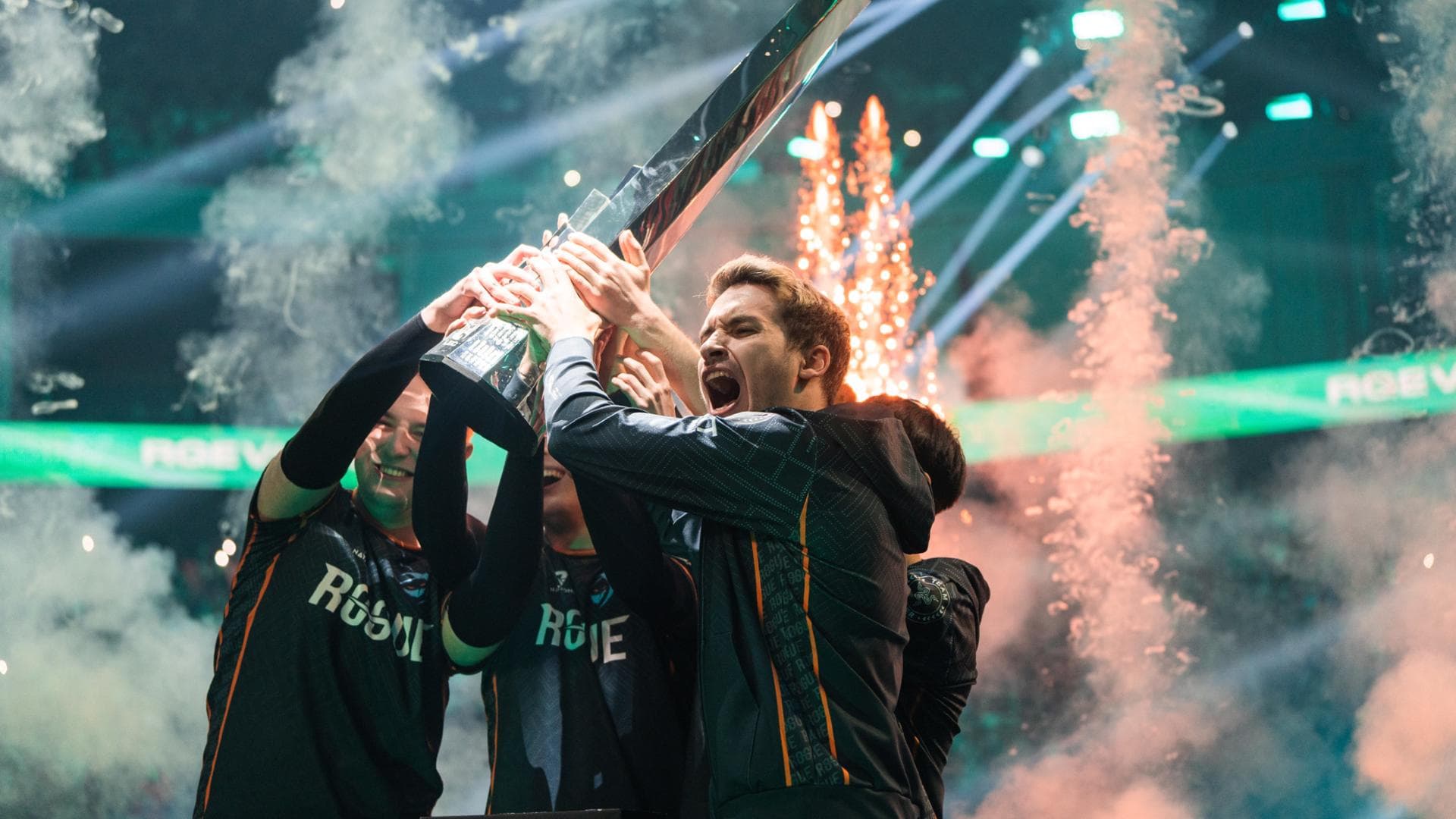
The summer of 2022 remains the pinnacle of Rogue’s competitive history as they captured their first LEC title, a landmark moment after several years of consistent playoff runs but falling short of ultimate glory. Notably, in Spring 2021 grand final, when Rogue was reverse-swept by MAD Lions. Comp describes the significance of the 2022 season: “That year was the most meaningful of my LEC career. We were dominant in spring and, despite a slow start to summer, we peaked during playoffs. Playing the final in Malmö in front of a huge crowd was unforgettable. It clearly motivated us to win.”
Larssen recalls the surreal feeling of finally achieving the dream: “The win in 2022 felt almost unreal, like living in a dream or being an AI going through the motions. Our mental strength showed especially during the spring reverse sweep of Fnatic when we were down 0-2. That mentality was something we lacked before, and it made all the difference.”
Hans Sama, though no longer on the roster, celebrated the victory from afar but noted the team’s growing struggles shortly after: “I was happy for them when they won. It was well deserved. When I scrimmed against Rogue later, they were still strong, but I saw their confidence drop and they struggled to regain form.” This title win stood as both a crowning achievement and a bittersweet high point before deeper challenges ensued.
The Downturn and KOI Partnership
After reaching the peak of competitive success with their 2022 LEC title, and a quarterfinals at Worlds taking a game from DRX (the future champions) and Top Esports, Rogue’s journey took a complicated turn. In late 2022, Rogue announced a strategic merger with KOI, a rising Spanish esports organization owned by popular figures Ibai Llanos and Gerard Piqué. This partnership aimed to combine Rogue’s strong talent development and competitive experience with KOI’s brand strength and growing fanbase. For the 2023 LEC Spring Split, Rogue rebranded as KOI while maintaining much of the original management structure and infrastructure. However, the new alliance struggled to find consistent success on the Rift, delivering middling to poor results.
They started facing competitive difficulties in their first year. The 2023 season began promisingly but quickly deteriorated, sparking questions about what went wrong. Comp offers his own interpretation of this time: “After a top 3 finish in the first split of 2023, things fell apart by summer. We made several roster changes, like bringing in Szygenda (Mathias Jensen) and losing Odoamne, then Trymbi (Adrian Trybus) mid-year, which affected team dynamics. It felt like we got ‘sunburned’ after flying too close to the sun.”
Larssen confirms internal struggles after the merger with KOI esports: “Since the KOI merger, we’ve had issues within the org, some of which leaked online. We never quite got back the same team spirit or cohesion as before.”
Struggles and losing streaks at the bottom
Following the ill-fated KOI partnership and organizational instability, Rogue’s competitive form dramatically deteriorated. Over the course of 2023, 2024, and early 2025, Rogue consistently found themselves near the bottom of the LEC standings. The team failed to qualify for the playoffs in every split since summer 2022, marking at least five consecutive missed playoff appearances. Their performance slump extended to the international stage, with Rogue never returning to the World Championship after their 2022 title year.
Throughout this period, the roster underwent numerous changes, leaving Larssen as the sole remaining cornerstone player from their golden era. Despite his efforts as team captain to stabilize the squad, Rogue’s results did not improve significantly. Many splits ended with losing streaks, and the organization often fought just to avoid last place.
Comp, remaining on the roster until the end of 2024, reflected on the painful reality during these years: “We just couldn’t keep up the momentum. The team chemistry broke down with all the roster swaps and the changing environment. It was tough watching an organization that had been a champion struggle to even make playoffs.”
The gloom surrounding Rogue’s slide bottomed out with the 2025 Spring Split, where they finished last and sealed the narrative of decline that ultimately culminated in selling their LEC franchise slot. This prolonged downturn underscored how difficult it is to remain competitive in a dynamic league like the LEC, even after reaching the highest peaks.
The legacy left behind
Despite the recent turmoil, Rogue’s legacy remains significant within the European scene. Comp emphasizes the enduring impact: “They started tough in 2019 but quickly became one of the most consistent teams, qualifying for Worlds multiple times. Our 2022 title, especially beating G2 in the final, is iconic. While recent years were difficult, many remember the strong impact Rogue had at their best.”
Hans Sama reflects emotionally on the moments that defined his time with Rogue: “I have so many great memories, from dominating the league, to traveling the world at Worlds in China and Iceland. Even losing the 2021 final was a powerful, emotional moment.”
Larssen is more nuanced about the lasting mark on playstyle: “I don’t think people will copy the Rogue style from 2020–2022 much anymore. We had different styles each year, mostly focused on winning lanes and controlled macro. The team’s identity was always evolving.”
All three players express optimism about Natus Vincere's potential to build their own legacy: “NAVI has the ambition and, with the right management, can do great things,” Hans Sama says. Larssen adds, “I felt excited and nervous again playing with NAVI this Summer, and I believe we can make a big impact together in the future if I ever get the chance.”
Closing one chapter, opening another
Rogue’s journey through the LEC was defined by perseverance and moments of brilliance. From humble beginnings to the glory of lifting the trophy, the organization helped define a generation of new European esports talent and competitive standards, before slowly falling and losing all of its brilliance since 2023. Their departure is not just an end but a passing of the torch to a new contender ready to write the next chapter in League of Legends history.