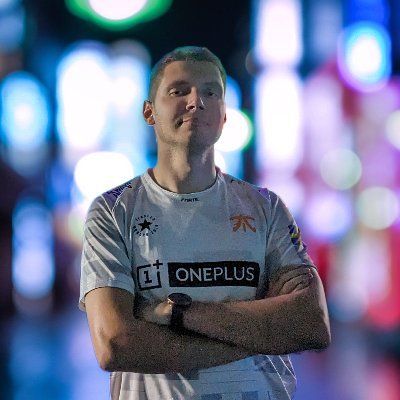
South Korea’s preparation for the 2026 Asian Games in Aichi and Nagoya, Japan, has taken a major step forward, with veteran coach Kang “
Hirai” Dong-hoon officially appointed as head coach for the national
League of Legends team. The announcement came this Thursday from the Korean Sport & Olympic Committee (KSOC) and the Korea e-Sports Association (KeSPA), who revealed that Hirai will lead the country’s efforts to reclaim gold as
League of Legends returns as an official medal event.
Hirai now faces the task of assembling a Korean roster capable of defending the nation’s throne in Riot Games’ MOBA. South Korea won gold at the 2022 Asian Games in Hangzhou, defeating China 2–0 in the grand final. As a reminder, he will be able to choose from
the players who participated in the most recent KeSPA Cup, which took place during the winter of late 2025.
Hirai began his coaching career in
StarCraft II before transitioning to
League of Legends, where he built his reputation with two years at Kingzone DragonX and five with
KT Rolster. Highly respected within the Korean scene, Hirai is known for his leadership and consistent domestic success. He made his international coaching debut at Worlds 2023, where KT Rolster advanced to the quarterfinals. Just like Choi "
Edgar" Woo-beom back in the Asian Games 2018 and legendary coach Kim "
kkOma" Jeong-gyun for the 2022 edition, Hirai has been selected as the national head coach during a year where he is not coaching any teams.
According to KeSPA, the recruitment process for national esports coaches ran from December 2024 to January 7, 2025, across multiple titles, including PUBG Mobile and fighting games such as Street Fighter, Tekken, and The King of Fighters. Each discipline required a dedicated head coach, with Hirai ultimately being chosen to lead the League of Legends division.
The eligibility criteria were particularly strict. Applicants needed to hold an “A-level” coaching license issued by KeSPA—or complete the certification course by 2025—in addition to having at least three years of experience in their respective titles. They also had to be ready for immediate service and free from military or travel restrictions, a condition that likely ruled out many active LCK or LPL coaches with ongoing contracts.