"There are clear lines and boundaries everybody should follow," LEC Commissioner on recent fines, road trips, and viewership
With the LEC Spring Finals looming, the league’s commissioner sits down to discuss international road trips, evolving fanbases, and the state of viewership.
00
공유
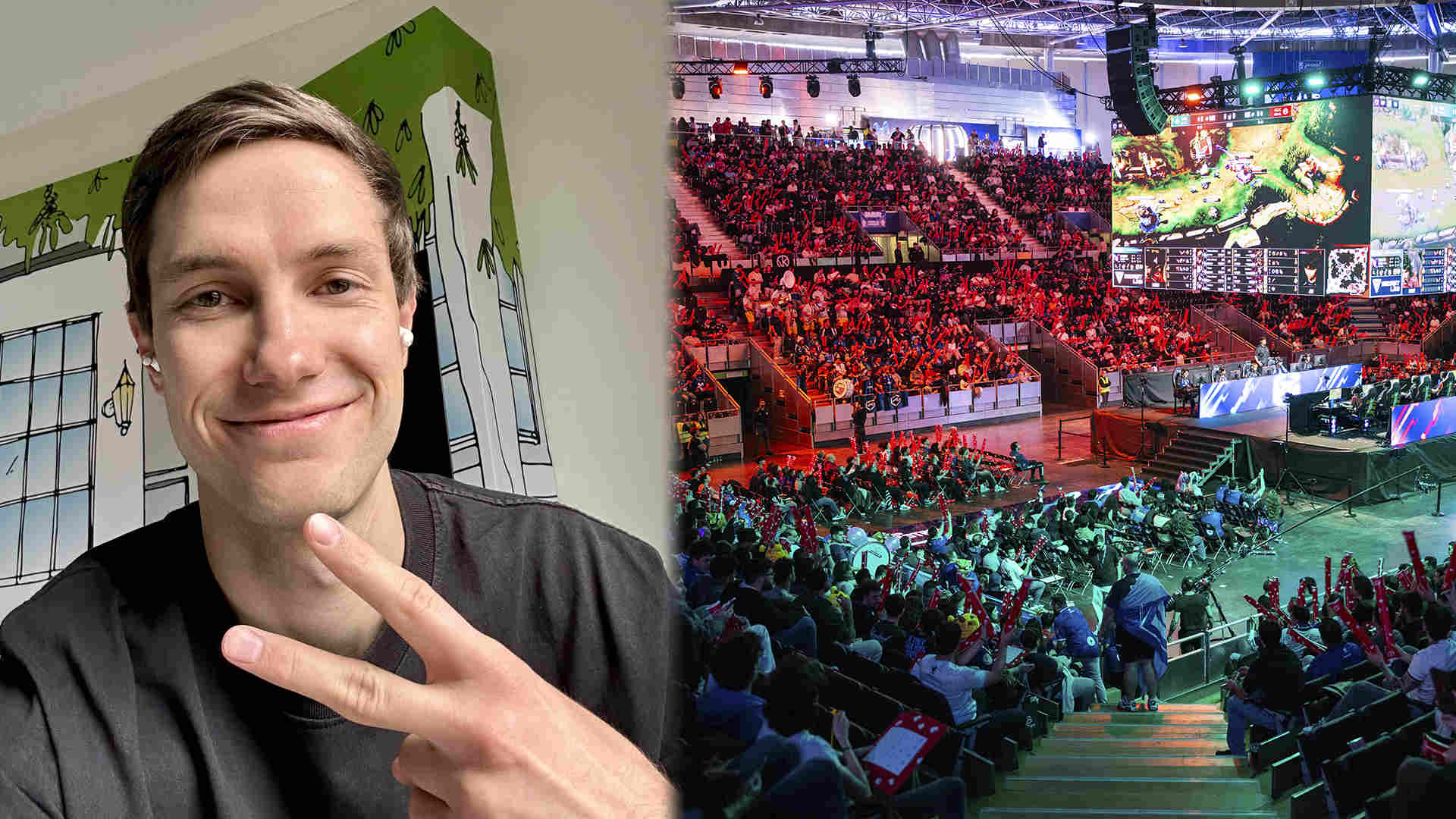
Artem Bykov, LEC Commissioner. Photo Credit: Hara Amorós/Riot Games
“It is an important thing for us to follow the conversation and know at what point we step in and moderate.”
Loading...
Loading...
Another split of the LEC is drawing to a close, with only a few hours remaining before the 2026 Spring Split Finals. Having completed its third road trip of the year, the league now prepares to witness the culmination of its teams’ efforts, as
In this context, Artem Bykov sat down with Sheep Esports to discuss lessons learned from the Spring Split and its road trips, the circumstances under which the league should issue fines to players, the impact of co-streaming on viewership, and more.
Editorial note: This interview was conducted before the publication of our coverage on the recent Madrid-related fines.
What have the past few weeks looked like for you behind the scenes, and what does day-to-day life as LEC Commissioner involve during quieter periods?
Artem Bykov: It's been a very exciting couple of weeks. Very fun to follow the LEC as a fan. It's also been great to see our two road trips during the Spring Split happen. And of course, there's been a lot of work, right? We have the finals happening this weekend, and you know how it is—we're already preparing for the Summer Split. So it's been very busy, but also very fun. The stuff we do on the LEC broadcast brings me joy and puts a big smile on my face.
The road trips have been one of the biggest talking points this split. Some teams and coaches have commented that the format led to uneven breaks and preparation times, particularly around playoffs. What lessons have you taken from that feedback, and how will it influence future road trips and LEC scheduling?
Artem Bykov: Yeah, there are plenty of learnings we have around road trips. We've also got to keep in mind that this project is still very new for us. The first road trip happened roughly a year ago, right?
This split, as you mentioned, we had some learnings on how to schedule the road trips better. That's something we'll already be implementing for the Summer Split very soon, and it's also something we're thinking about for next year. I'm sure you've also seen the news about the upgrades we're doing to the Riot Games Arena in Berlin, which will make it easier for us to schedule the LEC.
Another learning is around the number of days we dedicate to a road trip. Initially, we were targeting a three-day format.
“We saw that on Fridays, although we expected attendance to be lower because of work and school obligations, the number of fans in the arena was still below our expectations.”
And in general, venue size is something we're looking at for future events. With how fast things move in the LEC, it's easy to forget that we also ran a major trial by holding an LEC final in a road-trip format for the first time. There were plenty of learnings from that as well.
We're also trying new things at every event. In Madrid, for example, we experimented with the showmatch format ahead of the main games as a way to build hype for the fans.
The Summer Split will begin with a road trip. Do you think placing these events at the beginning of the split helps create a more stable schedule for teams and avoids some of the issues seen this spring?
Artem Bykov: It depends on the team. You have teams with a lot of experience playing on big stages, and for them it's business as usual. For some other teams, I could imagine it's a more stressful experience.
For the league, though, we see the importance of starting with a big opening weekend. For us—and definitely for the fans—it's going to be very exciting. We have an exciting new venue to explore, the Adidas Arena in Paris, so that's going to be a really, really cool opening for the Summer Split.
Will changes to the Riot Games Arena already have an impact on the Summer Split, and can fans expect any scheduling adjustments as a result?
Artem Bykov: Yeah, I think the most concrete upgrade we'll have for the LEC coming into the Summer Split is a more consistent schedule.
“I can already confirm, for example, that we will not have any break weeks during the Summer Split of the LEC.”
I can't reveal yet exactly what the day-to-day schedule will look like, but I expect it's going to be positively received by the fans.
Last year, road trips were run over two days, but this year the format shifted to three-day events. What led to the decision to move away from the two-day format and try three-day road trips instead? Was it influenced in part by situations like Vitality having to travel back to Berlin for tiebreakers after playing in Paris?
Artem Bykov: Yeah, you sort of answered this question for me.
A very big reason for us was the challenge of running two days of the LEC on the road on Saturday and Sunday, and then the need to go back to Berlin on Monday. It was very stressful for teams and players, but also very challenging for us and production, because people who work on the road trips also have roles to play in the show in the Berlin arena.
So we thought that, for this year, one of our goals was to have consistency—where if there is a road trip happening, that week of the LEC, the show is happening in one location. It has some benefits, it has some downsides, so we'll take the learnings from this and apply them to next year.
You’ve got to keep in mind as well that we have a limited amount of days to run the LEC in the Spring Split and the Summer Split. I think the flexibility that comes with an upgrade to the Riot Games Arena will come in our favor, because we can shape the calendar of the LEC better.
Was the move from two-day to three-day road trips something pushed by the teams as well? And was one of the considerations also the potential to generate more ticket revenue by adding an extra day for fans attending in person?
Artem Bykov: Yeah, in theory if you sell out the full arena on Friday you have more revenue from the tickets, but then of course there is a downside that it's harder to fill out the arena on Friday.
So we weighed all the pros and cons together with the teams and decided to try it this year. As I mentioned, a lot of what we do with the road trips, we try for the first time and then we learn. This is part of what makes the LEC the LEC, and an important priority for Riot is to always try out new things.
Do you see any risk that road trips could lead to a negative perception of the league if, for example, certain days consistently have visibly lower attendance?
Artem Bykov: As expected, we did have fewer fans in the arena on Fridays. On Saturday and Sunday, though, we had the arena filled up and the atmosphere was crazy. To be honest, I think it’s fair to say that the three road trip weekends were some of the most exciting weekends of the LEC this year, if not the most exciting, and the feedback from fans online has been phenomenal. We also saw that viewership for these weekends was higher, and the players on stage really loved them.
“So I’m not as worried about the ‘bad look.’ Of course, we will keep tuning things for the future, but that is not a major concern in my eyes.”
Another thing you need to keep in mind is that, for us to be able to run many of these shows, we need a certain degree of standardisation to make them scalable. One of the goals we set this year was how we could evolve the road trip program in a way that allows us to increase the number of events from two to five already this year.
That requires a certain degree of commitment together with the teams, where we agree that one of the non-negotiables is that the LEC week is always played within one location.
Around the Madrid road trip, there was quite a bit of discussion online about attendance and the optics of certain moments, especially on social media. When you see that kind of discourse happening in real time, how do you react internally?
Artem Bykov: We do have a lot of passionate, kind, excited, committed fans who’ve been following the LEC for many, many years. Reading feedback from them and communicating with them is what really fills me with excitement and energy to do my work, so I want to highlight them and say thank you to all the fans who support us.
But you’re right, there’s been a lot of action happening on socials around the Madrid road trip.
“I think it was unfair to judge the event based on the number of people in the arena on Friday afternoon.”
There are reasons why we pick these times—we want fans to come early enough so they don’t go home too late, for example, and there are certain rules and regulations in the countries we need to acknowledge. So I don’t think giving a judgment on the whole event based on early Friday was fair.
And to come back to what I said earlier, I think people will remember this event as one of the craziest LEC weekends on stage—where we didn’t crown the King of Madrid, but had a lot of back and forth between teams, a lot of energy and banter from the pro players on stage, the Caliste first pentakill shushing the Madrid crowd.
This is what people will remember the event for. It’s important for us working on the event, and for the teams and players, to focus on creating the best possible experience and to separate signal from noise—and the magic will happen.
There was quite a bit of banter during the Madrid broadcast. Were there any disciplinary actions or fines issued internally, or is that something you generally allow as part of the competitive atmosphere?
Artem Bykov: Look, banter and some degree of trash talk is part of sports. It’s part of what makes watching the broadcast exciting.
At the same time, there are clear lines and clear boundaries that everybody should follow—the fans, the pro players, Rioters, everybody in our ecosystem. And the bar for behavior, in my opinion, is even higher for people in the ecosystem, because we are examples that our fans should follow.
“It is an important thing for us to follow the conversation and know at what point we step in and moderate.”
To your question, the whole process around compliance and investigations for all cases remains confidential. But all fines that we issue become public in the public tracker. And we do have to add to that public tracker all the fines that were issued following the Madrid road trip.
How important is it for Riot to maintain control over the LEC experience compared to letting more raw interactions come through? Fans often value that “authentic” and unfiltered side of esports—do you see a risk of losing that if things become too controlled?
Artem Bykov: The most important thing for us is that the LEC stays a safe and welcoming environment for our fans and for everybody involved in the ecosystem. That is something we are constantly monitoring and thinking about—where we need to step in and where we don’t.
Other than that, I think the beautiful part of the LEC and League of Legends is our community. This is a feature of the game, and something that brings us a lot of joy and fun. So absolutely, this is something we embrace. At the same time, we are a professional league, a professional organization, and when we need to step in, we do so to make sure things stay civil.
Regarding the fines: we’ve seen what happened in Madrid with the planned show match, there was also a lot of online drama between the organizations beforehand, and the schedule had to be changed last minute before a replacement show match was eventually put together.
From your perspective, does this kind of situation risk reflecting poorly on the league when the actors within it are publicly in conflict, and how did you experience the process internally?
Artem Bykov: I spoke already a bit about the Twitter drama and my view on it, so I’ll focus on the show match.
I think it was a great idea from MKOI to create this show match concept to make the show more exciting for the fans. So it was a great plan. Then things happened—I think your readers know the context of what happened online.
We did have to work hard at the last moment to move things around, and I want to truly appreciate the work behind the scenes of everybody who put in the hours to adapt on the fly and come up with a new concept and execute it.
It’s the first time we ever did a show match before the official LEC match. I had fun watching it, I learned a lot of fun trivia about Spanish casters, and I enjoyed it overall. So from my side, just appreciation for everybody for making it work.
How do you view the growing dominance of Karmine Corp and Movistar KOI in terms of fan influence within the LEC, especially since 2025? It seems like their fanbases heavily shape viewership, attendance, and even the overall momentum of the league, sometimes overshadowing smaller teams. What are the positives of that, and are there any downsides in terms of balance across the league?
Artem Bykov: I’ll begin by saying that we are lucky to have both MKOI and KC. The energy that their fans bring to the arenas is unmatched in the LoL Esports ecosystem, but also globally. When I look at other esports products, when I’m at the arenas and watch the events live, I know and I feel that we have something very, very special here.
I’m getting goosebumps just remembering this—watching the LEC Versus finals, KC versus G2, is one of the most incredible series I’ve ever watched in esports. That was super fun.
“We are lucky to have KC and MKOI, and we’re lucky to have their fans who bring so much passion to the league.”
Their rivalry has become something that is driving a lot of interest around the league. There is no way around it. We have a KC versus MKOI match coming up on Saturday—we’ll see how the rematch plays out. I’m very excited about this. I think the benefits are clear and on the surface.
In terms of negatives, as we’ve seen in Madrid, it is harder to plan around these moments, and we do have to stay flexible to either step in and moderate or change our plans, like with the show match.
“Of course, because of the amount of fans in Spain and France, and how important Kameto and Ibai are for the region, it’s hard to compete with them.”
But I also want to mention that one of my favorite things about this year of the LEC is new teams stepping in. It’s been great to see Vitality shine in the regular season, NAVI mature as an organization so shortly after joining the league, GIANTX reaching top four two splits in a row, and of course G2 sitting in the final, as they do.
So I think there are more stories in the LEC for fans to follow. Maybe the right way to see it is that people may come in for KC versus MKOI, but then they stay for the deeper stories and rivalries happening in the league.
Do you see any risk in the LEC becoming too dependent on specific communities or co-streamers? For example, when prominent co-streamers decide not to broadcast certain matches, viewership drops significantly, and on the days they do, the official LEC stream only ranks as the fourth or fifth most watched broadcast of the league. Do you worry about a future where the league becomes vulnerable if those creators step back or change how they engage with it?
Artem Bykov: It is a risk for us, and that is something we learn as we go.
I have nothing bad to say about our creators deciding not to co-stream the LEC on certain days. That is their choice, and it is our job as a league: how do we plan around that? That’s something we are thinking about and constantly learning from.
We are evolving our co-streamer and creator ecosystem, and the rules and regulations around co-streaming. We are in a very challenging space where the LEC is broadcast in more than 15 languages, so it is a gradual process.
I think the addition of those strong creator voices to our league has been positive for the development of the LEC and how exciting it is for fans. So we are learning how to work with them better—just like we are learning how to make better road trips, or how to adapt in sensitive situations.
“We acknowledge the risks—but it is something we are actively working on.”
At the end of the day, you have to trust the process. We are here for the long term. We are one of the most developed leagues in the world, we have a lot of knowledge and great people working on it, and we are thinking long-term about how the LEC stays the most exciting league out there for many years to come.”
Armand Luque is an interviewer and journalist with deep roots in the EMEA League of Legends scene. A veteran of the esports world, they hail from France and are best known for their work on Leaguepedi...