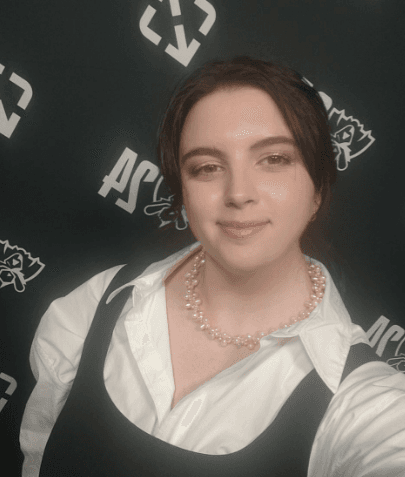
Players share once again examples of discrimination issues in the
League of Legends ERL scene. On March 24th, professional
League player Ève “
Colomblbl” Monvoisin
posted on her X account that she had “
just learned” that one of the ERL mixed teams she tried out for last December “
didn’t want me because I’m a woman.” Her message, like other past instances of discrimination, quickly drew the attention of the community, and many took the chance to
share their own nightmare discriminatory stories.
Some asked for the names of the people involved to be shared publicly, to both condemn and warn others of their behaviour. However,
Colomblbl explained that the person who told her the story did not want to share names to avoid issues. She also mentioned how the decision of not having her on the team came from a player who refused to play with her, not from the organization or staff.
However, according to an anonymous source involved with the team that rejected Colomblbl because of her gender, the situation went beyond a single player.
The source told Sheep Esports that one of the team’s owners was also “very vocal” about not wanting her on the team, ultimately pushing against the idea and influencing the final decision. They stated that the owner was “heavily against any idea of bringing any women onto the active playing team,” and added that there were multiple attempts to bring “at least one female player” to the roster, but every attempt was “shut down immediately.”
One of Colomblbl former teammates, Maya “Caltys” Henckel,
replied to the original post by sharing a message she had received in the past. The message reads:
“Hi Caltys, probably you don’t remember me, but some years ago, I was making roster like coach and you were in trys. I told management I wanted you like adc because you were the best, simply. Suddenly they told me they don’t want a woman in the team because the other players could be more focus on flirt than play. I just told them they…”
Caltys’ post further fueled the discussion around continuous discrimination instances towards marginalized genders in the scene, reinforcing concerns that misogynistic attitudes remain embedded in parts of the competitive LoL Esports’ ecosystem.
The community voices among organizations’ silences
After both Colomblbl and Caltys’ posts, many fans and talents working in esports — especially from France — showed support for the players and highlighted how this kind of situation is still happening too often.
LEC host Laure Valée also reacted by sharing Caltys’ post,
mentioning that people still claim things have changed, or even that women get more opportunities in esports, but in reality, there is still a long way to go. She also criticized so-called “
positive discrimination,” explaining how often her gender was framed as a diversity asset rather than her professional merit.
French League partner Amandine Bamaca also responded, saying that situations like this can make women feel like any success they have is
only because of their gender, not because of their skills or work. Together with many other individuals are speaking up against these issues — but organizations have mostly remained silent.
While there are Tier 1 and ERL organizations that
actively support marginalized genders — through dedicated teams, development programs, and competitions — the absence of clear responses or action from those still willing to support players who oppose having women in their rosters is enough explanation of the countless obstacles faced so many.
Author’s opinion:
This situation is not a one-off failure, but a deeply rooted cultural issue within competitive gaming.
Misogyny in esports is not always overt but it often manifests through informal veto power, “locker-room” logic, and assumptions about possible team dynamics. The idea that a woman’s presence would distract male players is an admission of unprofessionalism that should disqualify those making the argument — not the player being excluded.
The persistence of these attitudes also explains why dedicated spaces for marginalized genders — such as the Game Changers and LGC initiative — remain necessary. Some might often argue that these spaces create division rather than union. But cases like this demonstrate the opposite. Competitions for marginalized genders provide a baseline of opportunity and safety that the main ecosystem still fails to guarantee.
Until merit alone determines opportunity, and until organizations actively challenge discriminatory behavior instead of passively allowing it, the competitive scene cannot claim to be truly inclusive.
Distancing individuals and cultures that enable or normalize discriminatory behavior from the scene is essential. Until organizations take clear action against these attitudes and ensure that merit alone determines opportunity — rather than passively allowing such behavior to persist — the scene cannot claim to be truly inclusive.