10.04.26 - 13:0510.04.2026 - 13:05·15m15 minutes de lecture·
Par Cecilia Ciocchetti
Creating League of Legends' skins: the hidden rules shaping champions' cosmetics, an interview with Riot Games' Associate Art Director
An inside look at how League of Legends skins are created by balancing new themes, gameplay clarity, and evolving technology.
00
Partager
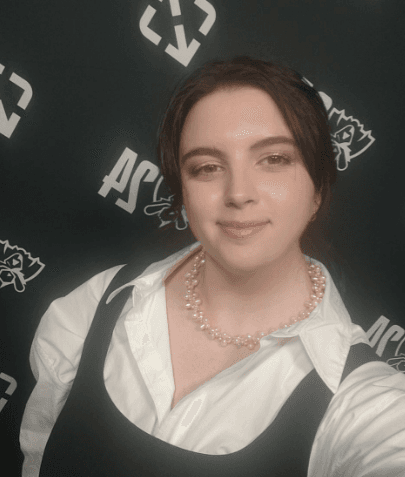
Thomas Randby,Associate Art Director at Riot Games. Image via Riot Games
"A skin is at its best when it's either fully in service of the sort of core nature of the champ, or it's a very particular subversion of that character."
Loading...
Loading...
Skins are at the core of the League of Legendsexperience and arguably as defining as gameplay itself. They are where player identity, fantasy, and expectation collide, making them one of the most celebrated yet most scrutinized aspects of the game.
The process behind skins is far more complex than it might seem at first glance. Questions around whether design choices could impact gameplay clarity, how far visual experimentation can go without affecting fairness, and even how chromas expand personalization without crossing into entirely new themes, all play a role in which champions get which skins.
In an interview with Sheep Esports, Thomas Randby, Associate Art Director at Riot Games, speaks about the nuances of skins’ development.
If you’ve ever wondered why your main doesn’t have a Star Guardian skin or how League Next is going to affect future cosmetics, this might be the right read for you.
How do you define a visual identity for a skin in a game where everything needs to feel very distinct and readable?
Thomas Randby: “Well, I think the first thing that we really want to think about when we're looking at the context of a skin or a cosmetic is the visual identity of the character. I think there's a certain kind of layer that we operate in where there's the visual identity of the character, which is always tantamount.
That's the most important thing to make sure at any given moment, regardless of what skin a player is using, I'll be able to look at it at a glance and be like, "Okay, that's Janna. Okay, that's Sett, that's Aurelion Sol." Certain characters have more distinct silhouettes than others. I don't think you'll see Aurelion Sol and ever mistake him for a humanoid character. But whenever we're beginning [working on a skin], we sort of isolate different kinds of visual anchors relative to the character's source of power.
A good example is Kai'Sa with her cannons: the cannons are absolutely a must [in a skin]. It's not necessarily a must that we keep the length of her hair, but just making sure that those certain aspects of the silhouette that are really primary for gameplay are maintained.
Ink Shadow Kai'Sa. Credit: Riot Games
And then when it comes to the visual identity of the theme, we've got a whole team of folks, a team dedicated to thematic development where what we do is we build out libraries and visual references. Things like shape, language, source of power, the aesthetic of visual effects are really, really important as well. So that holistic package communicates essentially the story that we're trying to tell with these different themes. And it's really all encompassing. It's the look of the character, it's the feel of their visual effects, it's how it sounds, like the soundscape of the sound effects as you're playing. All of that kind of comes together to deliver that final fantasy to players.
And I think that's really important when we're operating in spaces like Mecha, where we've got Mecha Kingdoms, our more traditional Mecha, like Mecha Malphite. And then this new space in Aegis Frame, where I think sound actually played a really large role in that. Our sound team did a fantastic job of pulling really retro nostalgia, like the anime swings of the different noises made for a really satisfying experience for the finaling game product.
Aegis Frame Galio. Credit: Riot Games
But yeah, the broader and larger our themed catalog gets, the more important it is for us to really make sure that those boundaries are established so the artists on the team can work with autonomy within that known space.
So I think examples are like, if we're working in the science fiction space, we've got PROJECT, we've got PulseFire, we've got Program, we've got Anima Squad, we've got Steel Valkyries — which is the Gun Goddess Dreadnova universe. Each of those has a really dedicated shape language treatment to a palette where PROJECT is historically very desaturated with one really bright neon accent color. Anima Squad is much more vibrant overall and we're playing with a lot of different shapes and whatnot. So really making sure that those are well established so that anytime we're crafting new content, players will be able to really understand what it is at a glance and know that it exists within this particular skin line theme or sort of alternate universe.
You do have a lot of universes and a lot of themes that you can explore, but if we take into consideration everything that you said for the vertibility of the game, it does feel like you're very limited in the options that you can work with. So how do you explore different thematics and how do you make each skin feel unique while working in a seemingly tight frame?
Randby: I think one thing that we really love to do is leverage the breadth of perspective on the dev team as well as in the player base. We're always looking for gaps in our thematic catalog, different sort of genre spaces that we've yet to cover. And then what we also do too is that there's the opportunity for essentially anyone at the company to pitch an idea for a skin theme.
So there's been a couple of things that I personally have pitched: Cafe Cuties is like my number one that I was really excited. That was me and my friend Megan Bayona, who is a really incredible VFX lead working on champion-oriented content. But so we basically pitched that kind of fusing a number of different themes together. The Culinary Masters skin line, which is a little bit more of a grounded theme where you're kind of like a food fight essentially, taking some notes from French made Italy, but portraying it in a way that was a little bit more leaning into cuteness and that degree of femininity as something that was like a power fantasy — which we were really excited about — and then elevating that to food-oriented fantasy. So it was very magical and whimsical and it felt a little bit more detached from the grounded nature of some of the earlier themes.
It was like we had a really cool opportunity to fill that gap in the skin catalog and deliver a new experience for players. And simultaneously too, the opportunity of paying homage to different regions of the player base, that's something that we're always really excited about as well.
Lunar Beast Darius. Credit: Riot Games
Obviously, we've got our Lunar New Year line that we revisit pretty frequently, but when there's opportunities like with La Ilusion, which we were all really, really excited to lean into, taking inspiration from an honoring central American and Southern American culture and visuals — but elevating it through the lens of fantasy so that it's something that people can engage with globally — that's always something that's really exciting.
So I think while we do have the limitations of clarity — this is going to sound so cheesy — but it's like there's no limitation on imagination. I think that's one of the fun creative challenges, I think innovation is born of constraints. I feel like that's a quote from, I don't know, somebody, from Disney or something, I don't remember who said it, but I think it is very true.
When we're working within the constraints of designing for League, you can find clever solutions that are working in conjunction with those limitations rather than in spite of them. And I think that's how you make something that feels really surprising and kind of special because when we try to work in spite of limit — and I think this is true not just of League but largely anywhere — trying to work in spite of those constraints or limitations, I think oftentimes you arrive at a place that might feel a little half baked versus taking the full picture into account, being realistic about what you're going to be able to execute on because it is a fact, right?
The range of characters that we have, some of them are as new as 2026 and some of them are as old as 2013, so as the game has evolved so too has our capacity to craft cosmetics on a champ-by-champ basis, but we always want to be thinking about what canvas are presented to us.
You did mention it in our last interview, how technology evolves for the cosmetic team too. And I do want to touch upon that, but before that, you did mention looking for gaps into the fantasy that you can present, but Stephanie Leung in our last interview mentioned also how risky it is sometimes to bring forward an idea, like Flora Fatalis, since it caters to a very specific portion of the player base. So how does that layer up into the million other things you have to consider when you decide what skins gets produced?
Randby: Yeah, absolutely! And I think that is very true. It's like some of our themes are more niche than others. And I think that to only be operating in a space that's very broadly appealing it would be to the disservice of certain portions of the player base, because just because something is broadly appealing doesn't mean that it's going to, strictly speaking, appeal to everyone.
I think the biggest thing that we want to look for when we are planning ahead, building our roadmap, is taking a step back and looking at the bigger picture of the year and what sort of journey we're taking players on, not just through the seasonal narratives that we're presenting, but through the cosmetics that we're offering as well. And I think this is kind of multifaceted because this was for me when I stepped into the Art Director role, one of the first things that I was assigned, outside of some smaller patches here and there, was the Demacian seasonal content.
And there were a lot of learning opportunities for me just as a player looking at how we'd progress through Welcome to Noxus, for instance, and some of the feedback that we got about the nature of the cosmetics from acts one to act two and how there wasn't as much of a progressive journey of tone and experience and how kind of similar the two themes fell to one another, given that they were both very Noxian and very red.
So for Demacia, one of my biggest goals was A) to provide cosmetics that felt like more of a departure and fantasy from the champions that we chose relative to the Noxian content, and B) making sure that from act one to Act Two, there was a large transformation insofar as the tone that was being presented. So where Act One is very radiant and optimistic, it's this glorious vision of Demacia and what it could be, or honestly, even the sort of idealized myth of Demacia in the form of the Morgana skin, Act Two skewed much more like dower, a little dark, like the secrets in the cracks of that beautiful veneer of Demacia.
Corrupted Petricite Xerath. Credit: Riot Games
And so we want to, that's kind of the microcosm of the season, but for the entire year, taking a step back and taking a look at each individual patch and be like, "Oh, we're pretty heavy on elegant beauty for this period of six months. Let's throw in something that's a little bit more fun and lighthearted or something that's a little bit darker." It's one of the reasons I also think too, we've had a lot of success in crafting content with more of a variety approach. And Steph might've touched on this as well, because Steph was a big driving factor in a lot of this decision, but the variety content I think provides us a really awesome opportunity to really craft something that's built with the champion in mind, which does, I think, also then provide us the opportunity to skew a little bit more niche outside of our super appealing themes like Spirit Blossom, Star Guardian, and more, where not every champion is necessarily going to fit into that mold.
The variety content really allows us to take characters who are more niche or whose fans might want something that is more than just generally beautiful themes and want something that's a little bit more divergent from that and really craft something with them in mind, which has been a lot of fun for us to develop. We've had a lot of really fantastic responses from players in that regard. So we're excited to see how we're going to be able to keep pushing the boundaries on that and incorporating that into our strategy moving forward.
I was going to say, Cecilia, what's your favorite? Do you have a favorite skin?
So many! But if I had to pick one then probably Alien Invader Heimerdinger. Because — and it's one thing that we also discussed last time — that cross-section between IPs that is just touched upon without infringing the original IP is so interesting to me. So going into Mars Attack but giving it like a League spin, I really, really like that. But I also really like the Flora Fatalis ones.
Randby: And I think that's also a fun aspect of the creative challenge of it too, right? I think Flora Fatalis was a really fun project because I think it blended horror and beauty in a way that was really unique for us, where I think we've operated more in those kinds of clear cut swim lanes, like one versus the other. And that was also born of that thematic pitch process where Flora Fatalis was like someone, I wish I could remember their name at the time, but someone just pitched that theme to us and we'd spent a couple of months workshopping it, building it out, figuring out exactly how we wanted to translate that broader idea into the in- game experience.
Flora Fatalis Lissandra. Credit: Riot Games
And I think we also did some really fun stuff speaking to some of the progression that we're trying to take in so far as our technical limitations. Obviously not every Flora Fatalis skin character, we didn't do any legendaries, nobody had rigging for beautiful foliage, but we opted for a really awesome material-driven approach where there's a vertex deformation material on each of the characters. So the petaling just kind of like, it pulses a little bit, it looks like it's kind of moving in the wind or has a little bit of life to it. And I think it really made that content stand out in particular as far as the thematic was concerned relative to other themes that we have in the catalog.
But yeah, I think that Heimer skin is a great example of a character whose silhouette lends itself more to something that is a little bit sillier... Not every character is going to be the Immortal Journey of it all, and I think when we're really trying to prioritize that. What is resonant, what's at the core of that champion that players want to see carried across from skin to skin. The more capable we are of crafting something that's going to resonate with players all over the world.
I do think there are some examples that can be made where the juxtaposition of the core of a champion and the core of a skin clashes. Stargardian Urgot is like a great example of it.
Randby: At the heart of that, I think it's like we need to 100% understand and commit to what fantasy we're trying to deliver. And I think to your point, a skin is at its best when it's either fully in service of the sort of core nature of the champ, or it's a very particular subversion of that character. And I think we've had a lot of success with that in the case of Pajama Guardian Cosplay Urgot, taking the more historically grim and dark fantasy of Urgot and presenting it in something that's fun and lighthearted and cute. I also think too, just in the interest of novelty of the player's catalog or their options to choose from, because if I'm playing Urgot and all four of the other members of my team are going lovely, pretty Star Guardian skins, I want to get in on that.
Pijama Star Guardian Urgot. Credit: Brahim Bensehoul Artstation
And so to have the opportunity to flex and personalize my experience, not just in aesthetic, but also in tone, we've had a lot of fun and a lot of success pursuing that path. I think Bee’Koz is another really good example. And then conversely, two of my favorite examples of this in reverse where we take a historically bubblier or kinder or friendlier champ and twist that into a darker experience. And so I think Dark Cosmic Lux and Star Guardian and Zoe are two really, really solid examples. On Star Guardian Zoe what I really enjoy about that experience is obviously the visuals skew much darker, but the processing on her voice takes the fun and whimsical nature of her VO script and almost twist it into this kind of like mania where she is corrupting all of these other star guardians, but she views it as this fun gift that she's giving you. And a lot of her voice lines, if she comes across a female champ, she'll be like, "Ooh, I have a present for you. We should be sisters." And the poem that that takes on in the Star Guardian skin, I think really fundamentally changes the character while keeping that resonant core intact.
So I agree, I think when we've got the opportunity to provide that variety in the catalog and really subvert the character, it's always a lot of fun. And again, I think it makes for a more diverse and more varied experience for players to really allow themselves to just customize their experience in game from one to the next versus just having different flavors of the same thing all the time.
And I mean, another kind of expression is chromas, because you mentioned Star Guardian Zoe, and I play it all the time, but I use the white and black chroma because it feels a bit more villain-y. So how do chromas also fit into your plan when it comes to skin?
Randby: When we're looking at chromas, I agree it just broadens the opportunity for player personalization of the experience. I think one thing we do want to avoid is actively kind of cannibalizing potential opportunities in the chroma space for new skins. So every time that we're crafting a chroma we want to make sure that if we are drastically changing things, like the sort of value breakup of the skin or the palette in a really divergent way, we are not treading into entirely new thematic spaces. So, for example, an Elderwood chroma, we wouldn't want it to change the character so much that it feels like a Coven Skin or Flora Fatalis one.
Elderwood Ahri Chromas. Credit: Reddit's Ahri Main community.
But to that point, I think of the opportunity... I think a good example is Cafe Cuties Lulu: every single one of the chromas is inspired by a different dessert theme. So whereas the base is kind of this French bakery sort of croissant visual, then one of the chromas’ presented is this kind of matcha cake sort of, and others are kind of like a raspberry cheesecake, something to that effect.
The bees' skins as well, right?
Randby: Yeah with the different insects and whatnot. I think one of my favorite examples being La Ilusion Ziggs has a different kind of sugar skull makeup application to every single one of his chromas. So I think that's always fun when we're able to add breadth to the particular theme, but not transform it so holistically that it's not recognizable as a Cafe Cuties skin, a Bee skin, an Elderwood skin.
Author’s addition:
Since releasing this interview I’ve been made aware of a recent Reddit post where players from the community had expressed their frustation over the lack of “unique chromas” in recent skins.
“As someone who often buys skin when there is a cool skin for a champion I play - what happened to the quality of chromas?
Going back to the Seasons, how do you shift your plans for certain skins so that they're not too close to the thematic season that the other teams are exploring? For example working on nature-based skins when the next Season would be based on Ixtal.
Randby:. Well, I think when it comes to the thematic seasons, obviously our goals and what our opportunity spaces are going to change pretty drastically from one season to the next. So I think even looking at Welcome to Noxus into Spirit Blossom, that season being dictated and driven by what essentially was cosmetics like canon-adjacent AU provided a very fantastic canvas for us to really create a whole season's worth of content that I think felt really, really in service of the player experience.
I think there's a little more constraint on us when we're operating in the core canon space because of the just more rigid boundary that the core canon presents, particularly our goal with Welcome to Noxus was really delivering a canon experience. It's like every mask of the black rose skin was a character who theoretically could be in attendance at the masquerade ball that Elise and Katarina were beefing at in the Bite Marks cinematic.
And then the Noxkraya Arena fighting pit skins, each of those characters was a character who canonically had participated in the Noxkraya Arena. And we were excited about that opportunity again to immerse players in the lore and the narrative in a way that we'd historically been unable to. And I think there was a lot of success in the CG space and the sort of metagame space, like how we were able to bring players into that vein. But I think there was some great feedback from the player perspective, again, that the skins just didn't feel quite divergent enough from their bass fantasies. So moving into the Demacia season, we took a much more kind of what if approach where none of the characters were like, Taliyha is not canonically in Demacia bending the latent magic within Petrocite in the core cannon, but it was a fun opportunity for us to explore the potential there in where what if Nautilus, rather than being this tight from the depths of Bilgewater, was this sort of seaside naval fortress of living Petrocite that would rise to defend Demacia's shore.
Petricite Nautilus. Credit: Riot Games
And so we had a lot of fun just kind of spitballing the ideas for the different sort of narrative spaces the skins could exist in. I think when it comes to future seasonal content, fortunately we're in the space where not every piece of content that we deliver over the course of the season is seasonally themed. So I think what we would want to do is make sure that were we to commit to a hypothetical Ishtal season, something to that effect, whatever theme we are building out, similar to what we were discussing before, it's got its very distinct swim lane relative to existing skins that we've got in the catalog. So I couldn't really say what that would be for Ishtal at the moment, but off the top of my head, making sure that whatever we arrived at, given Ishtal's connection with the elements through Qiyana, we wouldn't want that to overlap with any of the fantasy that we present with Elementalist Lux, for instance.
So really making sure that we're building out something that's new and unique and it's going to be really exciting for the particular season. But I see no reason why that content couldn't also harmoniously exist within the catalog with content like Flora Fatalis. We'll just want to make sure again that we're doing our due diligence, spending time crafting the experience so that it is in service of the seasonal theme while also prioritizing the player experience and making sure that whatever cosmetics we do deliver, just meet the expectation of that transformation of fantasy that we really want to have for every piece of content we make for the game.
Last time that we spoke, we touched upon how technology evolved over time and then this year Riot announced League Next is going to overhaul the game’s engine. How does that factor into the pipeline of skins coming forward? Do you see any new possibilities of this new technology working in favor of doing something you've never imagined even possible before?
Randby: I can't speak to any specifics unfortunately, but we're really, really excited about the prospect, not just to utilize this opportunity to sort of refresh and reset ourselves, not just for the ease of development, but also for what cool new opportunities we're going to be able to deliver to players. And I think even since the last time that we spoke, we've already been able to make a lot of smaller, more piecemeal improvements here and there.
One of the things historically that we really have needed to consider is our memory budget for each individual skin, and in crafting a lot of our more premium content spaces, we really needed to make sure that we were able to just sort of move the needle on how much we were able to incorporate into one particular piece of content. We've made a lot of development in our capacity for material rendering in-game, like we were discussing with Flora Fatalis. That's something that we were really able to leverage in a meaningful way in crafting out prestige content in particular, that capacity to really deliver value at a glance, utilizing things like Winter Blessed Mel's gown made out of pure starlight, for instance, really pushing the boundaries relative to what a standard sort of skin experience is.
Winter Blessed Mel. Credit: Riot Games
So yeah, we're really, really excited at the prospect to continue building out the tech to provide new and exciting experiences to players and also to, again, just to broaden that canvas that we're able to utilize to craft cosmetic content. I think, again, it has been a fun, creative challenge of the work to work within those constraints, but the things that we're going to be able to do once we've sort of gone in and retooled and removed some of those constraints and the shackles kind of come off, I think there's a lot of potential. So we're really, really excited about how we're going to be able to continue developing and improving the tech, moving through the rest of this year and into the future.
Is there any technique or any style, any asset, that you feel, maybe, with the improvement of technology could be brought to League?
Randby: On the top of my head, that I think would be pretty good is... So right now on Summer's Rift, all of our lighting is baked in, it's hand-painted. There's no sort of lighting system to speak of in Summers Rift. When it comes to the in-game experience, every single one of our models is hand-painted with essentially a false light source. So we paint all the models so it looks like light is hitting the top of the body, shading towards the feet, shines in the hair, shines on arm, or what have you. All of that is purely painted by our character artists. That's something that I think we've got the potential to really create something that feels a lot more dynamic and true to life in-game by incorporating something that feels more real-time and dynamic insofar as just light is concerned in Summers Rift.
I mean, I just thought of an eclipse event where we could get an “Eclipsed Summoners Rift” map where lighting changes depending on the eclipse...
Randby: Even things like the weather update, I don't even remember when this happened, but the update to the real time or the dynamic weather effects that happened in the different portions of the map, the way that the elemental Drakes have over the course of the last few years had a little bit more of a tangible effect on Summers Rrift itself — all of that is born of innovation in the tech that happens on the day-to-day basis. So while we are excited for Next’s potential to revolutionize the way that we craft the content, what we are able to deliver to players, we've never stopped trying to improve that aspect of the tech from one day to the next. It's always something that we're really excited to be just innovating on and improving for the future.
Is there maybe a piece of feedback from the player that directly impacted how you viewed tech for skins?
Randby: This isn't the most recent example, but one limitation we have, is that we've got no real hair or fabric simulations to speak of. That's just something that historically hasn't been present in League. So our incredible team of tech artists built out a system where we sort of simulate that, and we've retroactively gone back and incorporated it on a number of older characters like Lissandra's hair now in base and all her skins as she turns. There's a fluidity in it that comes across as a hair simulation, but is purely faked essentially through the tech that our team of tech artists have built.
And so we've gotten feedback from players on a number of different characters over the years that certain characters feel a touch more stiff, comparable to some newer character, Spirit Blossom Syndra more recently. So we incorporated that tech on the fabric and the hair and the skin to really have her feel as graceful and elegant and fluid as players wanted her to feel given the nature of the theme.
So that's an example where historically things back in the day did feel a little bit more stiff in that regard and we did actively build that tech out and incorporate it as a result of player feedback.
When designing and producing a skin, do you take into consideration a possible advantage it can have in-game? And if so, how do you test it so that it doesn't? I know it was fixed, but I remember.. Archlight Syndra’s orbs?
Randby: Oh yeah, you couldn't see those orbs at all. Justicar Syndra is the skin, yeah, that's a very similar theme to Archlight. I guess they kind of are the same thing, but that was before we had, again, those very firmly defined boundaries and thematic development. But we partner really, really closely with design and everything that we craft we clear through a really fantastic team of game designers, quality assurance individuals.
Nothing is really just like, “well, we look at it and we think it's pretty, so we put it in the game,” we do look at it and we do think it's pretty, but we also do make sure that we are checking it against its base [skin], running it through our design partners to ensure that we are providing the same amount of visual information as the base iteration of the champ does so that we're not providing either an advantage or a disadvantage. Because I think there are cases where both have happened in the past and we've moved to mitigate that following PBE feedback.
Justicar Syndra in-game model. Credit: Riot Games
And so like a Caityin’s trap, for instance, or a Syndra’s orb, it's like we don't want any particular one of those to be any more flashy or loud or super visible than it is in base skin, just to make sure that it's not something that enemy players are going to see and actively move to avoid when in bass they might have not noticed it and stepped on it.
So yeah, that's just core baked into the process is partnering with a multitude of other teams to gut check the work. We've got different sorts of gates where we wrap up concepts for VFX. We run it by game design. We make sure that everything is looking good. Like the Janna ult, it always needs to read like it's going to heal you. So in the case of Bewitching Janna, where we wanted to present a still quite fun, but like darker kind of fantasy for the character, that went through a number of iterations because the earliest was probably a little too witchy where it felt like her ult was something that was going to damage you rather than heal you. And we found that players were actively moving to get out of her ultimate in play test because it looked like it was going to hurt you.
So that's something that we're always taking into consideration. Does this poison effect look like poison? Does this healing effect look like it's going to heal you? Does this slowing effect look like it's going to slow you? There are multiple kinds of layers and we've got a really fantastic team that we partner with just to make sure that everything that we craft is in not just the best interest of providing a unique experience from a skin's perspective, but is in the best interest of the player experience that it's going to feel good to play for the person who's playing the skin, the people on the team of the person playing as the skin, and the people playing against the skin.
We want everybody to really be able to engage with it in a way that is satisfying and compelling, and then we're not creating something that's going to be to the detriment of the in-game experience.”
Freelance writer exploring the gaming, esports, and entertainment industries. Growing up playing games and discovering new music shaped my curiosity for the stories behind them. Today, I turn that cur...