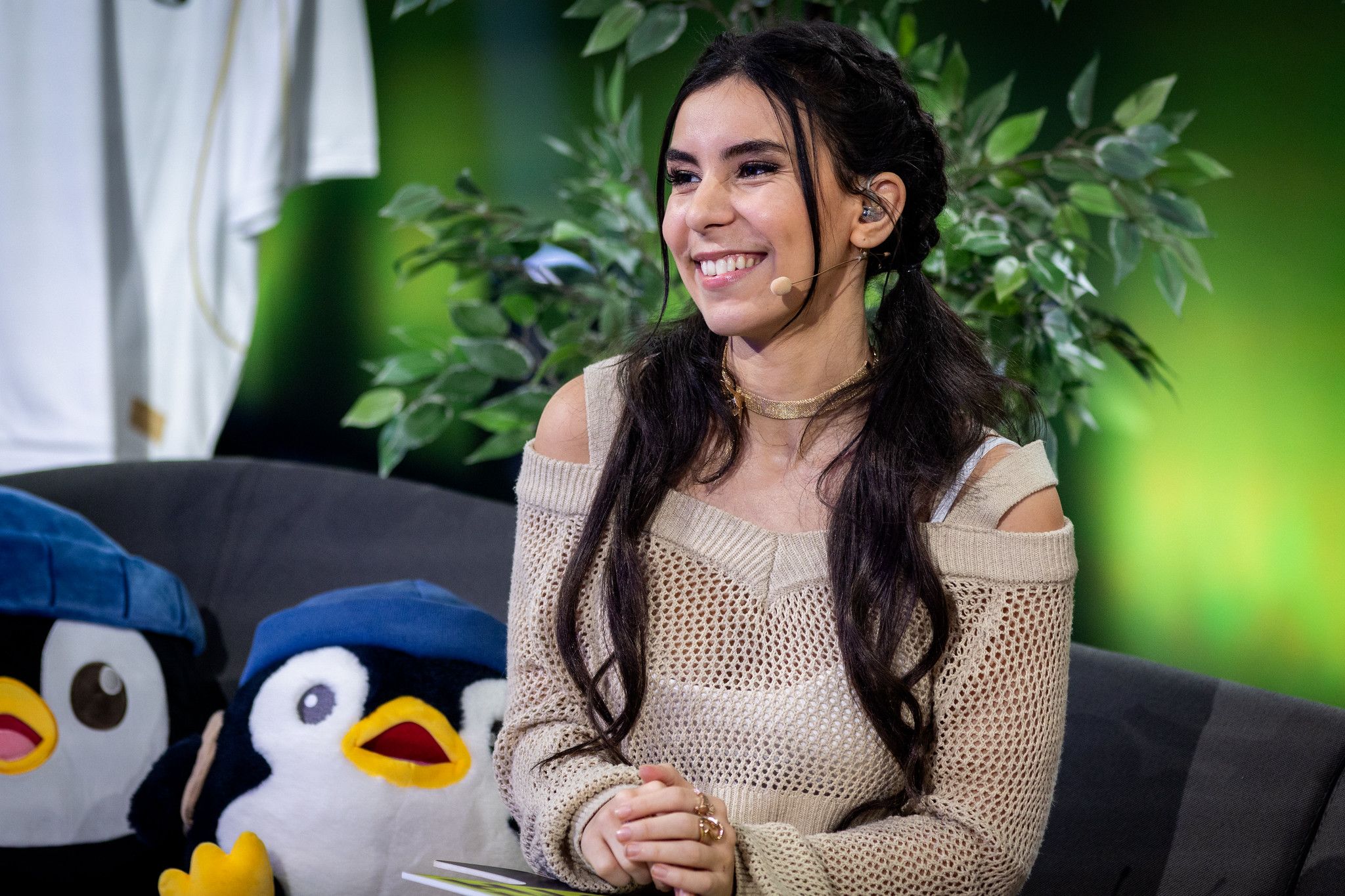
Freshly graduated,
VALORANT personality Lou “
Loupiote” Henguelle is closing a significant chapter of her life. A figure whose many roles defy any simple introduction, she has spent the past few years competing professionally for several teams in France and Japan, while also working as a host and interviewer on the VCT English broadcast, all while maintaining a streaming career and continuing her studies.
In a documentary directed by Bruno Sevaistre named “Loupiote, joueuse libre”, she chronicles the past two eventful years of her already demanding life. The film follows her journey as a woman entering an industry that remains largely male-dominated, tracing how she gradually forged her own identity through both her personality and the people around her.
Ahead of the documentary’s premiere, set to be released this Sunday 28 on Bruno Sevaistre’s
YouTube channel, Loupiote spoke with
Sheep Esports about the making of the film, the themes it explores, and her own personal journey.
How did this documentary come about, and why did you agree to take part in it?
Lou “Loupiote” Henguelle: “I never really felt like I deserved to have a documentary made about me or my story. I haven’t made history, I haven’t won a major tournament, and I haven’t defined an era as a player. Even as a host or interviewer, we're rarely the ones in the spotlight, we're there to highlight the people sitting across from us. That’s what I try to do whenever I interview players from Karmine Corp, for example.
One day, while I was attending a tournament with ZERANCE, Bruno came up to me and said, ‘I want to make a documentary about you, about your journey, the fact that you're studying alongside esports, and about your personality on stream’, which can sometimes be quite polarising. I clearly love the game, and that passion shows, even when I get frustrated or toxic at times. It came completely out of the blue. At first, I told him it would flop because I hadn’t really accomplished anything, but he insisted there was a story worth telling. Eventually, I agreed. Since then, he's filmed me around fifteen times over the past two years, in different places and across various aspects of my life and projects.
Beyond your personal journey, what message did you want this documentary to convey?
Loupiote: The documentary isn’t just about me. I think Bruno was influenced a little by my mum on that front [laughs], so there are quite a few emotional moments, childhood footage, things like that. But that’s not really the point. The core message is that children should be raised with an open mind, not to be racist, not to be sexist. Men and women can simply be friends. If you're friends with a woman, it doesn't mean you're a simp or that you're only trying to sleep with her. When men play video games with women, it isn't automatically boosting just because one of them happens to be a professional player. Of course, sometimes friendships turn into relationships, we all know stories like that, but that's simply part of life. The same thing happens with male friends: some become your closest friends, others you eventually lose touch with.
The real goal is to normalise women being present in traditionally male-dominated spaces, especially in games that were historically played almost exclusively by men. VALORANT is probably one of the best examples of that. It's one of the most welcoming and accessible games for women, and that's fantastic. We need to keep moving in that direction while also helping men understand that they have a role to play by spreading positivity and supporting Game Changers players. I think of Nami (Iman Nagaaoui), who receives an incredible amount of support from Gentle Mates fans. That's exactly the kind of encouragement that gives us confidence and makes us want to keep going. It's never been men versus women, it's all of us together.
A significant part of the documentary focuses on your experience as a woman in esports. You also show the criticism and hate you've received online. How do the clips that circulate on social media affect you on a daily basis?
Loupiote: The clips are always more or less the same. I don't want to fall back on the usual excuse of saying, ‘It's out of context.’ I actually think that, even out of context, you should be able to stand by what you've said. Ever since the whole ‘Pas mal les bzez’ clip (Viral clip where someone in the chat writes an inappropriate comment about her chest), and some of the arguments I had with people when I was toxic in ranked, I've tried to make sure that, no matter the context, I can own my words without hiding behind excuses. If I said something, then I said it. If I called someone an idiot because they insulted a woman, then yes, I did, and I can live with that. I want to become increasingly accountable for what I say.
I think a lot of streamers struggle with that. They immediately fall back on ‘It's out of context’ or other justifications, but we all know how these platforms work. People make reaction content from incomplete clips that don't always reflect what you truly meant, but which can still come across as problematic or insensitive. We understand the rules of the game, we laugh at some of those videos ourselves. Some creators make a great deal of money from them. In my case it's obviously much less than the biggest streamers, but I still make a living from this, and that's an incredible privilege. The least we can do is accept responsibility instead of constantly making excuses.
People told me exactly that before I went to Japan for studies. Before that period, I was honestly pretty unbearable. I understand why some people disliked me as a streamer. That doesn't excuse the sexist comments I received, but I can understand why people were frustrated with me. I think I've changed since then. Some people simply haven't seen that evolution, and I can't really blame them, it's the internet. People form an opinion of you, and they're not going to watch everything you do just to see whether you've changed.
Hopefully, this documentary will allow some curious people to discover that there's more to Loupiote than the ‘Pas mal les bzez’ clip, or the version of me shouting in ranked with WiPR (Renaud Malfait). Hopefully they'll also see how far a genuine passion for esports can take someone.
The documentary also shows you and your ZERANCE teammates meeting players from a football club to discuss the experience of women in traditionally male-dominated environments. Is that the kind of initiative you'd like to continue in the future?
Loupiote: Absolutely. One of the girls talks about hearing parents on the sidelines telling her to “go do dance instead” when she was younger. To me, that's the football equivalent of hearing “go back to the kitchen” in VALORANT. It's the same underlying mindset that there are hobbies for girls and hobbies for boys and that women somehow don't belong there.
I'd love to keep promoting the same message: we're more than bodies to be sexualized. Women can be good at games too. That said, there are obviously many structural reasons why it's difficult for women to pursue a professional career in football, just as it is in VALORANT. The budgets, the opportunities, and the stakes simply aren't the same. We all know there's still a significant pay gap between men and women in VALORANT, and it's even greater in football, largely because of the economics and marketing behind those sports.
That's why these kinds of initiatives matter. Esports is still a relatively niche industry, whereas football, traditional sports, or the corporate world resonates with almost everyone. They reflect people's everyday lives. Continuing these conversations is important, not to point fingers and say men are the problem, but to encourage dialogue. Men can also provide incredible opportunities. Most women who play video games were introduced to them by a man. There are so many positive stories to tell. It shouldn't be women versus men but men also have to do their part and not be afraid of being perceived as ‘white knights’.
On a more personal note, the documentary also features your family and close friends, including your mother, your godfather and one of your closest friends. How important is your support network, especially in an industry like esports that can seem difficult for outsiders to understand?
Loupiote: The person who probably understood my career the best was Benjyfishy (Benjy Fish). We were very close friends at one point. We played together in Riot's Spotlight Series EMEA 2024, which was a mixed-gender tournament. Having friends I could genuinely discuss the game with, who could challenge my thinking, give me advice, and review matches alongside me, was incredibly valuable.
At the same time, it's equally important to have people outside the game.
Sami (her close friend) follows the scene, but he's not a
VALORANT expert. He doesn't know every little detail. My mum and Alain, my godfather, are completely lost most of the time. They don't really understand what I'm doing, but they genuinely try, and I find that quite touching.
Having that balance is essential. Friends who understand the competitive side of things, and another circle where your conversations don't change whether you've won or lost. Those people help you step outside the bubble and remind you that, at the end of the day, it’s only a video game. Of course that match feels incredibly important in the moment, but there will always be another one. I know competition is a huge part of players' lives, but your worth isn't defined by one match, one failure or one season.
After everything you've shown in this documentary and everything you've accomplished, do you consider your journey inspiring?
Loupiote: Personally, I loved discovering the stories of Kayane (Marie-Laure Norindr) and Laure Valée. If, in turn, I can inspire young girls who come up to me after the premiere, send me messages after my streams or tell me that it's reassuring to see a woman who stands up for herself and speaks her mind, then yes, maybe my story is inspiring through their eyes.
When I look at myself, I don't think, ‘Wow, I'm inspiring.’ I just think what I'm doing is pretty cool. But hearing both women and men tell me that my journey means something to them definitely gives it a different dimension.
Now that you've finished your studies, what would you like to dedicate yourself to in the future?
Loupiote: The documentary also touches on the institutional side of my studies. Politics has always interested me because I think it's important to have people who genuinely understand the communities they're representing, who know the culture and can listen to criticism without immediately becoming defensive. I'd like to serve as a bridge between younger generations and institutions, to represent people who feel disconnected from politics and don't want to keep voting for the same parties over and over again. I'd like to bring a younger, slightly more ambitious perspective to what people often see as an ageing political class. That image isn't entirely unfair.
One day, I'd love to explore something like working within the Ministry of Culture. From an esports perspective, I'd like to help players obtain visas more quickly, secure more funding for events, and make it easier for fans to travel to competitions because attending events is extremely expensive. That's something I'd like to pursue eventually, though not right away.
For now, I want to give myself a real chance to focus on streaming, hosting, and broadcasting. I've never been able to do any of it full-time because my studies always came first. Now I finally have that opportunity. And who knows, this is a Sheep exclusive, if I ever fall in love with the right team, maybe one day I'll compete again alongside my sisters. I'm certainly not hoping Nami ends up playing with me tomorrow because she's got much bigger things to do, like winning splits and qualifying for Champions. But maybe in a few years, if I had the chance to play alongside Nelo (Mathilde Beltoise), Nami, Akita (Esllene Xu) or even Thuy (Ngoc-Thuy Duong) again after everything we experienced at ZERANCE… who knows? Being able to commit full-time changes everything.
Finally, a more VALORANT-focused question. The documentary shows you at numerous LAN events and international tournaments as a host. What's your favourite memory from everything you've experienced in the game?
Loupiote: That's a difficult one. As a player, I'd probably choose winning Samuel Étienne's Valkyries Games tournament in 2024, if I remember correctly. It was the first tournament ZERANCE ever won and the first title of my career. That moment meant a lot to me. I'll always treasure that team and everything we achieved together, including with the ZERANCE staff.
I also loved my time with Joblife. We didn't achieve the results we'd hoped for, which inevitably overshadows the experience a little, but I don't think people realize how difficult it is to qualify for the main event and finish among the ten best teams in Europe while being the only part-time roster. If I have one regret, it's that I wish we'd brought Joblife more victories during their first year in VALORANT.
Overall, though, it has to be Champions in Paris. My favourite memory is probably when Boaster (Jake Howlett) grabbed my microphone to hype up the Grand Final and warn NRG that they should be having nightmares about him because he'd be ready the next day. Even though Fnatic eventually lost, witnessing that incredible comeback after interviewing Boaster the day before was unforgettable. Then getting to interview the winners afterwards, it was surreal. That entire weekend was incredible. I'll remember it for the rest of my life.”