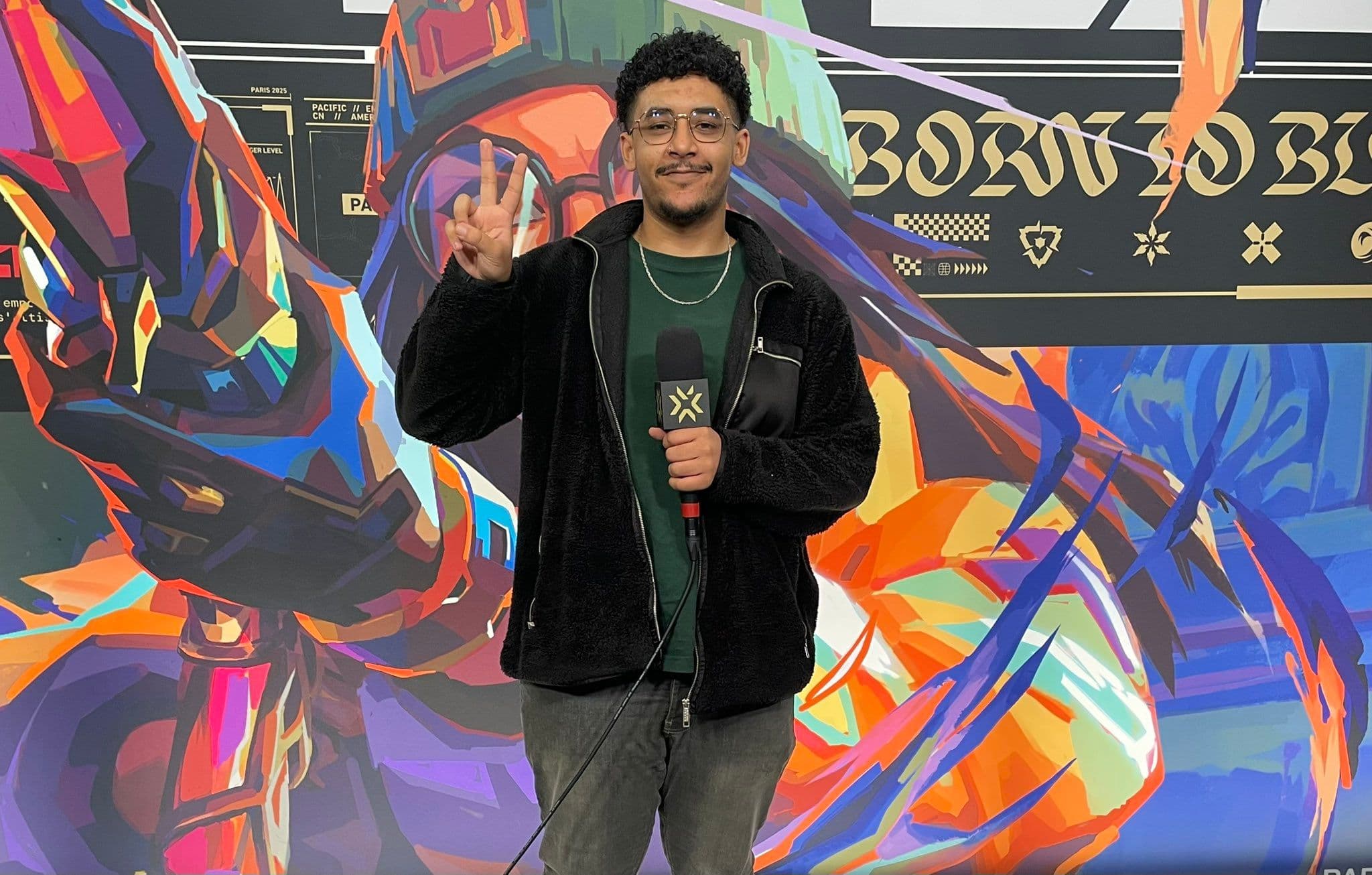
Ivo "LohaN" Albino experienced an eventful week at the start of
VCT EMEA Stage 2. Team Liquid's head coach was first forced to step in for his team's captain, Ayaz "nAts" Akhmetshin, who was unavailable for personal reasons during the opening match against Eternal Fire. Unsurprisingly, TL was unable to pull off the upset and suffered a straightforward 0-2 defeat.
Just two days later, Liquid faced another significant challenge. While nAts returned to the lineup, the team faced the reigning champions, Team Heretics. After a disastrous start to the opening map, trailing 2-11, Liquid weathered the storm and managed to turn the game around to secure a 14-12 victory before closing out the series with a 13-10 win on the second map.
Following a week filled with adversity and momentum swings, LoHaN sat down for an exclusive interview with
Sheep Esports. The Portuguese coach reflected on the team's resilience, nAts’ leadership, the current
VALORANT meta, and the challenges involved in rebuilding the roster.
How are you feeling about the team’s performance today?
Ivo "LohaN" Albino: “Honestly, I feel good. It has been a bumpy ride since the end of Split 1. We’ve gone through a lot of changes, both within the roster and the coaching staff. I wasn’t even present for our first match, so it definitely hasn’t been easy. We’ve continued to work extremely hard, but coming into this game, we didn’t have huge expectations. I’m happy with the result, even if the performance was far from perfect. What impressed me the most was the incredible resilience the players showed on the first map. Coming back from an 11–2 deficit was amazing to watch.
Few teams are capable of showing that level of resilience after falling behind 11–2. How did you manage to bring the players back into the game mentally and turn the situation around?
LohaN: I’m not going to lie: one of our main goals for today was resilience. In our previous match, even though I was playing, I think we could have handled difficult situations better. I understand that it can be hard for the players to find confidence when I’m on the server making mistakes, but one of our objectives going into this match was simple: no matter the score, we would never give up. Honestly, there is no better answer than the one the players gave on the server.
I also think nAts’ return was very important. He had a huge impact in bringing the team together and making sure that we kept pushing no matter what. Today proved that a game is only over once the opponent reaches thirteen rounds, or overtime. And, of course, we were playing Team Heretics, one of the strongest teams in the world. It’s not like we were facing a small team.
You had to replace nAts in the opening match. What was it like stepping into his shoes, even if it was only for one game?
LohaN: It was okay. Honestly, it was a fun experience. I wasn’t particularly stressed and I didn’t feel much pressure. The only thing that made me sad was wishing that I was individually stronger so I could help the boys more. Most of the time, I was just jumping out of smokes so they could trade me. Very few players can truly replace nAts, especially within the system we have at Team Liquid. Only Ayaz can really be Ayaz. That’s also why we never seriously looked for a substitute. At least I knew the system, and we could still try a few things. We already knew that winning that first match would be incredibly difficult, so we accepted that reality and focused on the bigger picture.
After spending so much time working alongside nAts, what makes him such a high-level in-game leader in your eyes?
LohaN: For me, the biggest strength of nAts is his open-mindedness and his willingness to adapt. A lot of in-game leaders have a very specific vision of the game, but VALORANT evolves constantly. Meta shifts force IGLs to change their approach, and sometimes making those adjustments can be difficult.
One of the things I enjoy most about working with him is that openness. Of course, we argue and discuss ideas all the time, whether we should go left, right, or approach situations differently, but at the end of the day, we both make compromises. He sacrifices for my vision of the game, and I do the same for his. We always find a middle ground that works.
TL before the game against Team Heretics Credit: Michał Konkol/Riot Games
This year, we have already seen several major balance changes and meta shifts. Across different regions, teams have experimented with new agents and compositions, including triple-Duelist lineups. Do you think VALORANT is evolving toward a more explosive style of gameplay?
LohaN: It’s difficult to answer because I don’t think anyone has truly found the perfect formula yet. I’m not even sure whether the current state of the game means the meta is healthy or unhealthy, or whether there is a defined meta at all. What I do like is that teams are experimenting. We’ve seen DRX pushing double-Sentinel compositions, Paper Rex experimenting with triple-duelist setups, and other teams relying heavily on double-Initiator compositions.
The variety is good. It probably means that nobody has completely figured out what the most optimal compositions and playstyles are following the recent changes. The game is very different from what it was before the Initiator nerfs and the Sentinel adjustments. Right now, I’m honestly not sure what the meta really is.
In your opinion, what would be the ideal meta for competitive VALORANT?
LohaN: For me, the healthiest meta is one that allows multiple compositions to coexist without one clearly dominating the others. If we go back to the beginning of the year, double-duelist compositions were so strong that they became almost mandatory. That isn’t healthy for the game. The perfect meta is one where teams can adapt and innovate: double-Sentinel, double-Initiator, triple-Initiator, triple-Controller, anything. As long as teams are able to experiment and create different systems that are all viable, that’s the healthiest state competitive VALORANT can be in.
Looking back at the offseason, what were the team’s priorities?
LohaN: The break between Split 1 and Split 2 was a bit unusual for us because the changes we initially planned didn’t end up happening the way we expected. MiniBoo (Dominykas Lukaševičius) decided to step away for his mental health, which is completely understandable, and that forced us to make additional roster moves. That naturally shortened our preparation time. On top of that, we already knew for quite some time that Ayaz would miss the opening match, which also influenced the way we prepared for Stage 2.
Because of all that, I wouldn’t say we entered Stage 2 in the best possible conditions. Right now, we are still nowhere near our full potential. We’re making a lot of fundamental mistakes in-game, and there are still issues with synergy. Sometimes our trading isn’t clean enough, and players aren’t always on the same page. That’s completely normal for what is essentially a brand-new team. We didn’t just replace players, we also changed roles and rebuilt parts of the system. Our biggest challenge at the moment is simply time. We need to use the remaining weeks before playoffs to reach the level we know we are capable of.
Joblife recently qualified for VCT EMEA. Do you have a message for your former team and for Toma “Tomy” Abdellaoui?
I’m really happy for them. I still keep Joblife close to my heart because my time there was such a great experience. At the same time, I really want to play against them, and I want to beat them just to see Tomy’s reaction. Hopefully, I won’t end up in a situation where I have to eliminate them, because that would be difficult. But I’d still love to face them on stage. To everyone at Joblife: congratulations on qualifying. I love you guys.”