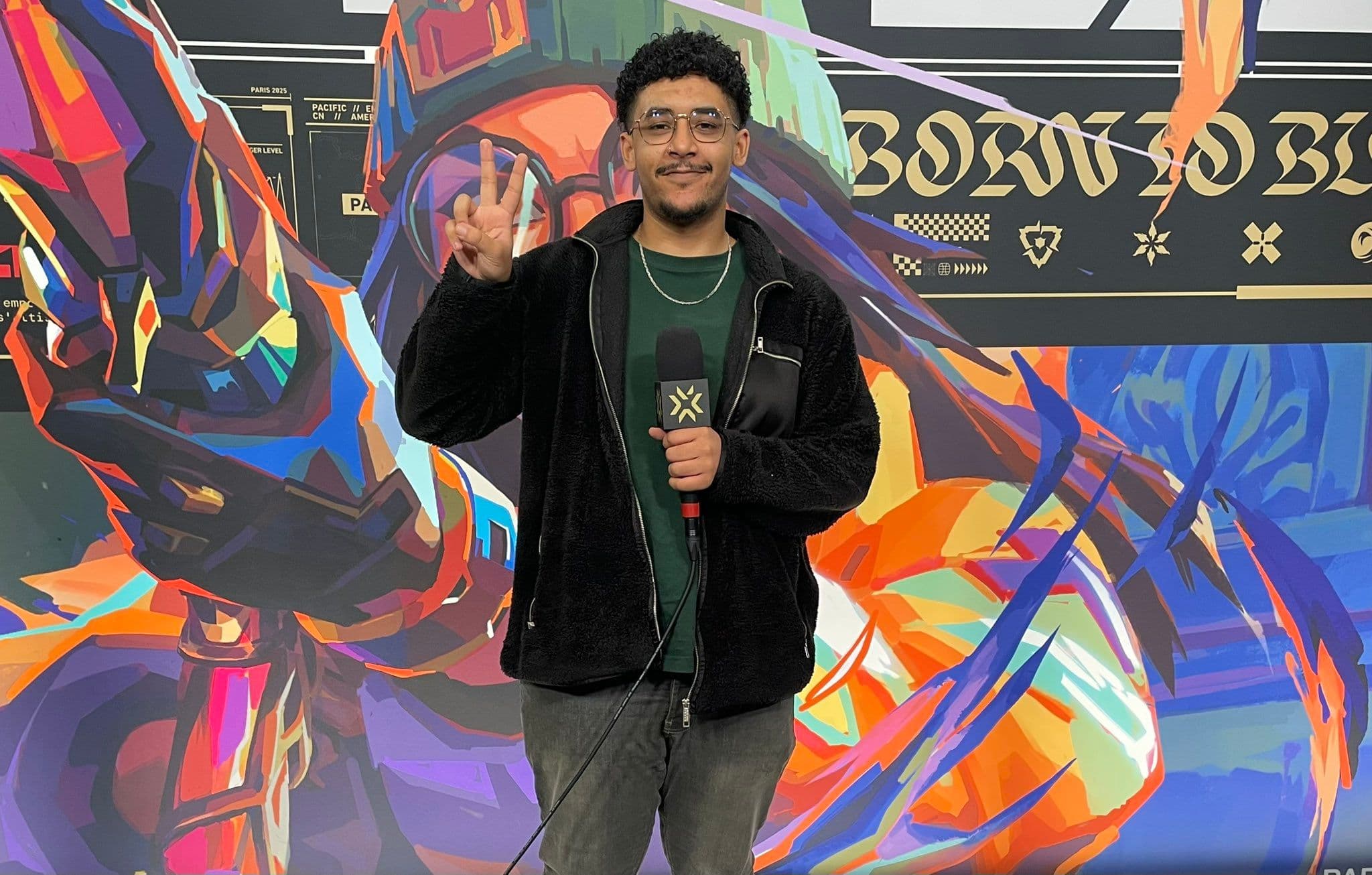
Shortly after Fnatic secured a playoff place at
VALORANT Champions Paris 2025 with their victory over MIBR on Wednesday,
Sheep Esports caught up with
Kajetan "kaajak" Haremski to break down the series. He discussed how the team recovered after losing on Bind, the changes made on Abyss, facing Erick "aspas" Santos, and how playing alongside experienced teammates has improved his performance in the arena.
After that match, how are you feeling about your own performance and the team’s play overall?
Kajetan "kaajak" Haremski: "I feel really good. Haven got very close at the end. We could have closed it out much earlier. We threw a 5v3, and once that happened, things unraveled a bit. Overall, though, it was a pretty good game. I actually expected it to be easier, but they surprised us with their confidence and individual level. At times, they were playing incredibly well. It was a very useful match for improvement, too. We lost Bind, one of our best maps, and it’s good to lose sometimes if it shows you what to fix. Because we still won the series, we can correct those issues and be stronger for the next official.
On Bind specifically, from your perspective, what was missing to win the map? And did you expect MIBR to perform at that level?
kaajak: Our confidence might have been a bit low. I could have taken deeper lines on defense, and on some sites, we weren’t on the same page. We either gave up picks or got picks without being set up on the sites they hit, so a lot needs cleaning up. Our mid-round proactivity also dipped; sometimes we just sat on sites and didn’t do much. We need more initiative there. I’ll rewatch the game to understand exactly what went wrong.
aspas is a well-known star on the other side. What was it like facing him one-on-one, and how do you think it went?
kaajak: It felt good. He farmed me a bit on Bind, but on the other maps, I felt I had the upper hand. I’ve wanted to fight aspas for a long time. He was the guy I used to watch when I was in tier 2 or even earlier, so it was great to play him. He’s a very good player, and beating him feels like a small achievement.
After playing aspas, who would you like to face next in a potentially close series?
kaajak: In playoffs, we might meet G2, depending on seeding, and I think they’ll qualify. Paper Rex is another team I’d want to face. They’re the best teams right now, in my opinion.
How did you and the team reset to win the series and clinch playoffs? What did the coach and IGL say before heading back onto Abyss?
kaajak: Our coaches, Boaster (Jake Howlett) and Alfajer (Emir Ali Beder), pointed out that we were lacking confidence. We needed to reset, slow down a bit, and be clearer with our planning. On Bind, we were over-communicating at times, and our pre-rounds got messy. They told us to stop dwelling on previous rounds and focus on the next one. We went into Abyss with confidence, and it paid off. We reset well, we know how to handle losing a first map and bounce back.
Photo by Adela Sznajder/Riot Games
This is your first Champions. What are your impressions of competing on this stage?
kaajak: It feels incredible. The crowd is amazing. I’m really looking forward to the playoffs, especially the top-four arena, if we make it there, it’s going to be massive, and I believe we will. I’m not in peak form yet, but I’m progressing game by game. The opener against RRQ (Rex Regum Qeon) was rough; I wasn’t in good form despite preparing hard. I think I took the tournament too seriously at first and didn’t enjoy it enough. That has changed, and I’m feeling better now.
You won Ascension EMEA with Apeks and are now competing for a world title. How did that experience prepare you for Champions with Fnatic, and how do past wins influence your mindset?
kaajak: Ascension didn’t prepare me that much because it was only one stage match. Coming into this year, the biggest adjustment was playing on stage; it felt different from home, so I had to learn during Kickoff and then progressed through Stage 1. Experience helps for sure, but Champions has its own aura. I still feel some stress, especially on the first map. When I’m less tense and enjoy the game like in Toronto, I play much better. That’s what I’m aiming for now.
Playing on a top team means constant high-pressure matches. How have you managed the mental side in those big games?
kaajak: In the RRQ game I was learning on the fly, how to deal with emotions when I’m not having a good game. I think I handled it well, I kept communicating, maybe less on Ascent, but on Abyss I was still calling and offering ideas. The biggest thing is mentality. If you’re not fragging, you still do your job, play your role, and communicate. You can’t go quiet.
Fnatic’s roster includes many veterans. What have you learned from playing alongside so much experience, and how have they influenced your game?
kaajak: It helps a lot, especially at international events. They know how to handle imperfect conditions like a bad practice room without letting it affect them. They focus on the game and block out distractions. I’ve learned a ton this year, especially from Boaster: how to refine my role, how to play certain positions, and how to react on the map. He’s helped me a lot.
Which specific aspect of your game has improved most since joining Fnatic?
kaajak: Respecting advantages after getting an entry. At one point this year, I was very good at converting those openings, playing post-plant or post-pick positions where I can’t be traded easily or have a guaranteed follow-up. Right now, it’s a bit mixed, I don’t think I’m at my best in that regard. But earlier this year, before this event, I was stronger there, and I need to keep focusing on it for Champions."
Header credit photo: Colin Young Wolff/Riot Games