As
First Stand comes to an end,
Riot Games now turns its attention to the rest of its packed competitive calendar, with the
Mid-Season Invitational and the World Championship on the horizon. Following the first international event of the year,
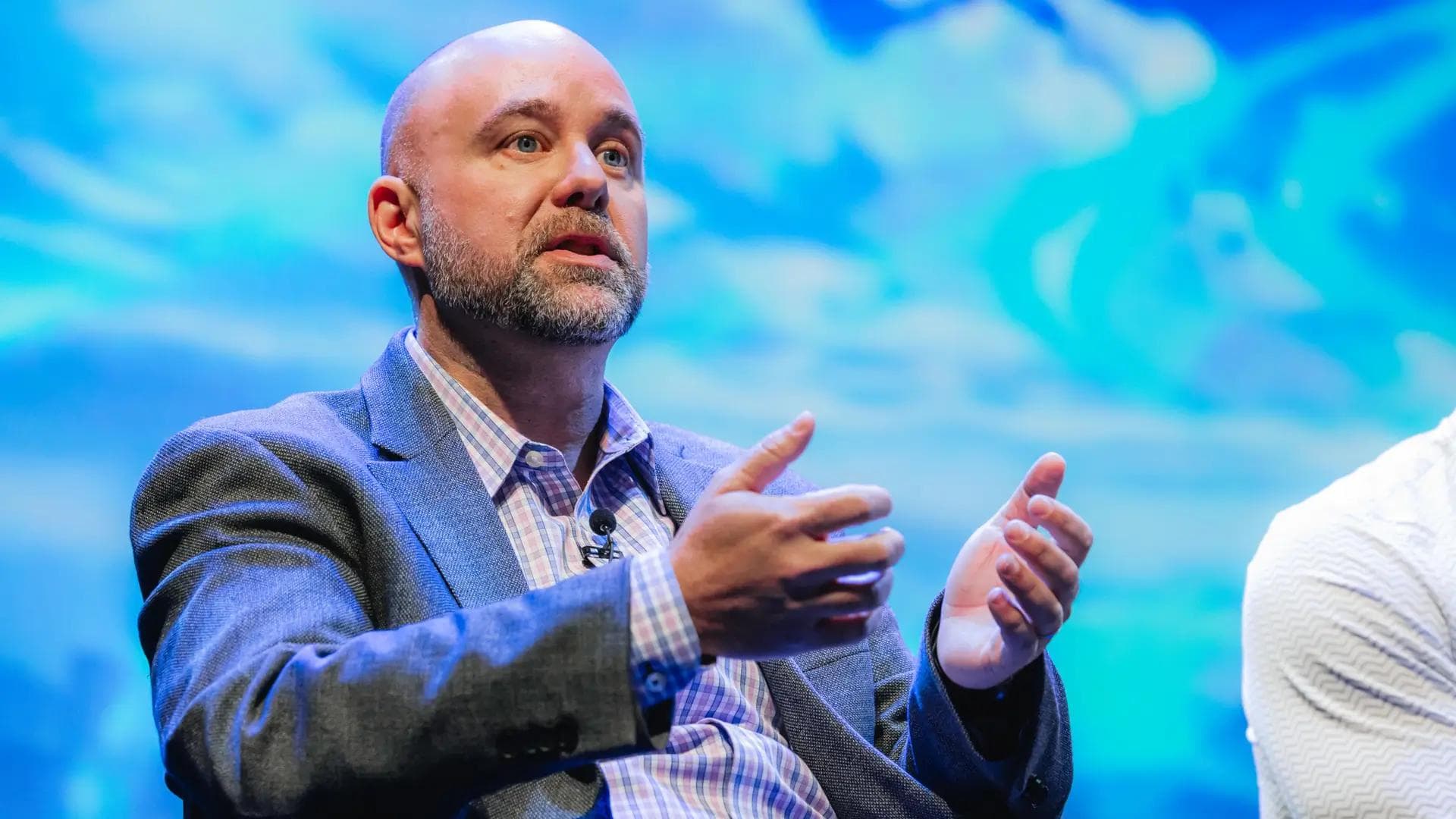
Christopher Greeley, Global Head of
League of Legends Esports, sat down with press from around the world to discuss key takeaways from the tournament, as well as address concerns surrounding the upcoming World Championship in the United States.
We will be sharing questions from Sheep Esports’ journalists first before citing Greeley’s answers to other media’s inquiries.
CBLOL was initially announced to have only one slot at the start of the season, but later Riot added a second slot. What led to this decision change, and did pressure from the Brazilian community influence it? (credit: Sheep Esports)
Chris Greeley: “I’ll answer the second part first—no, I don’t think pressure from the community had any real influence on the decision. Even recent competitive results, like the Americas Cup, didn’t impact it either.
We spent a lot of time last year focused on splitting the LCS and CBLOL back out. In doing so, I’ll be candid—I don’t think we spent enough time at the outset fully considering the implications for international event slots. When we restored CBLOL to parity, it was given one slot across events, similar to before the merger.
After the initial announcement, we revisited our formats in January and began reviewing the structure for this year and beyond. Through those discussions, we came to the conclusion that CBLOL likely should have been allocated a second Worlds slot. Over the past couple of months, we’ve been evaluating the implications of that decision for Worlds, Play-Ins, and future events. We want to avoid decisions that limit flexibility moving forward.
While we were in Brazil for First Stand, we had all our regional leads together, which gave us the opportunity to discuss the broader ripple effects in detail. Ultimately, we concluded that while this is something we probably should have done at the time of the original announcement, the next best time to make the adjustment was now. So we took the opportunity to announce it while we were in Brazil rather than waiting for a larger format announcement later, such as at MSI.
With recent changes in visa policies for athletes and past delays in approvals for US-based events, what happens if a qualified team is unable to attend Worlds this year? Does Riot have contingency or fallback plans in place? (credit: Sheep Esports)
Chris Greeley: We’re always looking at contingencies, regardless of where we are in the world. I can’t remember an international event in the last couple of years where there weren’t some visa or immigration concerns right up until the event.
If one or two teams are having trouble, we’ll continue working directly with those teams, along with our agencies and any government contacts we can leverage. That’s essentially our standard operating procedure—to do everything we can to help teams gain entry. In situations where there are isolated cases—like a single player or team unable to attend—we do look for fallback options, and we’ve done that in the past.
Overall, with all events, we continue to monitor the situation closely. We’ll work with teams, third-party agencies, and government contacts, and we hope that all qualified players for Worlds will have a smooth entry into the US and be able to fully participate and enjoy the experience.
How do you evaluate the impact of adding a third international tournament to the League of Legends ecosystem? (credit: PentaQ)
Chris Greeley: We're pretty happy so far with having a third international event. First Stand is an event that we're still experimenting with. Obviously, we had five teams when we were in Korea last year, and we're at eight teams in a full best-of-five format this year. We'll continue to work on the format and take fan feedback, sentiment, and viewership into consideration.
Having another opportunity in the calendar for some of the best teams in the world to come together is a huge advantage. I think it's something fans want—more international competition. Still, there are some pieces we're still missing, we know that fans in the LCS and LEC particularly would love to see more competition between their regions. Overall, I think it has been a good experience and a positive outcome for the ecosystem.
Overall, we're feeling pretty good about how competitive First Stand has been. I think it is an upgrade over what we saw last year, although we did have some great storylines like CFO and KC coming back at the end. We're really happy with how the narrative and competition have progressed, and we're feeling confident about what Split 2, MSI, and eventually Worlds will bring—more importantly, what they’ll bring to fans this year.
Why did First Stand adopt a full best-of-five format throughout the tournament this year, and could it revert to previous formats? (credit: Yahoo)
Chris Greeley: First Stand is a really interesting opportunity for us to experiment with formats. One of the big pieces of feedback from last year was that it didn’t feel competitive enough and maybe felt a bit too small. So this year, we added more teams and leaned more into a best-of-five format, which has had really strong reactions—especially from MSI.
We’re going to continue to tinker with First Stand until we feel like we’ve gotten it right. We’ll keep taking fan feedback, sentiment, and metrics like viewership and engagement into account. So far, things look pretty good—viewership is up, sentiment looks positive, and most people seem to be enjoying the event. We’ll take that as a win, but nothing’s perfect, so we’ll keep working on it.
The First Stand venue had only ~140 seats compared to much larger venues used in past international events like MSI (e.g., ~15,000 seats in 2017). Why was a smaller venue chosen? (credit: kenzi)
Chris Greeley: Ultimately MSI and First Stand are very different events, and 2017 versus 2026 are very different timeframes for us overall. First Stand last year was at LoL Park, and this year it was at the Riot Games Arena in Brazil. Being in our own venues just gives us the flexibility to make changes to format, days, and times much later than we normally could when we have to sign venue contracts far in advance.
Why choose indoor over outdoor venues? (credit: kenzi)
Chris Greeley: Indoor venues remove a lot of negative variables. We don’t have to worry about heat, weather, or glare. During COVID, we experimented a lot with outdoor venues because they were safer for staff and players, but it exposed many issues that make competitive play on a computer difficult. I can’t control things like temperature for players outdoors. So we tend to choose indoor venues when we can because they give us much more control over the competitive environment.
What is Riot’s current perspective on fan–player interaction? Early on at First Stand, it seemed like interactions were somewhat restricted, but later became more flexible. What changed, and what is Riot’s stance now? (credit: Dory)
Chris Greeley: I don’t think there was ever an intention to restrict it. Early in the tournament, security was moving pro players backstage quickly, based on the assumption that’s where they were expected to go. After the first day, we were able to sit down as a team—including team handlers and security staff—to better understand the situation. Ultimately, we want to make sure players are able to do what they want to do, especially after matches.
We heard from several team handlers that players wanted the opportunity to engage with fans, so we adjusted our procedures to allow for that. A lot of those interactions have been really positive. Overall, we believe the fan experience is better when there’s some level of interaction between fans and players. Even if it’s not always up close, the ability for fans to cheer players as they pass by—and for players to acknowledge them—is important. We’re glad we were able to accommodate that and hopefully make the on-site experience more memorable for fans.
With an increasingly crowded calendar, is Riot considering limiting team participation in third-party events—similar to traditional sports? (credit: Yahoo)
Chris Greeley: We’ve talked with our regional leaders about what parallel competition could look like, kind of taking inspiration from traditional sports like English football. We hear from teams that they want more competition and more games, and we know fans—especially in some regions—are hungry for more competitive League of Legends.
At the same time, it’s a difficult balance. The rise of the third-party ecosystem has actually been really interesting, because it lets us vary formats, broadcasts, and locations through partners. We’re going to keep evaluating this space carefully. Ultimately, the best signals we get—alongside fan feedback—come from teams and players themselves: what feels like a good balance, and what starts to feel like too much or just competition for the sake of competition.
Chris Greeley: In the case of the LCK, we’re going to continue experimenting, especially across Asia, where we can partner with local governments and teams to bring events to fans outside Korea—while still making sure we serve our core audience in Korea as best as we can.
In terms of broadcast deals, our current agreements in Korea already cover Worlds. So I couldn’t really see us taking an exclusive offer, especially for Worlds. I don’t want to say “never,” but right now our goal is to bring Riot’s competitions to as many fans as possible.
Sometimes we balance that with commercial needs, like we did with Naver and SOOP in Korea. But overall, accessibility is the priority—making sure fans can watch in as many places, languages, and formats as possible, including co-streamers and influencers. We want to deliver a product that fans are actually interested in, and we’ll keep prioritizing that.
During the selection process for Daejeon as the host city for the 2026 MSI, Riot ran an open bidding process. What factors made Daejeon particularly attractive as a host city? (credit: Game Chosun)
Chris Greeley: Ultimately we hadn’t hosted an event there before, but when comparing options, several factors stood out. We looked at the overall terms presented by different cities, the opportunity to work in a venue we’re familiar with, the strength of the local fanbase, travel considerations, and the cooperation from the city as a partner. In the end, it was a difficult decision working together with the Korea team, but we felt Daejeon would provide the best overall experience for on-site fans and for the broadcast as a whole.
Will Riot continue to use open bidding processes for future event host selections?(credit: Game Chosun)
Chris Greeley: It depends. The open bidding process is useful in some situations, but it really varies depending on the event, country, or region. For example, in EMEA, there are multiple countries involved, so the approach can differ. We work closely with external advisors who have been helping us source locations and venues for years, and we also rely heavily on our regional teams to understand the landscape in each region. Every region is different. So we’ll continue to use open bidding where it makes sense, but in other cases we may use a more targeted process or even direct conversations, depending on the market and timing.
For Worlds 2026 being held in the United States, there are concerns from the Latin American community about visa processes, travel accessibility, and the broader global context. How was the host location selected, were alternative regions considered, and what factors influenced the decision? (credit: Mais Esports)
Chris Greeley: We’re trying to be thoughtful about where, when, and how we host our global events, and that includes being as realistic as possible about the broader environment in any region we go to.
For Worlds 2026 in the U.S., we’re planning proactively and preparing to adapt as needed depending on circumstances. In the overall planning process, if you look at the calendar for Worlds and MSI, we’ve generally followed a fairly consistent regional rotation over the years. The decision to host in the U.S. was made about two years in advance. Venues in the U.S., particularly those tied to professional sports, require very long lead times—often secured in October or November—so early planning is necessary to lock those in.
For Worlds specifically, that rotation likely continues into the future. We’ll continue to evaluate MSI separately as well. Right now, MSI has rotated through regions like NA, EMEA, China, and Korea in recent years. In the past, we’ve also taken MSI to places like Brazil and Vietnam, and we may look again at opportunities to bring it to more diverse locations. Events like First Stand also give us additional flexibility to go to different regions. So while Worlds follows a more structured rotation due to its scale and logistical requirements, we continue to explore ways to bring international events to a wider range of locations.”